A Mexican entrepreneur turned discarded plastic into low-cost homes for families in poverty; each 430-460 sq ft house used 2 tonnes of waste, took 7 days to build and cost families about $280
Rest of World News: Plastic production has increased exponentially over the last few decades. A 2017 study published in Science Advances estimated that 8.3 billion tons o.
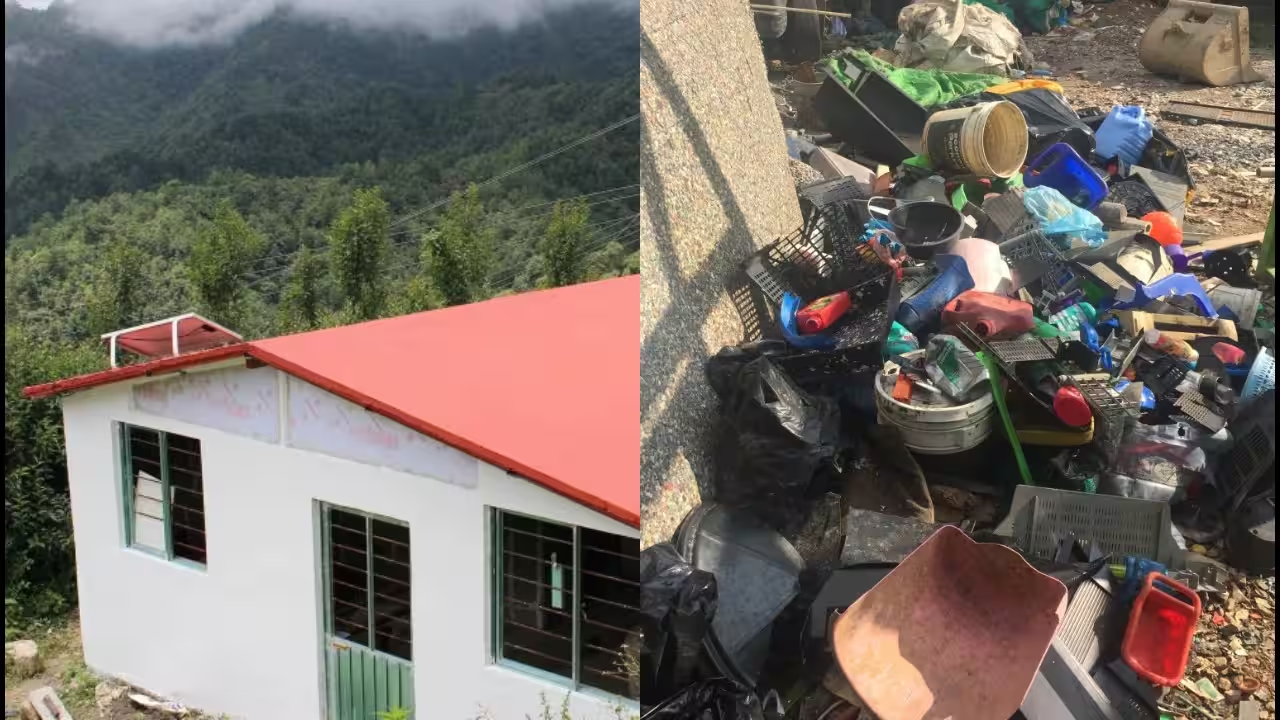
Plastic production has increased exponentially over the last few decades. A 2017 study published in Science Advances estimated that 8.3 billion tons of plastic have been produced globally since large-scale production began. Only a tiny fraction has been recycled, with huge amounts accumulating in landfills, ecosystems and waterways. Mexico has a big plastic problem of its own. The country consumes hundreds of thousands of tons of PET every year and is one of the largest consumers of bottled water and soft drinks in the world. Mexico has made progress in recycling, too. In the last 15 years, PET collection and recycling rates have risen substantially, proving how awareness can be translated into concrete action. An example of this approach is González’s EcoDom project. According to a news report by Eleconomista website, González was raised in the mountains of Puebla, a region rife with poverty and little access to proper housing. His experiences helped shape his interest in finding solutions that can solve both housing needs and plastic pollution. In 2013 he created the model which would be the basis of EcoDom. The company doesn’t see plastic as waste, but as a potential construction resource. Its raw materials are PET, as well as high-density polyethylene, polypropylene and ABS plastics found in products ranging from containers and buckets to toys and bags. EcoDom collects plastic from small businesses, independent collectors and organized collection campaigns. The material is sorted, processed and ground into flakes, then placed into molds, heated and pressed into construction components.Recycling for building materialsThe report highlights that they produce materials for structural walls, slabs, mezzanines and thermal roofing systems. González says each wall requires about six kilograms of processed plastic. The system provides an alternative to traditional masonry, while reducing the amount of plastic that enters the environment. The company’s model combines commercial activity with a social mission. It earns revenue by selling construction materials, offering construction services and building housing for people who cannot afford it. Some of the revenues go toward social programs, like helping to subsidize homes for families that otherwise would struggle to pay for them.Homes affordable for low-income familiesEcoDom’s subsidized housing model is specifically designed to ensure affordability for low-income households. The company's figures state that complete homes of about 42 square meters can be provided for roughly 5,000 Mexican pesos, or about $280. Single-bedroom buildings and other smaller units can be much cheaper. Families can also contribute labor, making the model more accessible for those with limited cash. The homes are designed to be constructed far quicker than traditional buildings. A house built with the system is said to be finished in a week, and the company says its materials can be more resistant to some loads than traditional masonry.A soial mission beyond buildingThe work of EcoDom has gone beyond the sale of houses. The company has also started giving houses to families in need. It has already sold two homes, given away five homes and three bedrooms and is seeking more partnerships to provide more housing. One possible collaboration is with the Universidad Cuauhtémoc de Puebla.The project has also attracted attention internationally. González said that companies and organizations from India, Canada, France, Brazil, South Africa, Guatemala and the Dominican Republic have shown interest in the technology.Expanding on the ideaThe investment to develop the business is more than eight million Mexican pesos. Now González is looking at franchising EcoDom and expanding the concept to communities beyond Puebla. The firm is also gearing up for a project to build 250 houses in Puebla, with plans to provide materials and training for at least part of the development. The premise of EcoDom is simple: waste does not necessarily have to stay waste. González’s model aims to tackle two enduring problems at once – plastic pollution and the lack of good quality, affordable housing – through the combination of recycling and affordable construction. If scaled up successfully, such approaches could show how discarded materials can be used in practical solutions for communities, while giving plastic waste a second life.Images Courtesy: Unreasonable Group and EcoDomCatch the latest World News and Live updates. Download the TOI app.
Topics in this story
- affordable homes made from recycled plastic
- Mexican entrepreneur recycled plastic homes
- how plastic waste is turned into houses
- low-cost homes for poor families in Mexico
- recycled plastic houses built in seven days
- low-cost housing solutions
- recycled plastic construction
- World news
- World news today
- World news live
- Top news in US
- Breaking news
Gathered from external sources. Rights to this text belong to whoever originally published it.