Janmashtami 2026: When will the festival be celebrated? September 4 or 5; Pooja muhurat, timings, when to break the fast, rituals, everything you need to know
Trending News: Janmashtami marks the birth of Lord Krishna, the 8th incarnation of Lord Vishnu, which is celebrated with immense fervour and festive spirit.Every yea.
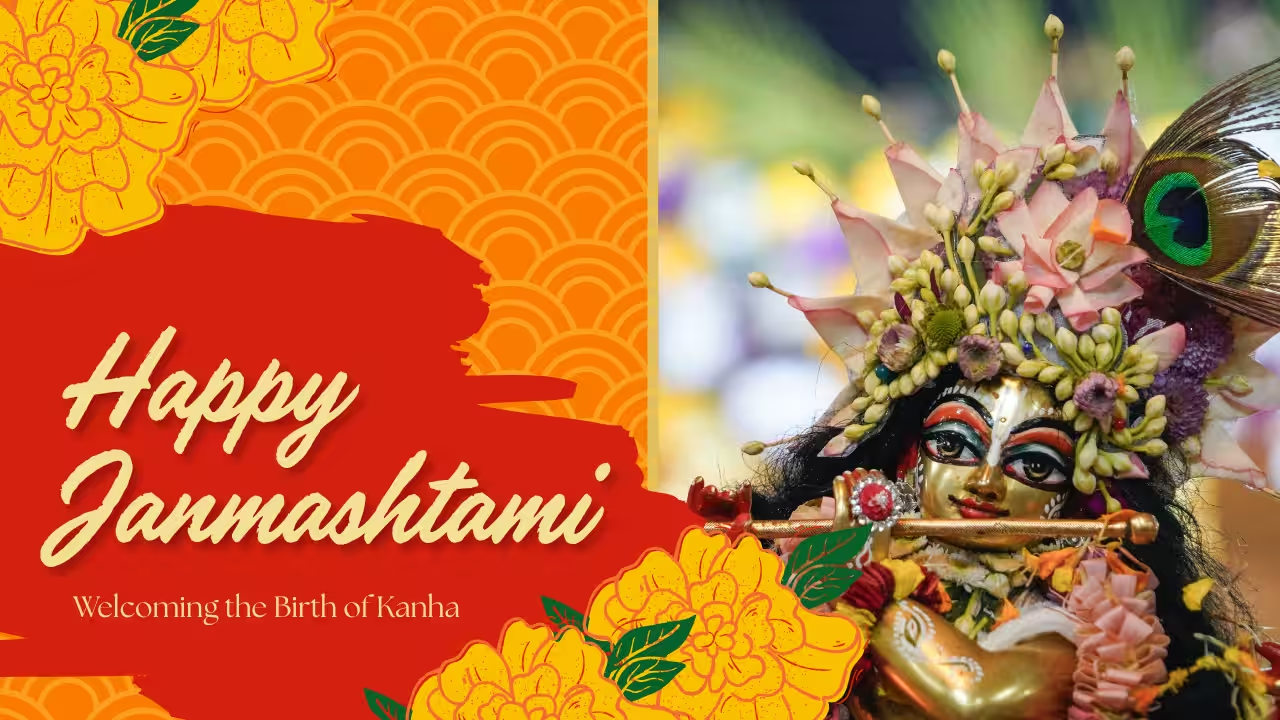
Janmashtami marks the birth of Lord Krishna, the 8th incarnation of Lord Vishnu, which is celebrated with immense fervour and festive spirit.Every year around this time, the same question comes up in group chats and family circles, compelling us to ask: Is Janmashtami today or tomorrow?Sometimes, calendars, apps, and even temples list two different dates for the same festival; that is why this confusion comes up.Janmashtami falls on the eighth day of Krishna Paksha, the waning phase of the moon, in the Hindu month of Bhadrapada, which usually falls in August or September on the Gregorian calendar.Why is Janmashtami celebrated?Janmashtami celebrates the birth of Lord Krishna, believed to be the eighth avatar of Lord Vishnu, born to save the world from evil.The story goes back to King Kansa of Mathura, a cruel ruler and Lord Krishna’s maternal uncle, who learned of a prophecy that the eighth child of his sister Devaki would be the one to kill him. Terrified, Kansa imprisoned Devaki and her husband Vasudev, killing each of their children as they were born.But when the eighth child, Krishna, was born at midnight, something miraculous happened. The prison guards fell asleep, chains loosened, and Vasudev was able to carry the newborn Krishna across the flooded Yamuna River to safety in Gokul, where he was raised secretly by foster parents, Yashoda and Nanda.Krishna grew up to fulfill the prophecy, eventually defeating Kansa and restoring peace and righteousness, or dharma, to the kingdom.That's why Janmashtami is celebrated at midnight; it marks the exact moment Krishna was born and hope quietly triumphed over tyranny.When is Janmashtami 2026: September 4 or Sep 5, 2026?In 2026, that eighth day, the Ashtami Tithi, begins at 2:25 am on September 4 and runs until 12:13 am on September 5, according to Drik Panchang. Since Lord Krishna is believed to have been born at midnight, the festival's most important ritual naturally falls after the clock strikes twelve, which is exactly why September 5 keeps showing up alongside September 4 in most Janmashtami coverage.The festival will officially be celebrated on Friday, September 4, but because the most sacred rituals happen well past midnight, the celebrations will naturally go into September 5 as well.September 4 is observed as the main Janmashtami day, with the grand midnight celebration, Nishita Puja, carrying the festival into the early hours of September 5.Here are the Nishita Pooja Muhurats across various cities in India from Sept 4 into Sept 5:New Delhi: 11:57 PM – 12:43 AMMumbai: 12:14 AM – 1:01 AMPune: 12:10 AM – 12:57 AMChennai: 11:45 PM – 12:31 AMJaipur: 12:03 AM – 12:49 AMHyderabad: 11:52 PM – 12:38 AMGurgaon: 11:58 PM – 12:44 AMChandigarh: 11:59 PM – 12:45 AMKolkata: 11:13 PM – 11:59 PM (Sept 4)Bengaluru: 11:55 PM – 12:42 AMAhmedabad: 12:16 AM – 1:02 AMNoida: 11:57 PM – 12:42 AMWhen to Break the Fast (Parana)Most devotees who observe a strict Janmashtami vrat break their fast only after the midnight Nishita Puja is complete, once Krishna's symbolic birth has been marked. Some others prefer to wait until after sunrise the next morning.Janmashtami 2026: How is the festival celebrated, rituals to follow and moreThe day typically begins with devotees observing a Nirjala or Phalahar vrat, abstaining from grains and pulses, and eating fruits, milk, and water for those doing a lighter fast.Through the day, people visit temples, sing bhajans, meditate, and prepare for the midnight celebration, decorating temples by arranging jhankis. At night, devotees bathe and dress an idol of Bal Gopal (infant Krishna), decorate a cradle, and offer panchamrit along with makhan-mishri, butter mixed with rock sugar, as the primary offering, often placed along with a Tulsi leaf. Once the Nishita Puja concludes, devotees break their fast with these offerings.The main attraction of the festival is Dahi HandiThe festivities don't end at midnight either. The next day marks the Nandotsav celebrations in Krishna temples, along with the energetic Dahi Handi tradition, where teams form human pyramids to break pots of curd suspended overhead. This custom is especially popular in Maharashtra.Get the latest movie news, reviews, and celebrity updates. Download the TOI App.
Topics in this story
Gathered from external sources. Rights to this text belong to whoever originally published it.