In 2023, Portuguese street artist Vhils turned coal-plant remains into 13 underwater sculptures; transplanted corals now shelter octopuses, crabs and urchins
Rest of World News: A Portuguese street artist named Alexandre Farto, also known as Vhils, put 13 sculptures that were made from material recovered from decommissioned co.
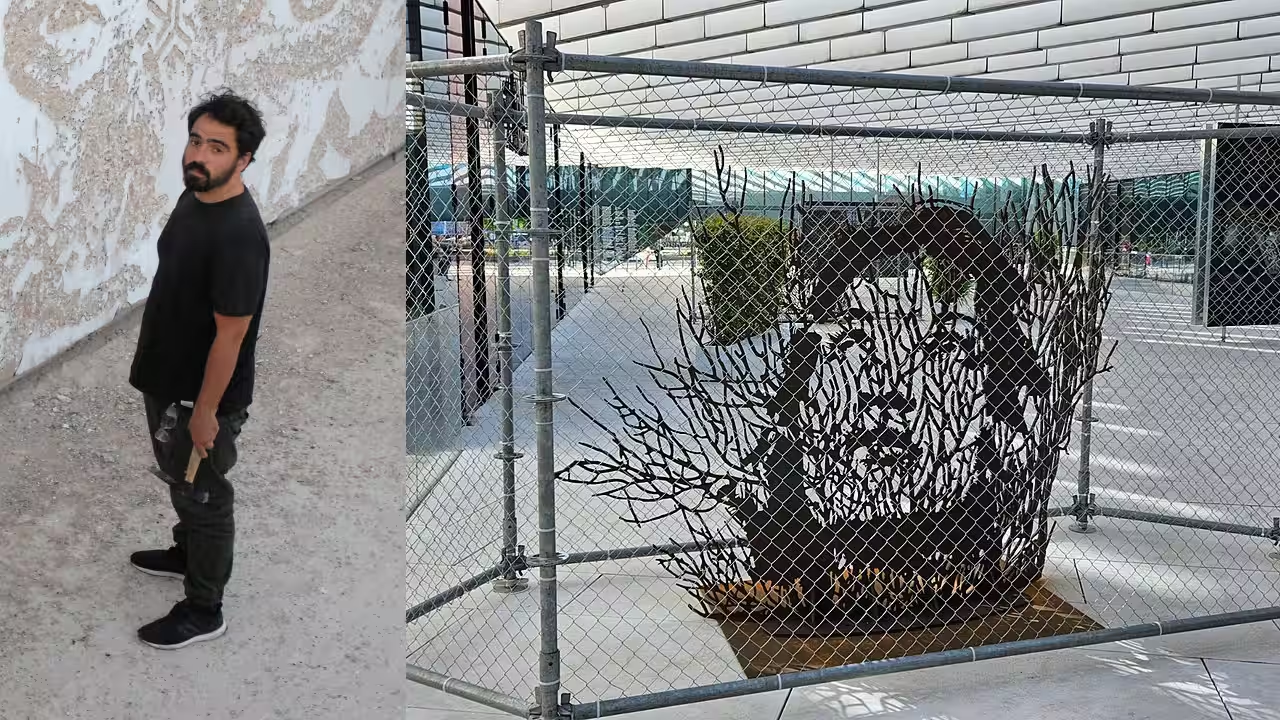
A Portuguese street artist named Alexandre Farto, also known as Vhils, put 13 sculptures that were made from material recovered from decommissioned coal-fired power stations beneath the Atlantic off Albufeira, Portugal. The works became the EDP Art Reef, which is an underwater exhibition designed to function as an artificial reef as marine organisms colonize the structures.Vhils' project page says the installation uses materials that were recovered from former coal plants and was commissioned by Portuguese energy company EDP. The sculptures were designed to become part of the marine environment rather than remain unchanged artworks on the seabed. The installation lies off the Algarve coast, more than 10 metres underwater and roughly a mile from shore. EDP describes the project as a combination of art, material reuse and marine-ecosystem development.From power stations to the seabedThe raw material came from three dismantled EDP thermal power stations, namely, Sines and Carregado in Portugal and Soto de Ribera in Spain. EDP said Vhils' team took three years to develop the project with the company and a group of other organizations. The 13 pieces were made from iron and concrete that had been treated for underwater use, and were divided into six groups of different shapes and sizes. Equipment that was associated with electricity generation was given a second function. Selected components became part of a permanent underwater installation instead of sending every piece of industrial material through conventional disposal or recycling routes. EDP's own account says the reef also incorporates live corals that were germinated in captivity. Researchers from the University of Algarve were expected to study and monitor the marine life developing around the structures.The sculptures were designed to changeVhils' project description says corrosion, sediment and biological growth would gradually alter the sculptures after they were submerged. Marine organisms would effectively become part of the work, and would change its appearance over time. The official EDP project page gives the installation an exhibition area of about 1,250 square metres. Eight of the 13 pieces are iron and five are concrete, and the highest structure reaches 5.3 metres, while the minimum depth of the installation is 10 metres.Divers can visit the installation, although access depends on the required diving certification and conditions at the site. The project therefore operates as an underwater art exhibition, but its physical structures also provide hard surfaces and spaces where marine organisms can attach themselves.Corals were transplanted onto the structuresPlant a Coral helped transplant coral fragments onto the structures, and TIME reported that some of the transplanted corals had been damaged by fishing nets before being moved to the new reef. The same report found that marine life had begun using the structures, including octopuses, spider crabs, urchins and fish. TIME described the installation as sitting in about 40 feet of water, which makes it accessible to divers who can reach that depth. The appearance of the sculptures has also changed underwater, since rust, sediment and biological growth cover portions of the metal and concrete.A former energy site becomes marine habitatEDP had a wider plan to move away from coal, and the company soon began decommissioning coal-fired facilities as part of its transition toward renewable energy, and material from those plants became the physical basis for the reef. EDP says the Art Reef was developed with the Centre for Marine Sciences at the University of Algarve, Portugal's maritime authorities, Albufeira City Council, Plant a Coral and other partners. Researchers were involved because the project was intended to be monitored as the marine ecosystem developed.The result is not a coral reef created entirely from transplanted coral, nor is it simply an underwater gallery, since the 13 sculptures provide the physical substrate, while corals and other marine organisms gradually occupy and alter them. Vhils' project page describes the installation as a permanent underwater exhibition and the foundation of a new artificial reef. Its appearance is expected to keep changing as corrosion, sediment and biological growth continue to work on the sculptures.Catch the latest World News and Live updates. Download the TOI app.
Topics in this story
Gathered from external sources. Rights to this text belong to whoever originally published it.