In 2009 Australia began removing rats and rabbits from Broughton Island; by 2018, an estimated 64,500 pairs of wedge-tailed shearwaters were breeding there
In a remarkable conservation effort, Broughton Island in Australia successfully eradicated invasive rats and rabbits, leading to a boom in seabird populations, including over 55,000 breeding pairs of wedge-tailed shearwaters. Discover the intricate journey of restoration and the impact on native wildlife.
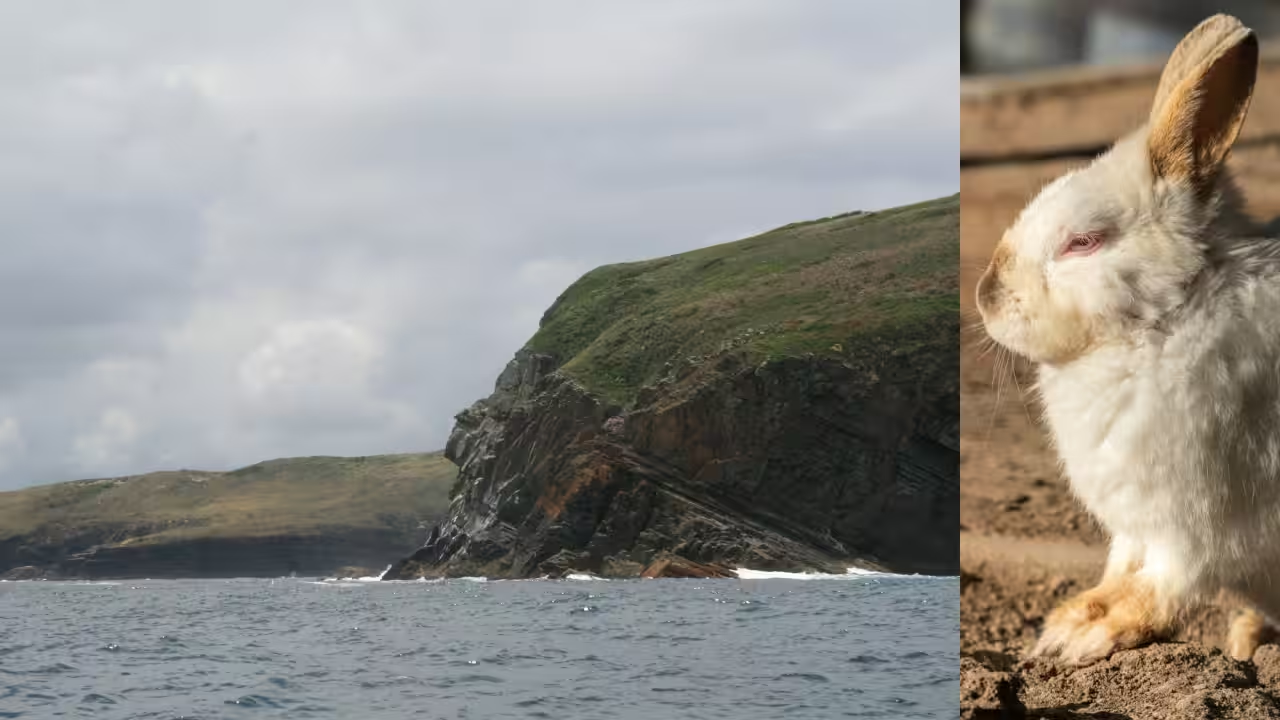
Broughton Island, off the coast of New South Wales, became the site of a major effort to remove introduced rats and rabbits that threatened its seabirds. Introduced mammals can be particularly damaging to seabirds that nest on or beneath the ground. On Broughton Island, rats and rabbits affected both seabird habitat and vegetation. That is why conservation agencies around the world have spent decades removing these animals from islands, usually with carefully placed poison bait.One such area where conservation agencies have tested this approach is Broughton Island, off the coast of New South Wales, Australia. Broughton Island is a 114-hectare island about 16 kilometres northeast of the entrance to Port Stephens and forms part of Myall Lakes National Park. In 2009, the NSW National Parks and Wildlife Service began an eradication program targeting rats and rabbits. A seabird survey conducted later in 2009 estimated roughly 55,000 breeding pairs of wedge-tailed shearwaters on the island, locally known as the muttonbird.When the scientists surveyed again in 2018, they found the colonies slightly larger, but they say the narrative of the island is more intricate than a simple bounce-back. Here's how the island got into trouble, how it was cleaned and what the data show and don't reveal.How the pests arrived hereRabbits arrived on Broughton Island in 1906, when a rabbit inoculation station was also established there to experiment with bacterial control methods for rabbits on the Australian mainland. After some twelve months the experiment was abandoned, but the rabbits remained. Black rats, according to the 2012 seabird study, arrived later, probably in the 1930s.Damage extended beyond the burrows. Storm petrels, little seabirds that are said to have nested in their thousands on the central dune in 1911, appear to have vanished from the island around 1958, almost definitely because of the rats. Fire and grazing reduced the island’s trees and vegetation to scattered relics. By the 2000s, the state wanted the pests gone for good, and the scheme that followed was carefully choreographed.Clearing Island in 2009The eradication combined rabbit disease control with aerial baiting. In April 2009, diced carrots carrying rabbit haemorrhagic disease virus were distributed across the island to reduce the rabbit population. In August, helicopters made two aerial bait drops 14 days apart using cereal pellets containing brodifacoum to target the remaining rabbits and rats. Also, bait stations were installed under and around the huts of visiting fishing families.Trained detector dogs scoured the island in November 2009 looking for survivors and discovered no indication of rats or rabbits, according to David Priddel and colleagues in the IUCN volume Island Invasives: Eradication and Management. The programme, which cost about $60,000, killed more than 1,000 rabbits and about 5,000 rats, the Newcastle Herald later revealed. Monitoring continued through August 2011, when final checks were scheduled to confirm whether the eradication had succeeded.Within weeks, another sign arrived. In December 2009 a single Gould’s petrel was spotted incubating an egg in a rock fissure, the first report of the species reproducing on the island. The bird may have tried and failed earlier because rats damaged its eggs, researchers said. The harder question is, what did the clean sweep do to the birds who were already there?What the figures indicateThe 2009 study was conducted in the months of October to December and estimated the number of breeding pairs of shearwaters to be around 55,400, although with a significant error margin of some 18,000 pairs each side. Timing is everything. Surveyors only tallied the burrows months after the baiting; therefore, the figure depicts the colony as it already existed, not a response to the eradication. They found roughly 111,000 burrows, compared with 34,000 in 1977, showing the colony was increasing long before the rats and rabbits moved out. The same study counted only about 235 pairs of short-tailed shearwaters, and there was no trace of sooty shearwaters, so not every species has been successful.A further survey in 2018 estimated approximately 129,000 burrows and around 64,500 breeding pairs, according to a Corella paper by Nicholas Carlile, Susanne Callaghan, and Mary Garrard. Shearwater colonies were larger in 2010 than in 2009, but the increase was only approximately 11 per cent more breeding pairs, since burrows were more thinly spaced, although the colonies covered 31 per cent more land. The authors highlight that other islands in the Port Stephens area showed similar increases over similar times with or without rats and rabbits, suggesting that factors offshore, such as supply of prey, had a key influence. The authors instead suggested that off-island factors, including changes in the availability and quality of prey, may have contributed to the population trends.This leaves the reader with a balanced takeaway. The removal of the rats and rabbits has made Broughton Island safer for birds that nest underground, led to the first known Gould’s petrel nest there, and allowed storm petrels to return from surrounding islets. But that one step cannot be credited with the surge in shearwater numbers, because the colony was already growing and neighbouring islands were seeing similar improvements. Ongoing monitoring will show how the seabirds respond over time.You use AI every day. Now get your AI Quotient. Take the AIQ test.
Topics in this story
- Broughton Island
- wedge-tailed shearwater
- invasive species eradication
- seabird conservation
- New South Wales
- Broughton Island rats and rabbits removal
- wedge-tailed shearwater breeding
- Australian wildlife conservation
- invasive species impact
- pest eradication methods
- seabird nesting habitats
- seabird survey results 2018
Gathered from external sources. Rights to this text belong to whoever originally published it.