An Alberta family kept a jade amulet for more than 50 years after receiving it as a gift; a Costa Rican archaeologist verified it could be up to 2,500 years old
An Alberta family discovers their jade amulet is over 2,500 years old and returns it to Costa Rica, highlighting the importance of cultural heritage and provenance.
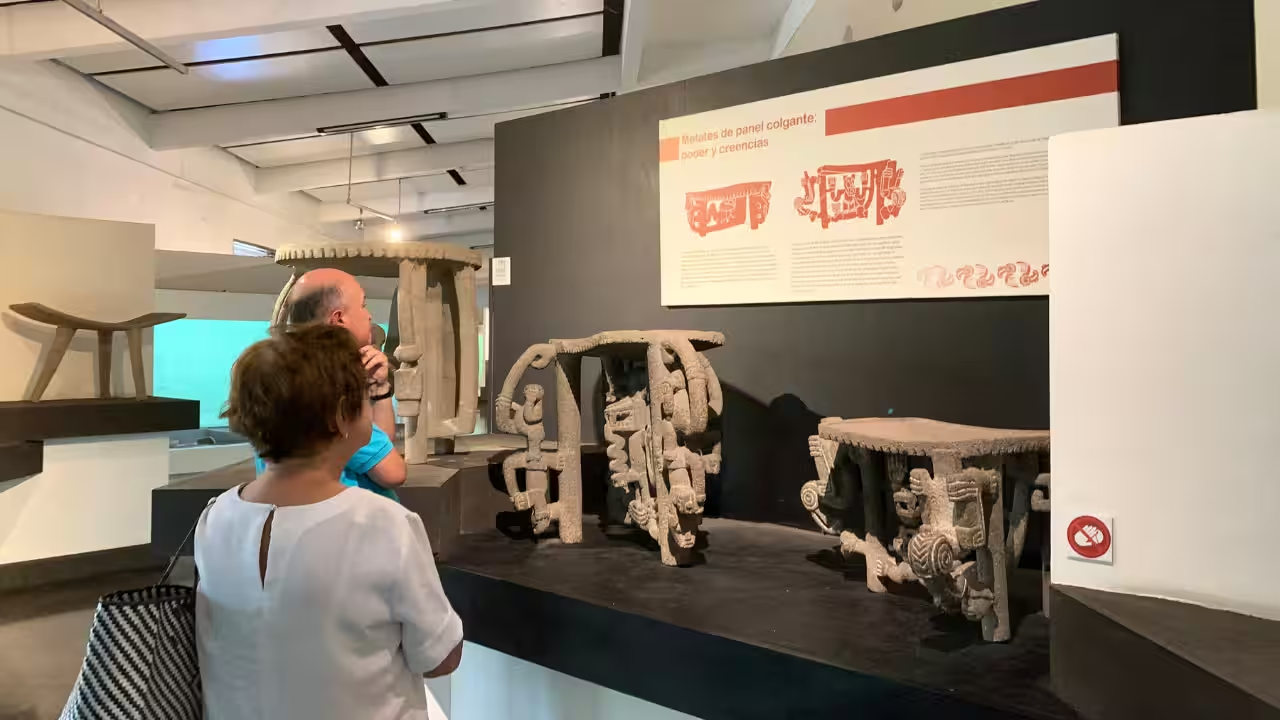
Finding valuable artefacts is no easy task; archaeologists often spend years uncovering them. However, an Alberta family received a gift that turned out to be up to 2,500 years old. According to Global News, in February 2025, Don McDougall, a man from southern Alberta, flew to Central America to return an ancient piece his family had received more than five decades earlier.Speaking to the media outlet, McDougall, originally from Okotoks, a small town in Alberta's Calgary region, said his family had owned a jade amulet from Costa Rica for more than five decades. He explained that back in 1971, his parents sponsored a visiting student from Costa Rica. The exchange student’s father was so grateful for the experience his son had that he gave McDougall’s father this relic as a token of appreciation.Don McDougall’s father loved collecting rocks and other itemsThe media outlet reported that McDougall described his late father as a passionate rockhound who jumped at every opportunity to take the family across Western Canada in search of fossils, agates, and petrified wood. After his mother passed away, McDougall began thinking about the jade amulet again. One day, while going through his father’s rock collection, he came across the artifact, which motivated him to do some research. His investigation revealed that the tiny piece had most likely been used in ceremonial burials and could be more than 1,000 years old.Noting that the artefact could be at least 1,500 years old, McDougall realized that it didn’t belong in his house. He sent emails to several museums in Costa Rica and received a reply almost right away from a representative at the National Museum of Costa Rica in San José. In the email, museum staff expressed their excitement to examine the piece and gain more insight into Costa Rican history.Official transfer of the jade amulet As reported by Global News, on February 4, 2025, McDougall took a flight to San José, where he met with an archaeologist, Arturo Hernández Ruíz, and a police escort to oversee the official handover. Following an analysis, the archaeologist confirmed the authenticity of the small relic and told McDougall that it dated back 1,300 to 2,500 years (circa 500 BCE to 700 CE).At that time, McDougall signed a few documents to officially transfer the piece to Costa Rican authorities. He also noted that museum officials were very interested in knowing how he had acquired the jade amulet in the first place.In an interview with Global News, University of British Columbia professor emeritus Michael Blake said that McDougall’s decision is a prime example of how others ought to act. Blake referred to McDougall’s actions as "great" and praised them as a strong example of honoring the cultural provenance of such artefacts.New exhibit in the works Meanwhile, McDougall revealed that the National Museum of Costa Rica was working on a new exhibit, featuring the jade amulet alongside other repatriated artefacts recovered over the years. According to Global News's April 2025 report, McDougall and his wife had not yet decided whether to make the trip back when the exhibit opened.Housed in the former Bellavista Military Barracks, the site where the national army was abolished back in 1948, the National Museum of Costa Rica has a rich history of its own. According to the museum's guide, visitors can explore its gardens, exhibits on Costa Rican history, pre-Columbian sculptures, dungeons, the commanders' houses, and a library.You use AI every day. Now get your AI Quotient. Take the AIQ test.
Topics in this story
Gathered from external sources. Rights to this text belong to whoever originally published it.