Memo from New Delhi: Make America India Again?
TOI Correspondent from Washington: First, he renamed the Gulf of Mexico the Gulf of America. Then he wanted Lake Ontario to be called Lake America.
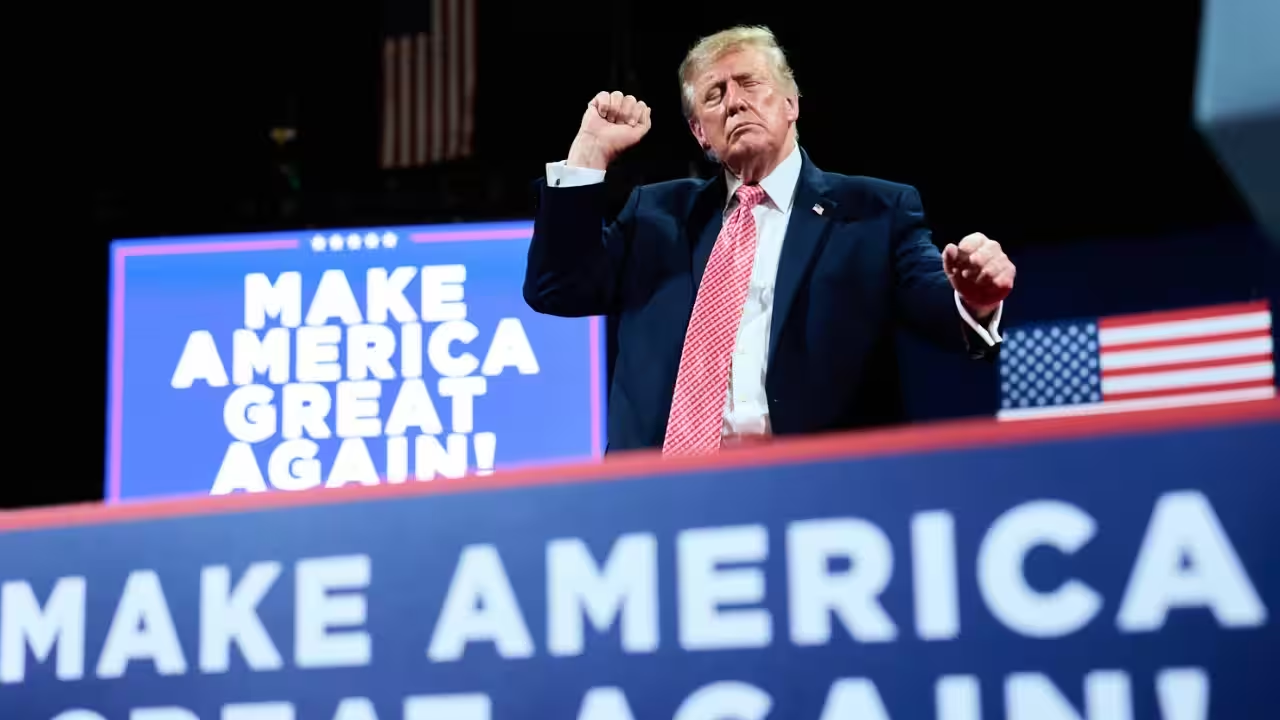
TOI Correspondent from Washington: First, he renamed the Gulf of Mexico the Gulf of America. Then he wanted Lake Ontario to be called Lake America. Now he wants New Mexico to become New America. At this rate, goes the joke, US President Donald Trump may soon rename America itself – perhaps call it New India, since Christopher Columbus, whose voyages helped bring the continent to European attention, was looking for India when he got here.“New Mexico should immediately change its name to New America. We are not Mexico, we are the United States of America!” Trump declared on Truth Social on Monday. The new name, he promised, would add “great value and prestige” to the state, boost residents’ pride in saluting the American flag and even ensure that “the Crooked Elections, that New Mexico is known for, would become honest again!”New Mexico’s political reps were unimpressed. Senator Ben Ray Lujan, a Democrat, reminded Trump that the state’s name dates back centuries, long before the United States itself came into existence. “We are New Mexicans. We’re proud of our name, proud of our home, and we’re keeping both. Long after Donald Trump is out of office, we’ll still be New Mexico,” he shot back.There is also a constitutional obstacle to the Trump threat, which some see as trolling: the state’s constitution does the naming and a presidential social media post cannot change that. Renaming it would require action through the state’s constitutional and legislative processes, as well as Congress. “No, Mr. Trump. The American people don’t want you to rename New Mexico... They want you to immediately end your illegal Iran War that is forcing Americans to pay $4.30 a gallon for gas and $6.30 a gallon for diesel. Enough,” clapped back Senator Bernie Sanders.New Mexico’s history stretches much further back than that of the country Trump wants to insert into its name. Spanish explorers entered the region in the 16th century, and Santa Fe, New Mexico’s capital, was established in 1610, decades before the English settlement at Plymouth and more than 150 years before American independence in 1776. Indigenous peoples had inhabited the region long before the Spanish arrived.The question of who named America is itself a reminder that geography and nomenclature have rarely followed a straightforward path. The name America was popularised by German cartographer Martin Waldseemuller, who used it on a world map in 1507 in honour of Italian explorer Amerigo Vespucci, whose accounts helped persuade Europeans that the lands across the Atlantic were a separate continent, rather than part of Asia.Christopher Columbus, meanwhile, had sailed west seeking a route to India, and he died in 1506 still believing he had reached India. Spain consequently referred to its American possessions as the West Indies, distinguishing them from the East Indies he had hoped to reach. Early European maps also used terms such as the New World and, in some cases, India Nova, or New India.In short, America was named after Vespucci, not Columbus, although Columbus’s voyages helped set the European encounter in motion. A Genoese navigator sailing for Spain went looking for India; a German mapmaker honoured an Italian explorer; and an entire continent acquired a name born of that chain of events. Truly, the 16th-century branding industry was nothing if not international.Indeed, cartographers note the continent was hardly nameless before Europeans arrived with their maps. Various indigenous tribes, notably the Lenape, Iroquois, and Anishinaabe, called America Turtle Island, referring to the creation story where the continent was built on the back of a giant turtle. Abya Yala, a term used by the Guna people of Panama, has gained wider currency among Indigenous activists as a name for the Americas. Many American states have indigenous names: Alabama, Connecticut, Massachusetts, Michigan, Minnesota, Mississippi, Missouri, Nebraska, Ohio, Oklahoma, Tennessee, Texas, Utah, Wisconsin and Wyoming among them.So if historical authenticity is the new test, trolls are suggesting that Trump could widen his campaign to rename Virginia (named after England’s Elizabeth I, the Virgin Queen); Maryland – honouring Queen Henrietta Maria; and New York, which commemorates a British duke. Restoring Indigenous place names where historically justified might be a more meaningful exercise than replacing an old name with what sounds like a real-estate development.There is also irony in the term “American-Indian” itself. Columbus’s geographical mistake helped give rise to the label applied to Indigenous Americans – Indians, and pejoratively, “Red Indians.” Clearly, Europeans’ confusion about where they had arrived left a lasting – and deadly – imprint on the people they encountered. So if Trump really wants to correct history’s naming errors, perhaps, chuckled one wag, he could start at home and rename America as New India, in honour of Columbus’s original destination.You use AI every day. Now get your AI Quotient. Take the AIQ test.
Topics in this story
Gathered from external sources. Rights to this text belong to whoever originally published it.