Coming off the pill: Why it's no longer the automatic choice when it comes to contraception
The proportion of young women taking the pill has dropped over the past decade - and experts say the reasons are complex.
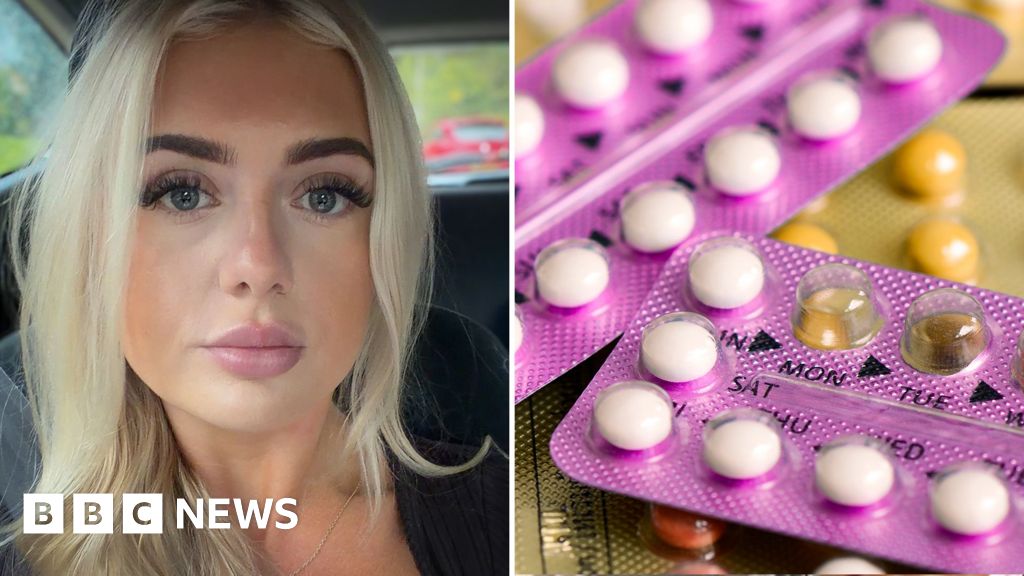
When the contraceptive pill was first launched in the 1960s, it was seen as a symbol of women's liberation, allowing them to take control of their own fertility. But over the past decade or so, attitudes have changed.
Now, the results of a major national sexual health study show the proportion of young women taking the pill has dropped by more than a third in a decade, from 48% to 32%. Among all women of reproductive age, use of the contraceptive pill has also fallen – just under 21% are on it, down from 29%.
Experts say the underlying reasons behind the figures are varied and complex. One factor could be that women now have more information about contraceptive choices, or that people are having less sex than the generation before them. So what's really going on? We asked three young women how they feel about the pill and spoke with experts about women's changing attitudes toward birth control.
Maddison Middleton, 24, came off the combined contraceptive pill last year. She had first started taking it aged 15 after experiencing painful periods, and although it made her period pain more manageable, over time Maddison began to question whether it was safe for her body to be on it for so long.
It was "purely just the thought of it isn't natural to be taking this pill all the time", says Maddison, who now uses condoms as well as a fertility tracking app.
Maddison says she was also concerned that taking the pill long-term might affect her fertility in the future and was worried about some of the side effects, although she never experienced any.
Studies show the pill, which prevents pregnancy by stopping the ovaries releasing an egg each month, has no long-term effect on fertility. But the NHS says taking the pill can cause side effects such as mood changes, and there is also a very small risk of developing blood clots as well as a slightly increased risk of breast or cervical cancer.
Despite this, it is seen as a safe and effective mode of contraception and remains one of the most popular, with millions of women taking it in the UK.
As well as a contraceptive, the pill is also commonly prescribed for a range of health problems including acne, painful periods, endometriosis and polyendocrine metabolic ovarian syndrome (PMOS).
Elle-Mae Thompson, 31, from Warwickshire, was prescribed the progesterone-only mini pill to help manage her PMOS symptoms such as acne and hormone fluctuations, but says it had a huge impact on her mental health and she ended up being signed off work for three months.
Her doctor suggested she might have progesterone sensitivity and she came off the pill earlier this year. She says that switching anti-depressants also helped, but that within days of coming off the pill, "I just felt clearer, felt better... this cloud had been lifted".
Elle-Mae believes doctors often "dish out [the pill] far too easily", without discussing the side effects.
Dr Neha Pathak, an NHS consultant who researches sexual and reproductive health, says the findings of the National Surveys of Sexual Attitudes and Lifestyles chime with what she is seeing in her surgery.
"I have seen more women come into my clinic with questions and concerns about using different methods and side effects - and that is a good thing," she says.
"Women should have the information to make healthy, informed choices."
But Pathak says we really need to understand whether some of the concerns around the contraceptive pill are "driven by misinformation" – and the potential perception that the synthetic hormones they contain are harmful because they are not natural.
The popularity of non-hormonal contraceptive alternatives has risen in recent years, and combined with the rise in using fertility tracking apps, there's an increased awareness and interest in the role our own hormones play in our bodies.
The NHS says fertility apps – which use measurements like body temperature to track fertile days – are more than 90% effective at preventing pregnancy when used correctly, but this falls to 76% if you do not follow the instructions exactly. In comparison, the pill and the mini pill are 91% effective with "typical use" and 99% effective with "perfect" use.
When Greta Costioli, a 29-year-old content creator, came off the pill after discussing it with her GP, she says she was inundated with supportive messages from her followers on social media. "People were really cheering me on."
But Greta, who had been on the pill for seven years to help manage her PMOS symptoms, says within months her symptoms had returned, so after careful consideration she tried a different type of pill.
Some people on social media were "really rude and judgemental" about her decision, she says, telling her that going back on the pill was "just a band-aid solution" and it wasn't "going to fix the root cause".
"It was like they rather I suffered than take the medication I needed for my condition," she adds. "Surely it's down to individual preference?"
Many women are now opting for other forms of contraception instead of the pill, according to the once-in-a-decade Natsal study, which surveyed 6,700 randomly selected people aged 16 to 59 across Britain between 2022-24.
Use of the hormonal coil increased from 4% to 10% over the last decade, the survey found – and Natsal is currently analysing its data to see how many women are now choosing to use fertility-tracking tools. Condoms are still widely used to prevent STIs with no notable change over the past decade, the study also showed.
Elle-Mae says she had a coil fitted earlier this year for contraceptive purposes, and while it still contains progesterone, it releases a very small localised dose which has not had such an impact on her mental health. However, it has not helped alleviate her PMOS symptoms, she says.
"My mum's generation [were] a generation of, 'yeah, yeah, go on the pill,'" she says, whereas now there are "different perspectives" and young women are considering other options.
That generational shift is something Prof Joyce Harper from University College London also recognises. In the 1980s she says it felt like "we were all just given the pill" and there was a nervousness about using the coil as a contraceptive.
"Women have more choice now," she says. "We have implants, injections, the coil, the hormonal coil, there is a lot more out there."
Despite more women choosing not to use the pill, the study says the number of unplanned pregnancies for women of all ages has not increased.
And the number of women not using any form of contraceptive has remained stable – although it is still a significant number, Pathak says.
"One in five women are still at risk of pregnancy by not using effective contraception and two in five pregnancies are unplanned or ambivalent," she says.
The study also suggested the fact that people are having less sex might also be part of the picture of why contraceptive choices are changing – and is something it wants to investigate further.
But the pill will always remain "very good for some people", Pathak says.
"It's so individual how you make a choice around contraception that I think there will always be something different that suits every person."
Dr Paula Briggs, a consultant in sexual and reproductive health at Liverpool Women's NHS Foundation Trust, agrees, highlighting that there are an "awful lot of positives" to the pill, while also acknowledging its side effects.
"It can reduce abnormal bleeding, pain, even the risks of some gynaecological cancers," she told BBC Radio 4's Today programme.
And the pill has continued to evolve, she adds, with different types of oestrogen, such as estradiol which is closer to the hormone we make in our bodies.
"The pill is not just one thing," she says. "We now have 20 plus different hormonal combinations."
For Greta Costioli, it's about choosing the best option. "As women," she says, "we need to be informed and make the best decisions for ourselves."
Third of young Brits have never had sex, but many are sexting and watching porn
I've been a sex educator for six years. Why did I start doubting my contraception choices?
'Pregnancy is a risk I'm willing to take': Why some women are ditching the pill
Why I don't regret choosing a vasectomy in my 20s
Topics in this story
Gathered from external sources. Rights to this text belong to whoever originally published it.