In 2019, two Bolivian sisters began floating native totora reeds on rafts made from discarded bottles; the Uru Uru Team later planted about 3,000 to restore the polluted lake
Rest of World News: Two Bolivian sisters, Dayana and Tatiana Blanco, lead a community initiative at Lake Uru Uru, using native totora plants and recycled plastic bottles to combat pollution and restore the ecosystem, significantly improving wildlife and local livelihoods.
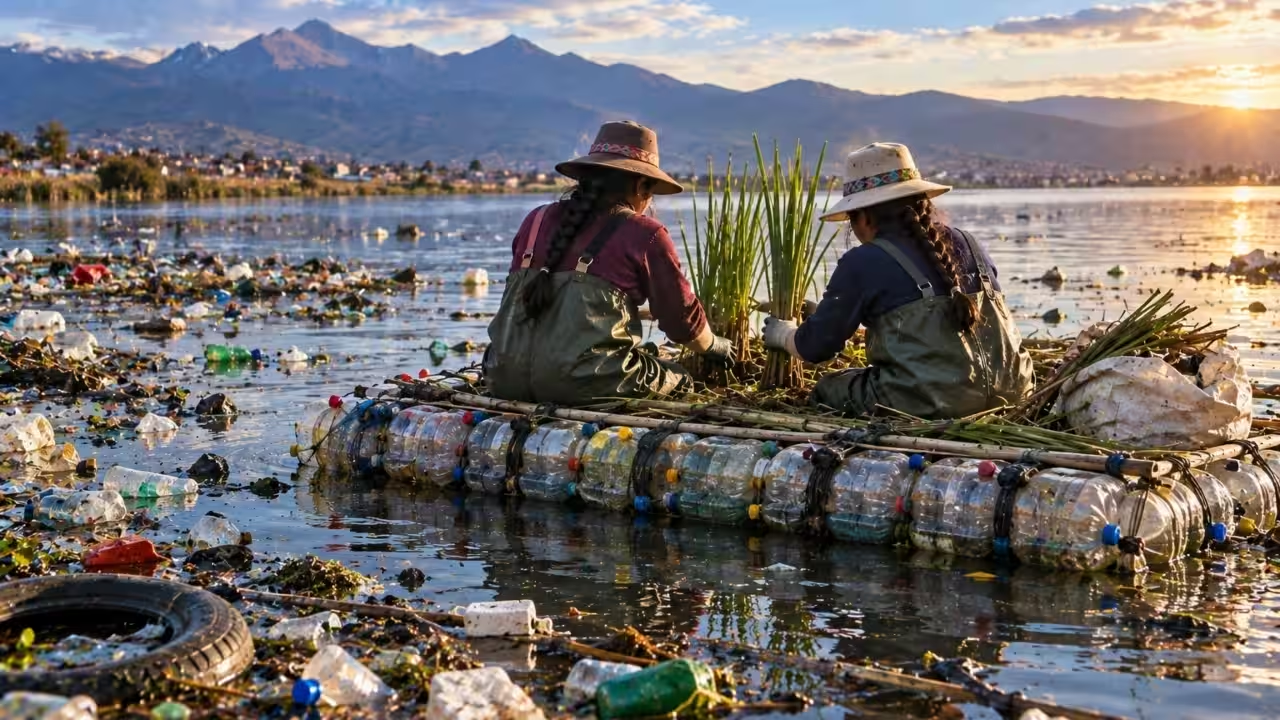
Lake Uru Uru, in Bolivia’s highlands, was once considered important to Indigenous communities that depended on it for fishing, irrigation, livestock and other everyday needs. Rich wildlife, including large numbers of flamingos, was also supported by the lake. But years of mining pollution, urban waste, plastic trash and changing rainfall and temperatures degraded the wetland drastically. In 2019, sisters Dayana and Tatiana Blanco and other young Indigenous women responded by forming the Uru Uru Team. They started experimenting with an aquatic plant their community had used for generations: totora.The team collected discarded plastic bottles from the lake and used them with a grid of sticks to build floating rafts, where they then transplanted about 600 young totora plants. The reeds, scientifically known as Schoenoplectus californicus, were chosen because they can survive in wet environments and have been used in the treatment of sewage and mining wastewater. The plant can absorb minerals and other contaminants, making it useful for phytoremediation.How plastic waste became a part of the restoration effortMost of the lake’s shoreline and water were heavily damaged, leaving little suitable habitat in which the women could simply re-establish totora. Instead, the recycled plastic bottles provided buoyancy while wooden grids created a surface on which the young plants could grow. This approach allowed discarded plastic collected from the polluted lake a second life instead of letting it remain as waste.The experiment came with uncertainty and challenges. In an interview with The Guardian, Dayana Blanco shared that the team initially doubted whether totora could survive in water with such high mineral levels. The team also had to contend with the foul smell of polluted water while planting the reeds. According to Dayana’s account to the Ramsar Convention, the group subsequently faced another challenge when cattle began eating the new plants, while people who attempted to establish illegal settlements around the lake also tried to damage the floating structures.These issues turned the project into a broader community effort rather than a simple planting exercise. Ramsar’s account reports that local elders shared ideas for making the rafts more durable, while community members built fences to protect the plants from cattle. Groups were also organised to protect the floating rafts from people trying to establish homes around the waterbody. The sisters' community garden reportedly helped generate income for work clothing and equipment needed for restoration activities.Testing the plant’s effectiveness on polluted waterThe lake’s problems extended beyond just plastic waste, as communities around the waterbody have faced pollution associated with mining as well as waste from nearby Oruro. Reports describe the lake as an internationally important wetland that supports flora, fauna and the livelihoods of more than seven Indigenous communities. The blend of pollution, climate-related changes and pressure around the lake has made restoration increasingly challenging.Eventually, the team sought laboratory evidence instead of relying solely on visible changes around the rafts. To obtain rigorous baseline data, the crew collected water samples from the project sites and transported them south to the laboratories at Juan Misael Saracho University in Tarija. The findings of the test suggested that areas of Lake Uru Uru where totora had been planted showed a 30% reduction in pollution. This figure refers to the areas treated with totora rather than demonstrating that pollution throughout the lake had fallen by 30%.The Guardian reported that by September 2024, the Uru Uru Team had planted about 3,000 totora plants, expanding considerably from the approximately 600 plants used in the initial effort. With the concept validated, the crew set an ambitious new operational milestone to scale up from their past averages and plant around 4,000 totora annually.The publication said that flamingos and other birds had begun returning to areas where restoration had taken place. Likewise, the Equator Initiative lists the return of flamingos and other waterfowl among the project’s impacts, thus providing an encouraging ecological signal.Restoring wetlands alongside a communityThe ecological decline at Uru Uru had not just affected the wildlife. Reports said that the communities that once used the lake for drinking water, fishing, crop irrigation and watering cattle could no longer use it due to the degradation of the waterbody. Uru Uru’s shoreline also receded as temperatures and rainfall patterns changed, while the expansion of Oruro contributed to construction around areas that had previously been protected.Therefore, against this background, the return of flamingos has become an important indicator for the team involved in restoration work, even though it is only one measure of the ecological recovery. Beyond floating rafts, members of the team volunteer at a school where they established a garden and teach students how to grow food and make compost. The group also collects paper and plastic for recycling, creating an additional source of income while encouraging waste reduction.The Uru Uru Team gained international recognition for their initiative when they received the UN Development Programme’s Equator Prize in 2023. According to the Guardian, UNICEF has also provided technical assistance to the group. Nevertheless, what began in 2019 with a small group of Indigenous women has grown into a larger restoration project and remains a work in progress.Catch the latest World News and Live updates. Download the TOI app.
Topics in this story
Gathered from external sources. Rights to this text belong to whoever originally published it.