In 2021, a Minnesota couple bought a deteriorating 1909 chapel for $115,000 and spent about $400,000 converting it into an Airbnb; it generated roughly $40,000 a year in gross revenue
Discover the journey of O'Mara and Adam Dunnigan as they buy and renovate a historic 1909 chapel in Minnesota, turning it into a successful Airbnb and event space. Learn about the costs, renovations, and income they generated from this unique investment.
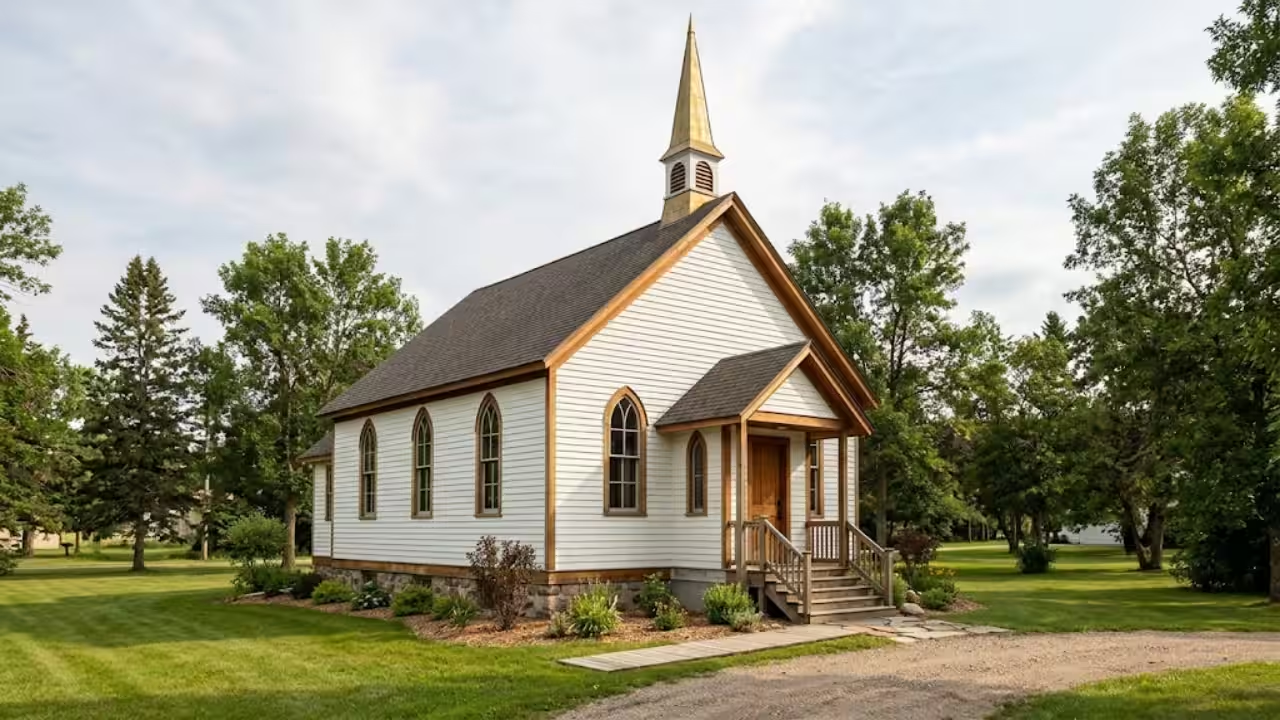
Small churches that once served as the centre of entire towns are becoming less active across the American Midwest. According to Lifeway Research, approximately 3,000 new Protestant churches were founded and 4,500 closed in the US in 2019. Many of those structures later serve as residences, studios or vacation rentals, but the entire cost of such a project is rarely disclosed. Compared to most, a church in northwest Minnesota provides a crisper picture.In 2021, O'Mara and Adam Dunnigan purchased a deteriorating chapel built in 1909 in Detroit Lakes for $115,000. They spent roughly a year and $400,000 converting it into an Airbnb and event space. In July 2024, O'Mara told Business Insider that the property generated about $40,000 in annual gross revenue, and the couple had listed it for $549,900. By April 2025, the asking price had dropped to $499,000, according to Valley News Live. These figures provide a picture of the purchase, renovation and reported income, but they do not establish the property's overall profitability.A chapel on the hillBy chance, or more by golf, the pair found it. While playing a round in Detroit Lakes in the summer of 2021, they noticed a small white chapel with a golden steeple on a tract of around 2.5 acres. The town is closer to Fargo, N.D., than it is to Minneapolis, and O’Mara said its population typically triples when the weather is warm, which made the concept of a rental a bit easier to believe. She’s in residential real estate, and Adam is an engineering director, so neither was starting from scratch.The peeling paint on the structure had a long history behind it. Fox 9 reports it was consecrated in June 1909 for the Saron Norwegian Lutheran congregation, while Valley News Live says services ended in 1960. The chapel was moved to its present home in 2000 and was a store and a location for events before the Dunnigans came. It was listed at $115,000 and was 3,061 sq. ft. Business Insider noticed that Zillow had the average property value in Detroit Lakes at $373,252; thus, the sticker price looked like a deal.Where the money wentTwo contractors took one look at the chapel and walked away. A local builder whose father had made church altars agreed to take it on. The work covered new support beams, insulation, a septic system, heating and cooling, plumbing and electrics, and the couple chose to keep several original features rather than strip them out. Valley News Live reported that insulation alone costs $26,000 and the septic system another $15,000. O’Mara said the 65-foot steeple was the hardest part to restore. Add the renovation figure to the purchase price and the total comes to roughly $515,000. That sum says nothing of the time two working parents gave to the project. The result was a three-bedroom home with two and a half bathrooms that doubles as a rental and a venue.What it earnedThe property operated throughout the year, with guests paying roughly $250 a night, according to O'Mara. Guests used it for graduations, birthdays, anniversaries, weddings and baby showers. In June 2024, the Dunnigans also renewed their wedding vows there after 15 years of marriage. O'Mara estimated annual gross revenue at about $40,000. That figure represents income before cleaning, utilities, insurance, taxes, maintenance and other operating expenses are deducted, so it should not be treated as profit.The couple later decided to sell because their work schedules were demanding and they wanted to focus on a vacation property they had purchased in Portugal. Business Insider reported an initial asking price of $549,900 in July 2024. By April 2025, Valley News Live reported that the price had been reduced to $499,000. These were asking prices, not confirmed sale proceeds, and they do not establish whether the couple recovered the purchase and renovation costs.The project illustrates why the purchase price alone does not reveal the cost of converting an old building into a rental property. The chapel cost $115,000, and the reported renovation spending brought the combined amount to about $515,000 before other expenses. The estimated $40,000 in annual gross revenue does not account for operating costs, and the property's asking price does not prove what a buyer would ultimately pay. The case offers a useful look at the financial demands of converting an unusual historic building, but the available figures are not enough to determine the couple's overall profit or loss.You use AI every day. Now get your AI Quotient. Take the AIQ test.
Topics in this story
Gathered from external sources. Rights to this text belong to whoever originally published it.