Iran discovers over 7.5 trillion cubic feet of gas reserves as US blockade squeezes energy sector
Middle East News: Iran has discovered more than 7.5 trillion cubic feet (tcf) of natural gas in its southern Fars province, even as months of conflict with the US and I.
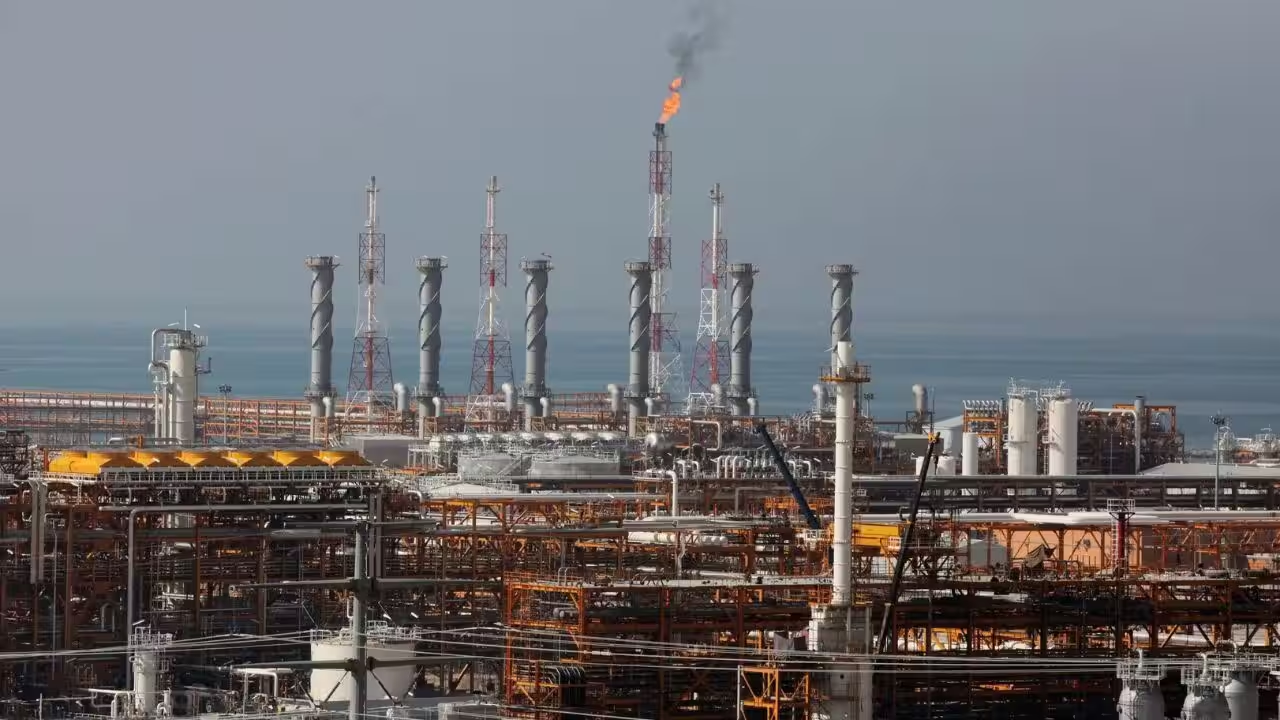
Iran has discovered more than 7.5 trillion cubic feet (tcf) of natural gas in its southern Fars province, even as months of conflict with the US and Israel have disrupted the country's energy sector.Around 5.7 tcf of the newly discovered gas is recoverable, Iranian oil minister Mohsen Paknejad told state television on Sunday. He said the recoverable reserves were equivalent to around 15 years of production from one phase of South Pars, the world's largest gas field, which Iran shares with Qatar.The discovery also includes gas condensates worth âtens of billions of dollarsâ, Paknejad said, adding that Iran plans to develop the resources âas soon as possible.âHowever, actual production is likely to take years. Iran's energy sector was already struggling with Western sanctions, underinvestment and power shortages before the latest conflict.War hits Iran's gas productionIran lost around a quarter of its daily gas production capacity after attacks on energy infrastructure began in late February, according to Bloomberg. The attacks included strikes on facilities at South Pars.Although some production capacity has since returned, the Iranian government has warned of possible gas shortages this winter and urged citizens to reduce consumption.The latest discovery comes as Tehran faces growing economic and energy pressures amid its confrontation with Washington.Hormuz tensions escalateTensions between the US and Iran also intensified over the Strait of Hormuz, a key global energy corridor. US President Donald Trump again shared an image on Truth Social depicting the strategically important waterway as ânew US territoryâ, after sharing the same graphic on August 18. Trump had earlier said, âPretty soon I'll be declaring the Strait of Hormuz a territory of the United Statesâ.Iran has rejected the US territorial claims and maintained that the waterway will remain closed unless Washington changes its position.Iran's Supreme National Security Council secretary Mohsen Rezaei criticised Trump's remarks, saying, âThe gap between America's inability to reopen the Strait of Hormuz and its claim to own it is greater than the 7,000-mile distance between Washington and the Strait itself,â adding, âWelcome to the post-American order in the Persian Gulf.âThe confrontation comes as the US prepares additional economic measures against Tehran. US Treasury Secretary Scott Bessent is expected to announce what he has described as âthe toughest sanctions in historyâ against Iran and has urged China to cooperate with Washington over Iranian oil shipments.Iranian foreign ministry spokesperson Esmaeil Baghaei criticised the planned measures, saying, âSuch secondary sanctions find no foundation in international law,â in a post on X on August 22.Rezaei also warned neighbouring countries against supporting the US measures. âWe are telling all nearby countries not to join the US economic war, otherwise we will consider them as enemies,â he said.Despite the escalating rhetoric, Iranian officials have indicated that Tehran remains open to diplomacy. Iranian President Masoud Pezeshkian has called for diplomatic engagement to resolve the standoff, while stressing that Iran must protect its national strength and dignity.Catch the latest World News and Live updates. Download the TOI app.
Topics in this story
Gathered from external sources. Rights to this text belong to whoever originally published it.