Evacuations begin in occupied Ukrainian town as Melania Trump-brokered ceasefire holds
Hundreds of people from an occupied town in southern Ukraine who survived months without basic supplies are set to be evacuated on Friday under a ceasefire agreement negotiated by first lady Melania Trump.
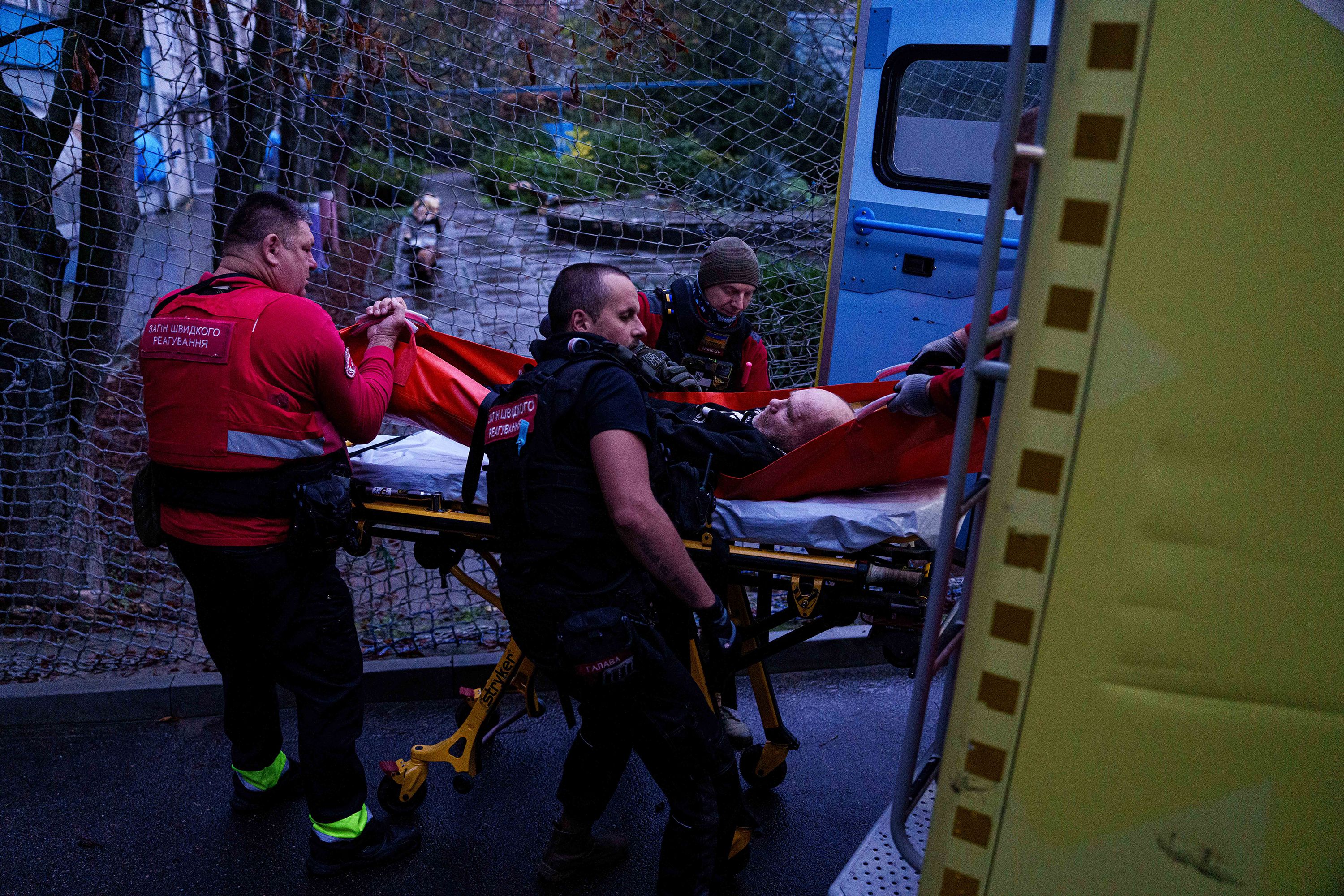
Hundreds of people from an occupied town in southern Ukraine who survived months without basic supplies are set to be evacuated on Friday under a ceasefire agreement negotiated by first lady Melania Trump. The town of Oleshky in the southern Ukrainian region of Kherson has been under continuous Russian occupation since April 2022. Some 2,000 people, including 50 children, have been stuck in the badly destroyed municipality, Ukrainian authorities say. All access routes were either heavily mined or swarming with drones, making an escape impossible. The humanitarian situation has deteriorated in recent months. The town was reported by Ukrainian authorities to have ran out of food and other supplies in September, with no access to electricity, gas, medicine, and other essentials. The dire situation has raised alarm around the world, with international organizations, faith leaders and others calling for urgent action. Residents have been reportedly resorting to searching for scraps and eating weeds, with bodies of people who died left in the streets. The temporary truce went into effect on Tuesday and has since expanded across the Kherson region. The ceasefire has also brought relief to Kherson, the Ukraine-controlled capital of the region, which has been under near constant drone attacks from Russia. It is set to expire on Sunday. Ukraine’s ombudsman Dmytro Lubinets traveled to Oleshky to personally escort the evacuees into Ukraine-controlled territory – becoming the first high-profile Ukrainian official to openly travel to occupied areas under Russian control and Russia since the start of the war. “We are in Oleshky,” he said in a statement. “People who want to go to the territory of the Russian Federation are gathering here, and there are people who want to leave for the territory of Ukraine. Everyone will be provided with such an opportunity.” Lubinets’ Russian counterpart, Yana Lantratova, was also present in Oleshky and the two were seen in videos standing next to each other while talking to local residents. The evacuation is scheduled to begin in early afternoon local time. According to Lubinets, 25 buses with the capacity of 750 seats are part of the operation. They are expected to travel through Crimea, Russia and Belarus and arrive to the Ukrainian border at some point on Saturday. Videos shared by Lubinets’ office show the ombudsman greeting groups of emotional residents in Oleshky, discussing their journey. In one, he is seen talking to people leaving about those who want to stay, telling them, “I was told that it’s their own choice. We will at least make sure that at least some humanitarian aid comes.” Some 40% of the town’s prewar population of around 24,000 managed to flee to Ukraine-controlled territories when it was still possible early in the war, according to the Institute for the Study of War, a US-based conflict observer. Thousands of others have escaped since then, but many remained, either unable or unwilling to leave. The town plays an important part in Russia’s military operations in the region. It sits near the banks of the Dnipro river, directly opposite Ukrainian positions. As the two sides fire at each other, the people in Oleshky are caught in the middle. All escape routes towards Ukraine gradually disappeared as the Russian occupation intensified. And while it had previously been possible to flee the city by going deeper into Russia-controlled territory, this has also become impossible in recent months, as fighting intensified and all routes out were either mined or swarming with drones. Ukraine’s President Volodymyr Zelensky has accused Russia of mining the access routes to the town in an effort to stop people from leaving.
Topics in this story
Gathered from external sources. Rights to this text belong to whoever originally published it.