In 1989, New York paved two test roads with ground-up tyre rubber; after 3 years, the state transport department judged neither project economical nor successful
In 1989, New York paved two test roads using ground-up tyre rubber, hoping to reduce waste and improve road longevity. After three years, the state found the project neither economical nor successful, echoing sentiments from other states involved in similar initiatives.
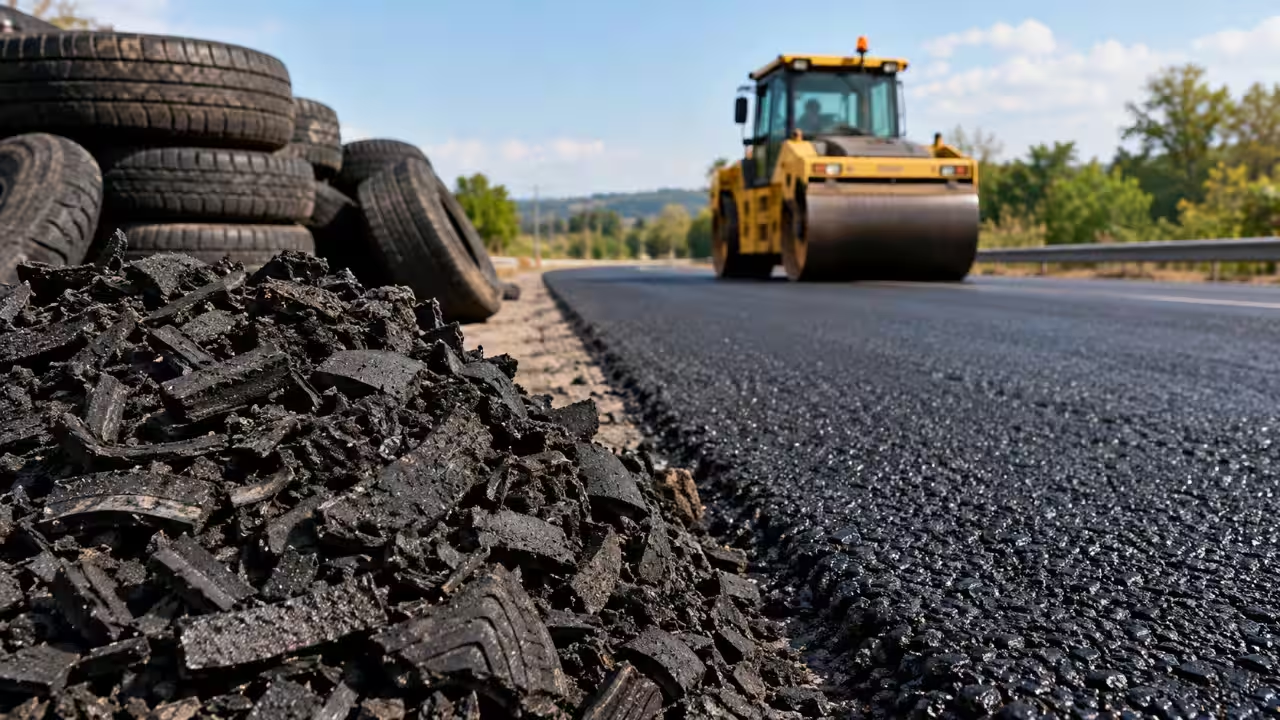
Turning old tyres into roads sounds like a win-win situation. It would cut waste, and roads could last longer. New York tried that idea in 1989. The state paved two test roads with ground-up tyre rubber in the asphalt, according to a Federal Highway Administration guide on waste materials in pavement construction. Three years later, the state transportation department said neither project was economical nor successful.Why New York ran the test In 1987, state lawmakers instructed the transportation department to carry out a pilot project involving recycled tyre rubber on state roads. This is explained in the progress report of the New York State Department of Transportation covering the first three years after the roads were built. The project resulted in the construction of two experimental roads during the summer of 1989. Each road had five test sections. Each test section was 2,000 feet long. Three sections had 1%, 2%, or 3% rubber by weight of the mixture. One section used a branded additive with larger pieces of rubber. The other had a standard mix kept for comparison. Both roads used what engineers called the dry process. In this particular process, ground rubber replaces a part of the fine aggregate in the mixture. The federal guide notes the most common US version came from Sweden in the late 1960s. It was sold in the US under the trade name PlusRide. The New York mixtures were applied as an overlay about 1.5 inches thick on top of the concrete roads.What the early results showedThe state didn't just pave the roads and walk away. The progress report covers the first three years of tests. Engineers recorded how the roads were behaving twice a year. They took note of the type and location of damage. They ran deflection tests, which measure how much a road flexes under heavy load. Lab tests provided additional data. The early results were not quite promising. The report states that the rubber pavements were not performing as well as the regular mixes. The federal guide agrees with the state's finding. After three years, the New York State Department of Transportation did not see either of the overlay projects as economical or successful.Other states had similar letdownsThe guide also provides information about the results from other states. Minnesota adopted the dry process on at least two projects since 1979. The roads performed well. However, they didn’t produce sufficient benefits to justify the higher cost. In Texas, one district’s rubber mix performed poorly and required a chip seal covering within three months. Washington State started using the dry process in 1977. The seven PlusRide road sections from Washington State varied from excellent to immediate failure. Eight dry process projects in Ontario, Canada generally performed poorly in the short term. The guide states that the results have been a mixed bag, with early failures being observed. It says that roads in service for several years showed little gain over regular overlays.What the story doesn't prove That is not to say that tyre rubber doesn’t belong on roads. Both New York projects tested only one technique, the dry process. Most of the crumb rubber data is from the wet process. That method mixes rubber into the asphalt itself. The dry-process projects above varied widely in performance across locations and climates, and the guide cites a lack of field data to evaluate the method’s performance. More carefully controlled test sections are needed in different climates to get further insight. The guide says such sections may need to be monitored for at least five years, and possibly as long as 30. Recycling a material isn’t the same as improving a road. A green road has to work in the real world, with real traffic and make sense from a cost perspective.You use AI every day. Now get your AI Quotient. Take the AIQ test.
Topics in this story
- tyre rubber asphalt
- rubberised roads
- New York transportation department
- road construction innovations
- recycled materials in road paving
- New York State Department of Transportation
- rubber road technology
- eco-friendly road construction
- tyre recycling
- road performance comparison
- dry process pavement
- road durability tests
Gathered from external sources. Rights to this text belong to whoever originally published it.