HR in Indian Navy
We officers perform HR duties from the very early period of our career.
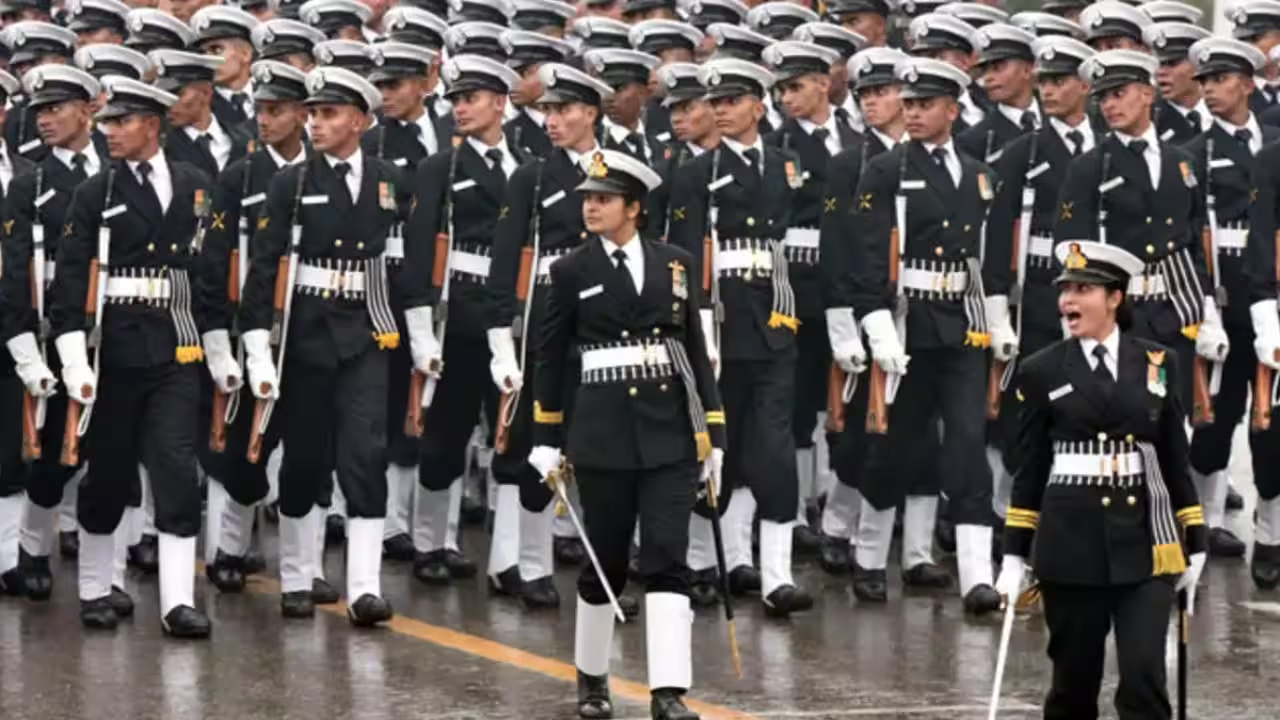
We officers perform HR duties from the very early period of our career. And yet, for many years I was unaware of this term called HR (Human Resources), which flows in the bloodstream of the Navy. After a few years of experience, when I learnt that the ACOP (career planning) shall now be called Assistant Chief of Personnel (Human Resource Development- HRD), my attention was drawn to the term HR.Navy accords much priority and importance to HR, and a vast organisational set up supports the HR system. All the aspects of HR – recruitment, training, staffing, promotion, discipline, welfare and post-retirement care are undertaken by the HR organisation of the Navy. The amount of time, money and manpower invested in the implementation of the various policies is significant, and in my opinion only a few organisations may match the Naval system. Only the Army and Air Force have a similar system. The reason to accord such high priority is to meet the critical aims and objectives of the Navy, which are to protect the nation/win the war/provide national security. All organisations invest in HR in accordance with the Aims and objectives of the organisation. The Navy objectives have nationwide ramifications and therefore require a matching policy of HR. Organisation At the apex under the Chief of Naval Staff, there are four PSOs (Principal Staff Officers) responsible for Operations, Planning & Administration, Material & Maintenance, and Personnel (COP). The COP (Chief of Personnel) is of Vice Admiral rank and reports directly to the CNS. Therefore, one distinct wing is responsible for the HR of the Navy. Under him, there are numerous senior officers, Directors looking after the various aspects of personnel management – recruitment, selection, manpower planning, training, appointments, promotion boards, disciplinary action, ex-servicemen affairs, pay and allowances, welfare, civilian administration, etc. A similar organisation exists at Command level where Chief Staff Officer (Personnel and Administration) reports to the Commander -in -Chief.Recruitment and selectionThe men are recruited through a wide network of recruitment centres spread out across India in order to provide opportunity to all the states. There is a written examination, physical test and interview. A separate directorate looks after these functions. The officers are selected through UPSC (Union Public Service Commission), which conducts a written test, and thereafter the various SSBs (Service Selection Boards) in various stations conduct screening, psychological test, group discussions, physical tasks, group tasks and interviews spread over three to four days. This system is unique to the Armed Forces and has withstood the test of time.Training The Navy has three Commands, two operational and one dedicated Training Command Headquartered in Kochi under a Commander–in–Chief who reports to CNS. The initial and subsequent training of officers and men is conducted in a planned and systematic manner by this command. The Training Command is the prime mover of ‘Human resource development’. All newly recruited sailors report to INS Chilka in Odisha for initial training, and after six months, when branches are allotted to them, they are transferred to the particular training establishments functioning in different locations such as INS Shivaji for engineering in Lonavala, INS Valsura for electrical in Jamnagar, INS Hamla for Logistics in Mumbai, INS Venduruthy for seamen training in Kochi. Thereafter, they have to undergo courses at every stage of promotion and return to training establishments periodically. In addition, they also do leadership courses and Management courses when they become senior. Training and enhancement of skills is therefore a continuous process.Officer cadets are trained for four years at the Indian Naval Academy built in Ezhimala, Kerala, from where they obtain a BTech degree in order to be technically proficient to deal with the capital-intensive Navy. Some cadets are also trained in NDA (National Defence Academy) at Khadakwasla near Pune for three years, which is an inter-service institute. Thereafter, they join the Indian Naval Academy for the final year. All cadets proceed to ships for further training after the Academy phase. Ships are stationed in Kochi only for training purposes and are part of the training command. Training of technical cadets is conducted in Shivaji and Valsura after the initial training in Naval Academy. After commissioning, all officers of the executive branch undergo a full one-year training at the various training establishments – Navigation school, Signal school, Gunnery school. Anti -submarine warfare school, etc. Officers thereafter return to these schools after three years for specialization as nominated and become specialist officers. It does not end here! In order to be promoted and seek command, all executive officers have to pass the Command Exam and Staff College entrance exam. Some get selected to undergo staff college at Wellington, Nilgiris, a very prestigious course. Technical officers enhance their skills by being sent to IITs for MTech. On promotion to Captain, officers undergo the Higher Command course in War College in Goa; later, some of them who are Admiral material go to NDC (National Defence College) in Delhi, a joint service institute. Officers and sailors also have to undergo training and OJT (on-the-job training) when they are appointed to new ships with different weapon systems. Therefore, in a career spanning 20 years, an officer is in training for about 4 years on average after being commissioned.Management of personnel – Posting, promotion, welfare A dedicated and distinct establishment- ‘Bureau of Sailors’ headed by a senior officer and assisted by many officers at Mumbai- looks after the posting, promotion, annual confidential reports, and post-retirement placement of all sailors. On board, all sailors are in various divisions in accordance with their specialization. An officer is nominated as Divisional Officer who maintains the service documents of the sailors under him and monitors their progress, leave, discipline and other matters. The divisional system in the Navy is the core strength of the service. The various heads of department initiate ACR (Annual Confidential Report) of the officers under them, and the Captain reviews the same. Not only the performance, but the choice of courses, transfer, etc are noted for consideration. The details of school-going children are noted for next posting and appointment.All sailors are given 60 days' leave and also casual leave. A system of leave encashment on retirement also exists. In order to provide continuity in station posting, criteria are implemented as policy so that the education of children is not hindered. Sufficient accommodation is available in each station, and though not all personnel get accommodation, the HRA is useful. Sports and recreation facilities and medical care are accorded primacy in all stations. Military stations are a big homogeneous family. There is a dedicated Pay Office and Pension Office to monitor and credit all pay and allowances in time. As part of the social security group insurance is provided to all, and it has a good savings element; provident fund, gratuity give support post-retirement. Housing, educational loans against insurance schemes, provident fund, and benevolent funds are available in reasonable terms.Post-retirement placement is assisted by the Indian Navy placement department. A large number of courses in universities and management institutes are available for those retiring, and financial assistance and help are also accorded. Navy foundation exists in all major stations, and the officers and families meet regularly. A separate directorate, DNV (Directorate of Naval Veterans) looks after all retired personnel. Medical facilities in Military hospitals and civil hospitals are also available.Discipline A separate directorate deals with all disciplinary cases, and at the Command level the Personnel department takes responsibility. Commanding Officers are delegated powers of punishment, and defaulters are marched to him every week, wherein sailors are brought to his table, and cases are dealt. In certain cases, summary trials and court-martials are also ordered. Under the Navy Act of 1957, certain fundamental rights of personnel are abrogated, such as freedom of speech and freedom to form associations, and these are strictly adhered to.All the above is structured to provide a formidable human force to counter, sustain and prevail upon an enemy in any hour of reckoning. Above all, it gives all personnel a career of immense satisfaction and dignity on which rests the humanity.Disclaimer: Views expressed above are the author's own.
Topics in this story
Gathered from external sources. Rights to this text belong to whoever originally published it.