Roman toddler's drinking cup goes on display in Cirencester museum
The tettine was found in an archaeological dig about 15 years ago but has only just been restored.
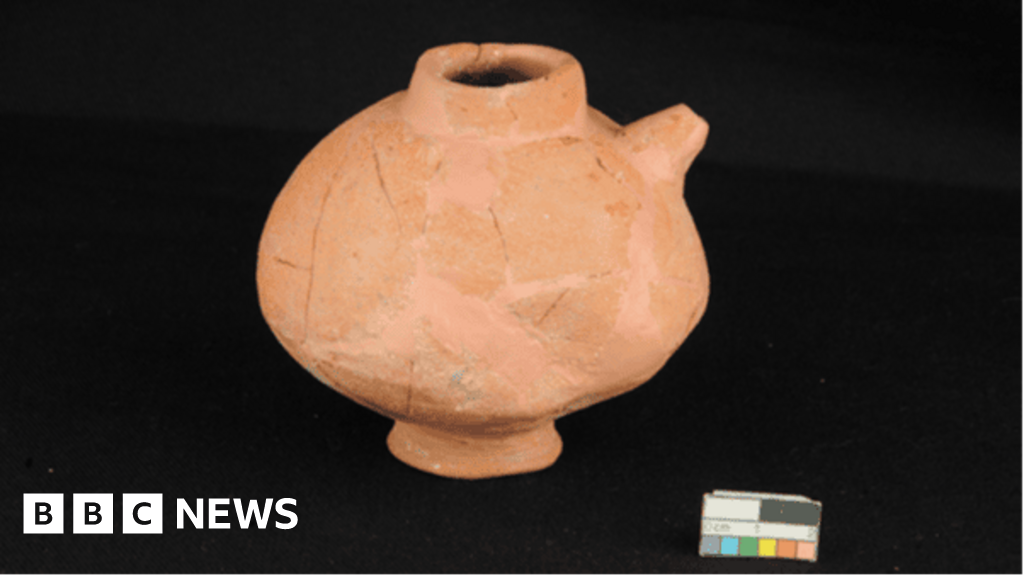
A 2nd-Century Roman toddler's cup is being displayed at a museum for the first time.
The cup, or tettine, was found in fragments by archaeologists during excavations in Cirencester, Gloucestershire, in 2011 and has been painstakingly restored.
It will go on display at the town's Corinium Museum with other artefacts found at the same time, and sheds light on a sad story from nearly two millennia ago.
Emma Stuart, museum director, said: "Infant mortality during the Roman period was higher than it is today," adding the tettine had been found with a Roman cockerel figurine thought to have been made to accompany a child's grave, and was likely placed "to provide sustenance to the child's spirit".
Halloween 'bigger than Christmas', say businesses
Why some have no choice but to pay costly oil prices
'Extremely rare' Roman coins up for sale
Stuart added: "The parents also placed the cockerel, a representative of the god Mercury, to crow the way to the underworld so that the child's spirit didn't get lost on the journey.
"It is a sad and touching story but one that is imbued with care and concern."
The cup was rebuilt and conserved by Lynne Edge, of Edge Conservation, and finished by Wiltshire's Conservation and Museum Advisory Service team, with funding from Friends of Corinium Museum.
"We are proud to have funded the conservation of the tettine cup and to help reunite it with the Corinium Cockerel," said Kathryn Allison from the Friends of Corinium Museum.
The unveiling of the new display coincided with the Cirencester History Festival, which uses the cockerel as its mascot.
"We chose the Corinium Cockerel as our festival logo with great enthusiasm," said Jess Yarrrow, festival director, adding: "It's a nod to the ancient city beneath our feet."
"To see it reunited with the conserved tettine cup after all this time is genuinely special and poignant," she added.
"It connects us directly to the people who walked these streets two millennia ago, which is at the heart of everything our festival stands for."
Follow BBC Gloucestershire on Facebook , X and Instagram . Send your story ideas to us on email or via WhatsApp on 0800 313 4630 .
Mosaic fragment 'thought lost' to go on display
Museum buys Iron Age hoard found by detectorist
Roman mosaic returns home after 200 years
Topics in this story
Gathered from external sources. Rights to this text belong to whoever originally published it.