A Virginia couple spent about $1,000 turning their overgrown one-acre backyard into a miniature state park; winding trails and native flowers now attract butterflies, bees and hummingbirds
When Brittany Lafave and Ryan Webb moved into their first home in Virginia last winter, the one-acre backyard did not look much like a finished garden.
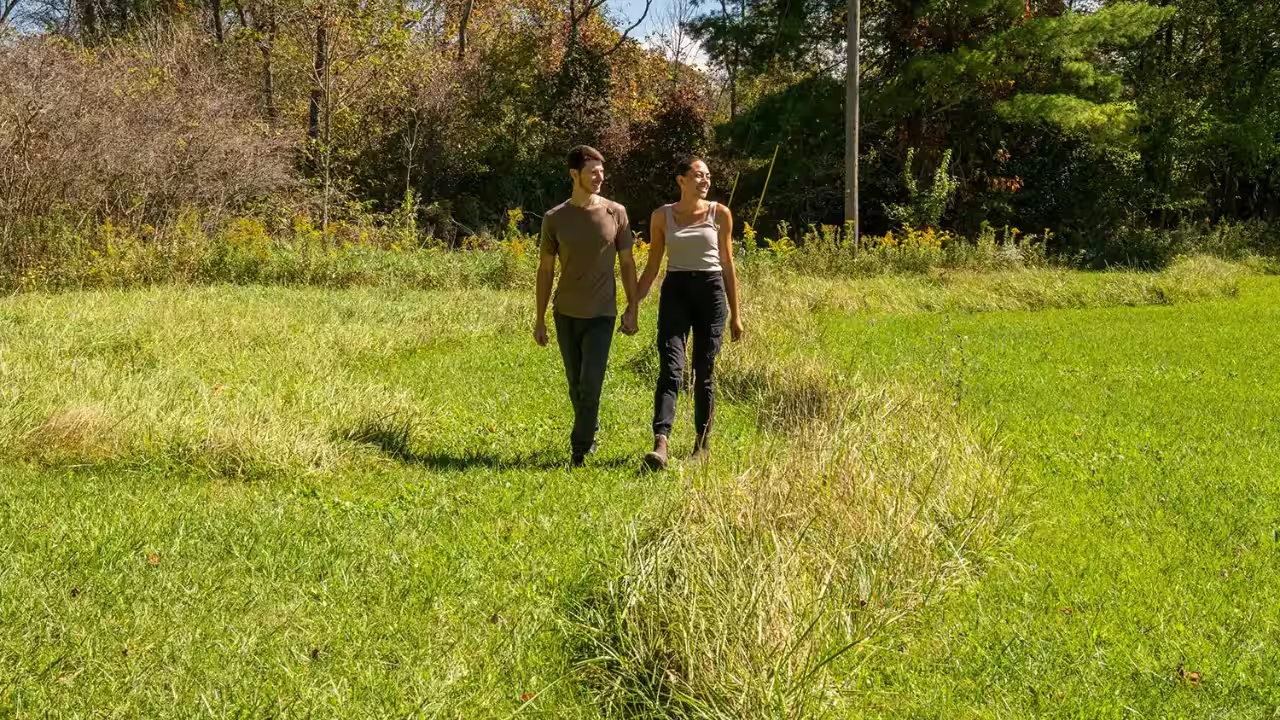
When Brittany Lafave and Ryan Webb moved into their first home in Virginia last winter, the one-acre backyard did not look much like a finished garden. Much of it was covered in grass or left overgrown, with mature trees, old garden beds and other remnants of the property's previous life scattered around.Instead, the couple decided to keep much of what was already there and gradually turn the space into a miniature version of the state parks they enjoy visiting in the Blue Ridge Mountains.Six months into the project, the yard has winding trails, meadow-like areas and native planting. Butterflies, bees, hummingbirds and other wildlife have also begun appearing around the property. According to PEOPLE, the couple has been carrying out the work in small stages rather than treating the acre as one large landscaping project.How the Virginia couple turned existing features into a backyard state parkThe idea developed from the couple's habit of exploring the Blue Ridge Mountains. Once they had a property of their own, Lafave and Webb began thinking about whether some of the experience of walking trails and spending time among nature could be recreated at home.They already had a useful starting point. Mature trees were established across the yard, while existing beds and old materials could be incorporated rather than removed. That changed the project from a conventional garden makeover into something that could evolve gradually.A concrete pad hidden beneath the ground became one of the first features they decided to build around. A dead tree on the property is also being kept for another purpose. The couple plans to turn it into a bench, echoing the simple seating often found along public walking trails.A $200 mower helped shape the couple’s winding backyard trailsInstead of covering the property with conventional paths, Lafave and Webb began mowing routes through areas of longer vegetation. The result gives the yard separate places to walk towards without requiring extensive hard landscaping.Some sections are deliberately allowed to grow higher. That has created a mixture of open ground and taller plants, producing what Lafave describes as useful habitat around the edges.Rabbits, chipmunks, groundhogs and birds have been seen around the property, using the vegetation and open areas for food, cover and movement. The couple's decision to leave portions of the yard alone has therefore become part of the wider design rather than something they need to tidy away.As reported by PEOPLE, the change was also inexpensive compared with a conventional landscaping overhaul. During spring, the couple bought a display-model lawn mower from Lowe's for $200. It had been marked down from a retail price of about $450 and gave them a practical way to maintain the paths and grassy sections.Unexpected plants lead to a more wildlife-friendly gardenAs summer arrived, the yard began producing some surprises of its own. Plants appeared in sections that Lafave and Webb had not deliberately planted, including cardinal flowers, goldenrods and asters.Her planting method remains deliberately small-scale. A typical nursery trip involves choosing one flower, often costing about $10, and finding a place for it in one of the existing beds. The changes could be noticed quickly. Lafave says that after planting the first flower in one bed, she saw a butterfly there within a day and a hummingbird arrived several days later.For the couple, the native plants also fit the practical side of their project. Plants suited to local growing conditions generally need less intervention than a garden that depends heavily on watering and fertilising.The spending has been spread across small projectsThere was never a single large landscaping budget. Lafave has instead treated each addition as a separate project, usually keeping the cost below about $150 and sometimes buying materials over several weeks.According to PEOPLE, the couple estimated that they had spent around $500 to $600 on the backyard during the first six months. That included roughly $150 for miscellaneous tools, about $100 for decorative and landscape lighting, an $80 picnic bench bought on clearance and around $50 on flowers.The $200 mower was another significant purchase. Later, they put another $300 into a produce garden, including fencing intended to prevent deer and other animals from getting into the crops.That puts the spending at roughly $1,000 when the later produce garden is included, although the couple's original work was carried out in much smaller installments. The project continues to develop in the same way.Lafave has also taken a cautious approach to buying equipment. Rather than paying for expensive tools immediately, the couple generally starts with a cheaper option. If they use something often enough to wear it out, they know an upgrade is likely to be worthwhile.Social media has changed the project tooLafave has been documenting the backyard's progress on TikTok, where the project has attracted people with their own knowledge of native plants and wildlife-friendly gardening.The interaction has become an informal source of advice. Followers have suggested plants, explained habitat-creation techniques and introduced Lafave to ideas she might not otherwise have encountered.There is a wider ecological idea behind that, although the couple are careful about the scale of what they are doing. A single acre cannot replace a large natural landscape. But gardens, meadows and wooded areas in different properties can provide small pockets of shelter and food for wildlife.Lafave has described these individual spaces as potential stepping stones between larger habitats. Her aim is not to suggest that one backyard can restore an ecosystem, but to make better use of the land they already own.The couple keeps adding new features to their backyard parkThe transformation is still unfinished. Native flowers are being added gradually, while the vegetable garden has brought another practical element to the property. The couple's original one-acre yard has consequently become less about maintaining a uniform lawn and more about creating different areas with different purposes. There are paths to walk along, longer vegetation to leave alone, planted beds, places to sit and areas for growing food.The couple's stated goal remains relatively simple: to recreate some of the features they enjoy in state parks on a much smaller scale. Six months into the work, the overgrown yard they inherited has already become a very different kind of outdoor space, built piece by piece rather than through one major renovation.You use AI every day. Now get your AI Quotient. Take the AIQ test.
Topics in this story
Gathered from external sources. Rights to this text belong to whoever originally published it.