Lone holdout juror in Lindsay Clancy mistrial says he has felt harassed
Michael P. Desronvil, the lone holdout juror in Lindsay Clancy’s high-profile murder trial, said he has been harassed since the trial ended in September.
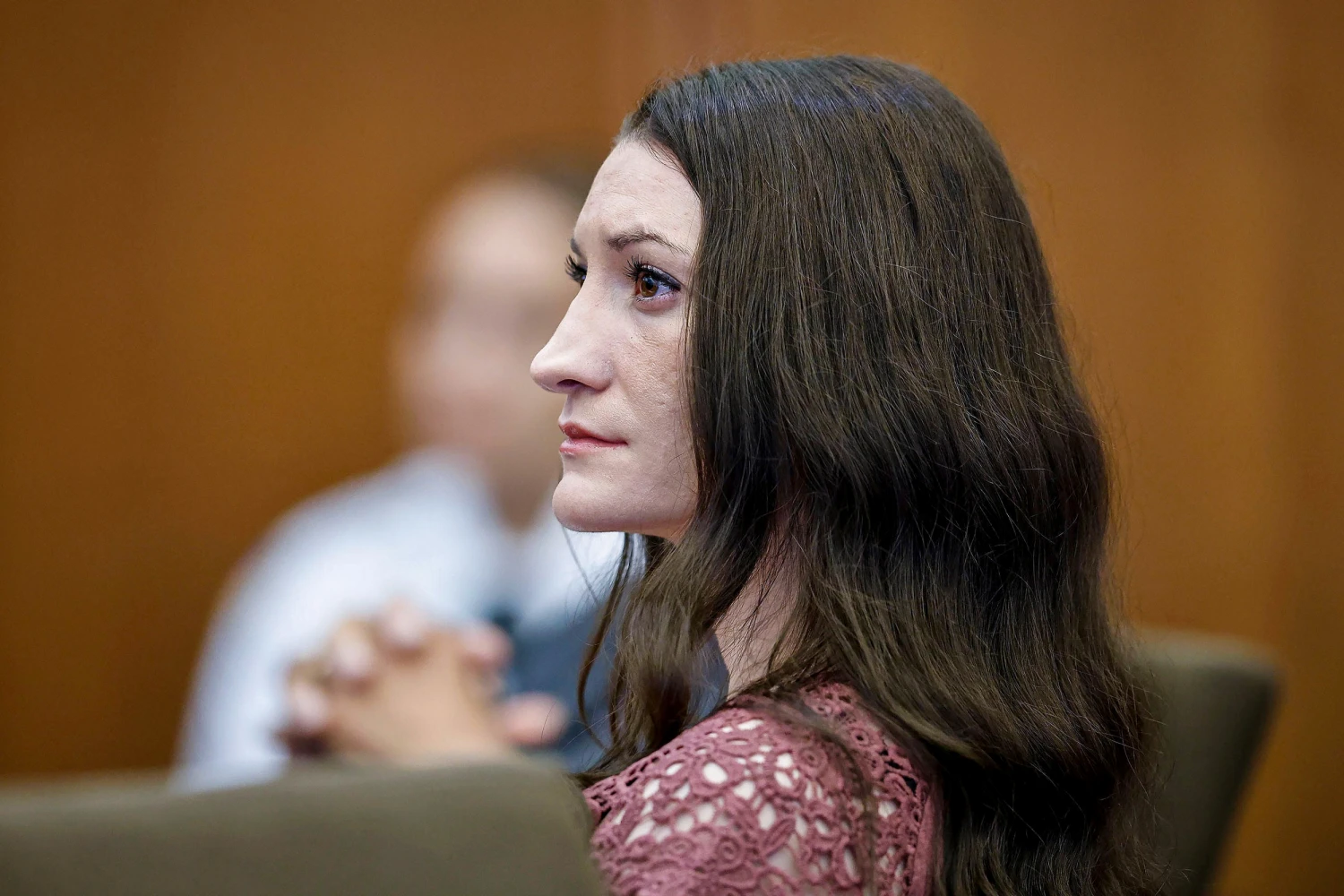
The lone holdout juror in Lindsay Clancy’s high-profile murder trial said he had been harassed since the trial ended in September, and doubled down on his stance that he did not have reasonable doubt during deliberations. The juror, Michael P. Desronvil, was the sole holdout who wanted to convict Clancy in the strangulation deaths of her three children — Cora, 5, Dawson, 3, and Callan, 8 months old — in January 2023, other jurors have said since the judge declared a mistrial in the case last month. “It was like night and day,” Desronvil said of his life before and after becoming the holdout juror. He spoke with Kayleigh McEnany on “Fox & Friends” on Thursday — his first media appearance since serving on the jury. Other jurors have described a man they claimed was unwilling to negotiate and hostile in the deliberation room. They said that Desronvil was insistent on convicting Clancy of the murders, but that he was not following the standard of reasonable doubt and had been blocking a unanimous decision. Through his attorney, Edward Andrew Paltzik, Desronvil has previously denied such claims, saying, “I didn’t have any doubts.” “As I tried to explain different possible theories during deliberation, I kept getting cut off as if I had doubts based on the evidence presented,” Desronvil said in a statement posted by Paltzik last month. On Thursday, Desronvil said he “definitely listened” to the other jurors, but added that “some moments in that deliberation room felt like, that decisions would be swayed towards one way.” McEnany asked Desronvil whether he had reasonable doubt. He replied: “No.” He said he had a lot of evidence to support his reasoning, but declined to share it. He did, however, say he thought Clancy had thought out the murders, stating how “methodical” he believed she had been “in the execution of the children.” “That was really big for me,” he added. “I thought it was logical.” Clancy, who was accused of strangling her three young children to death using exercise bands before allegedly throwing herself out of her home’s second-story window, could have been convicted of first-degree murder, or deemed not guilty by lack of criminal responsibility. The jury could have also convicted Clancy of lesser charges — second-degree murder or manslaughter. The other 11 jurors were poised to acquit Clancy by the insanity standard, they have said. Clancy’s attorney, Kevin Reddington, argued that she was in the throes of postpartum psychosis at the time of the killings and was therefore unaware of her actions and unable to control herself. The prosecution, however, argued that Clancy was not in psychosis when she killed her children, and that she planned the strangulations ahead of time. The case made global headlines and women showed up in droves to support Clancy at the courthouse and online. For those inside the courtroom, one piece of evidence in particular, from her then-husband, Patrick Clancy, made an impression, Desronvil said: a recording of the 911 call he placed when he found Clancy outside their home, injured after an attempted suicide. “It was surreal,” Desronvil said of hearing that recording. “Hearing the pain in his voice, hearing the desperation from that clip, it was surreal.” Desronvil said he realized his identity was going to be public the day after the mistrial, as the holdout juror was referred to as “he” and “him” multiple times. Desronvil was one of only three male jurors. Since then, he said, media outlets have swarmed his home. Despite this, he acknowledged, if he was called to be a juror again, he would do so. Reddington, when speaking with NBC News last month about the holdout juror, defended Desronvil’s right to his own opinion. “He’s got every right to do that, and I would defend that right, but not to refuse to apply the law,” Reddington said at the time. Desronvil has since tried to shift attention away from himself and back to Clancy’s children, visiting a park dedicated to the slain kids with McEnany. He calls them “the three angels.” “What I would like the world to know about me is that I do extremely care about people, especially children, because children are extremely innocent,” Desronvil said. Desronvil said he had “no idea” how big of a deal this case was in the Boston suburbs and around the country. “Even during jury selection, I had no idea of this case,” he said. Clancy’s future is still unclear. She remains in Tewksbury Hospital while it is determined whether she will be retried. She will be back in court in November for another status hearing to decide the future of the case. If you or someone you know is struggling or in emotional distress, call or text 988, or chat at 988lifeline.org 24/7, to reach the 988 Suicide & Crisis Lifeline. For additional resources, visit SpeakingOfSuicide.com/resources.
Topics in this story
Gathered from external sources. Rights to this text belong to whoever originally published it.