An Oregon artist built a two-storey museum using 800 tons of rock, and its glowing stone artwork and family treasures make it an unusual attraction
An Oregon artist turned an extraordinary building project into a museum filled with glowing stone pictures, bird paintings and family treasures.
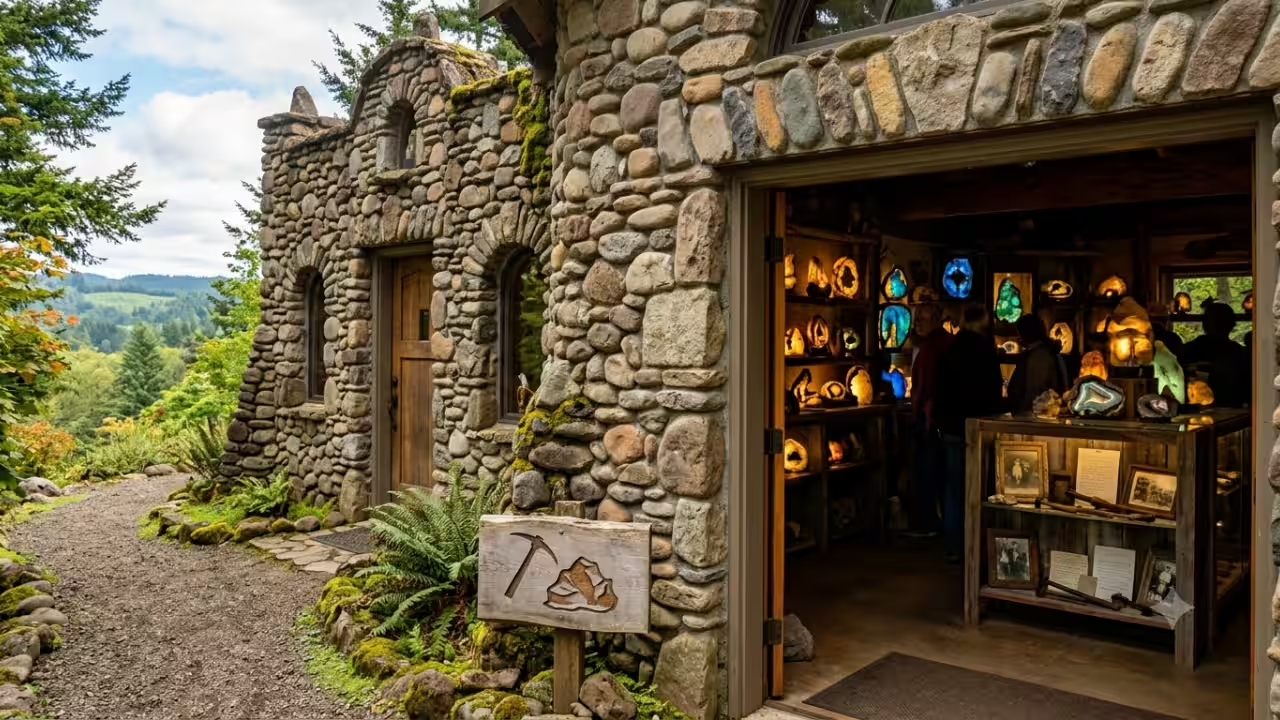
An Oregon artist turned an extraordinary building project into a museum filled with glowing stone pictures, bird paintings and family treasures. Built using around 800 tons of rock, the two-storey Living Rock Studios houses an unusual collection shaped by religious faith, wildlife and generations of artistic work. Its illuminated pictures are made from thin slices of stone, with light behind them revealing natural colours and patterns. Elsewhere, visitors can explore more than 100 bird paintings, carvings made from native Oregon woods and antiques linked to the family’s history. The museum stands along a scenic byway leading towards the West Cascade Mountains.The family history behind Oregon’s 800-ton rock museumThe Living Rock Studios is more than a place to display finished artwork. Its story reaches back to a family journey to Oregon by wagon train, with the museum presenting that history alongside accounts of hardship, religious devotion and artistic work passed between generations. The building itself forms a substantial part of the attraction, constructed using approximately 800 tons of rock.The museum’s website describes a project rooted in the family’s interests rather than a collection assembled around a single artistic discipline. Faith and creativity sit alongside an interest in the landscapes and wildlife of Oregon. Visitors can move between these themes within the same building, encountering religious scenes, natural subjects and objects associated with earlier generations.How Oregon’s Living Rock Studios turns thin slices of stone into illuminated artAmong the museum’s distinctive features are the Living Rock Pictures. Rather than relying on paint applied to a conventional canvas, these works are made from thin slices of rock, with light placed behind them to bring out their colours and patterns. The stone becomes both the material and part of the visual effect.The collection includes religious scenes such as Born in Bethlehem, Flight into Egypt, Golgotha and Moses & the Burning Bush. Other works depict Joseph in Egypt and the altar fire of Elijah, while the Garden of Gethsemane provides another subject drawn from Christian scripture. The pieces give the museum a strong religious thread, connecting its artistic displays with the faith that forms part of the family’s history.The backlighting is central to how these pictures are presented. Natural variations in the rock can become more visible when light passes through the thin material, setting the works apart from paintings made with pigments on a flat surface.More than 100 paintings of birdsWildlife has its own place in the collection. The studios display more than 100 bird paintings, including images of birds of prey. These works introduce a different subject from the biblical scenes, drawing attention to the variety of birds that inspire artists and observers of the natural world.The bird paintings also fit the museum’s wider interest in nature. Rather than separating wildlife from the building’s religious artwork and family exhibits, the collection places them under one roof. The displays offer visitors several ways to explore the relationship between artistic expression and the subjects that have mattered to the family.Wood carvings made from Oregon timberWood is another material represented throughout the studios. The collection includes carvings made from native Oregon woods, giving the local landscape a direct role in the artwork on display. Unlike the illuminated stone pictures, these pieces rely on the grain, texture and form of the timber.The museum also presents Oregon pioneers and antiques connected with the family’s history. These objects provide a historical dimension beyond the artwork itself, allowing visitors to explore the lives and traditions associated with earlier generations. The emphasis is on a collection that has developed alongside the family, rather than one devoted exclusively to contemporary art or a particular period.Oregon’s 66-mile scenic byway leads visitors to the Living Rock Studios museumThe Living Rock Studios stands directly on Oregon’s Over the Rivers and Through the Woods Scenic Byway, a 66-mile route that runs from the Willamette Valley towards the West Cascade Mountains. The drive passes through five ecosystems, making the surrounding countryside part of the experience for visitors travelling to the museum.The route provides a setting that complements the studios’ attention to wildlife, timber and the natural world. Visitors can combine a stop at the collection with a journey through changing landscapes, from the valley towards the western Cascades. The museum’s location also makes it a destination along a longer drive rather than simply an attraction within a town centre.An attraction built around art, history and natureThe studios’ website reports more than 24,000 visitors, including over 3,000 international visitors, and says the attraction has been open to the public for more than 37 years. It also lists a Google rating of 4.8, although ratings and visitor figures can change over time.The range of exhibits is central to the museum’s identity. The illuminated stone pictures sit alongside bird paintings, wood carvings, antiques and accounts of the family’s journey to Oregon. The building, constructed with around 800 tons of rock, brings these different strands together in a setting shaped by the family’s own history.For visitors, the studios offer a combination of unusual materials, religious imagery and regional heritage. Its appeal lies not only in the size of the stone structure but in the varied collection it houses, from carefully sliced rock pictures to artworks inspired by birds and the woods of Oregon.You use AI every day. Now get your AI Quotient. Take the AIQ test.
Topics in this story
Gathered from external sources. Rights to this text belong to whoever originally published it.