‘Please fight’: How an elderly woman’s eviction put Spain’s housing crisis in the spotlight
If there’s one name on people’s lips in Spain this week it’s Maricarmen. The eviction of the 87-year-old from her home has sparked a huge wave of spontaneous solidarity in various cities and drawn attention to one of the most pressing problems facing the country: access to housing.
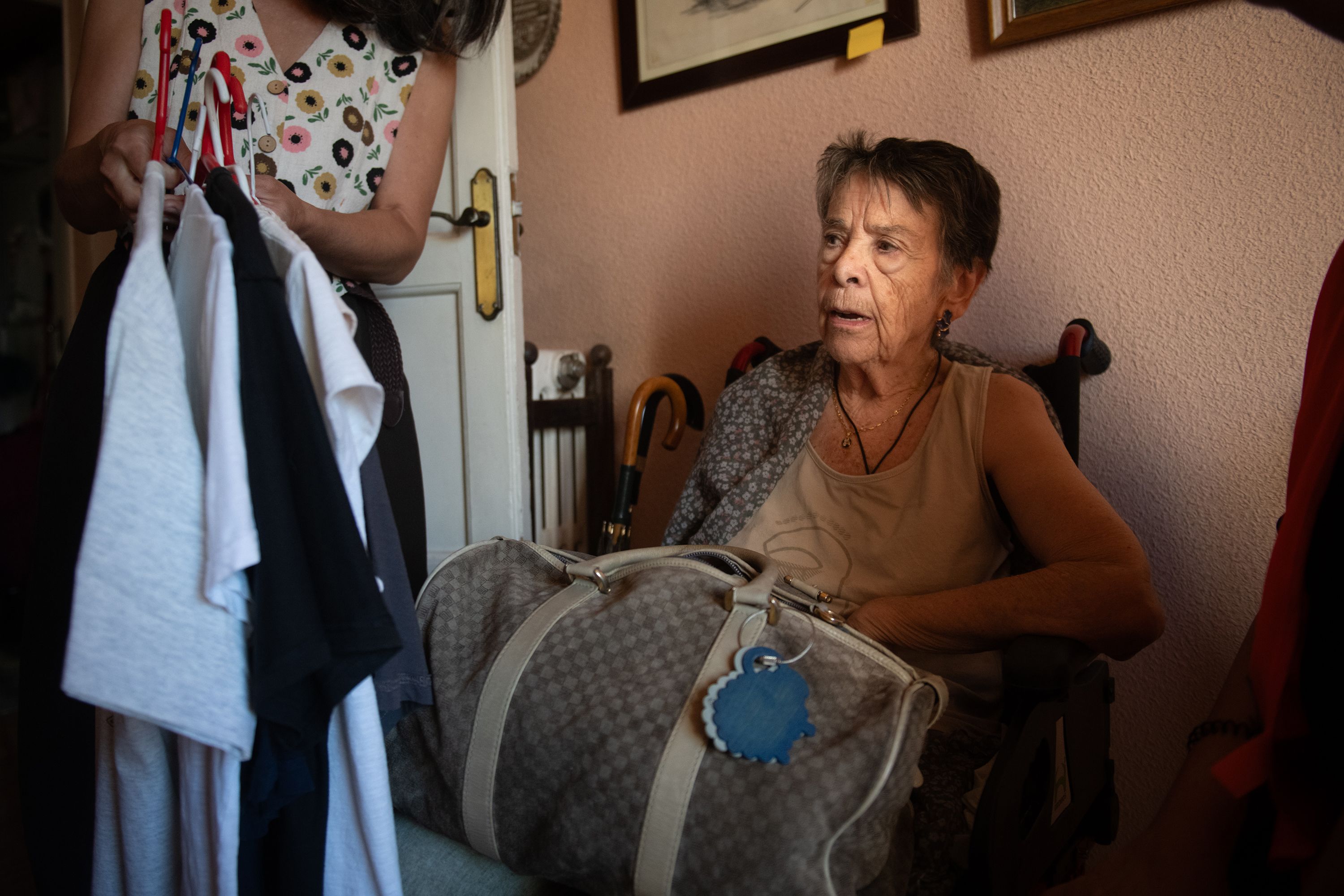
If there’s one name on people’s lips in Spain this week it’s Maricarmen. The eviction of the 87-year-old from her home has sparked a huge wave of spontaneous solidarity in various cities and drawn attention to one of the most pressing problems facing the country: access to housing. Tens of thousands marched through Madrid on Saturday to protest Maricarmen’s eviction. Some demonstrators camped overnight in Puerta del Sol, where more people, including families of several generations, joined them Sunday, according to the Associated Press. Protesters are demanding stronger tenant protections and a ban on evictions when no other housing is available nearby. María del Carmen Abascal, known by her nickname Maricarmen, is a resident of Madrid’s El Retiro neighborhood who, until last Wednesday, lived in an apartment on Alcalde Sainz de Baranda Street. She had lived in that home for more than 70 years, her attorney, Beatriz Duro, told CNN. Her eviction, which shocked many, took place Wednesday despite the efforts of dozens of people who had waited outside her home since the previous night trying to prevent it. That afternoon, nearly 10,000 people, according to the Spanish government officials in Madrid, gathered in the capital to protest Maricarmen’s eviction, while also expressing their frustration over the growing difficulties in finding housing. These concerns and expressions of solidarity protests also took place in other cities such as Barcelona, Seville, and Valencia. Abascal is currently hospitalized at Gregorio Marañón Hospital, where she was taken on a stretcher immediately after being evicted from her apartment. She is expected to remain there for a couple of days, Duro said, while she awaits some medical tests. Abascal spoke to supporters via a video Friday after being transferred to the hospital and urged them to “keep fighting” for their homes. “I did not manage to defend my home, but I have fought so that others learn to fight for theirs,” she said. “My house has been my life. And now I have to leave it behind. But that does not mean I will not keep fighting.” “Please fight,” she told supporters. “I send you all a very big hug and thank you for everything.” Evicted after 70 years Abascal had lived in the same place since 1956. In this apartment, located near El Retiro Park, she grew up and lived with her parents until she inherited and took over their lease from them. It was an old-style lease under which she paid about $568 (500 euros) per month. However, everything changed when the real estate company Urbagestión Desarrollo e Inversión acquired ownership of the apartment building for $280,787 (247,000 euros) in March 2018. That’s when her ordeal began, as shortly afterward the new owner began demanding a rent that was up to four times higher—even though she receives a pension of only $1,478 (1,300 euros), the Madrid Tenants’ Union told CNN. Consequently, in March 2020, the property company filed a lawsuit seeking the termination of the lease, Duro said. Abascal won the case in the lower court, but the company appealed, and the Provincial Court ruled in its favor. Faced with this situation, Duro filed a petition for constitutional protection with the Constitutional Court and an appeal with the Supreme Court, but both were dismissed. At the same time, Urbagestión filed a lawsuit to enforce the termination of the lease and thus regain possession of the home, which resulted in up to four eviction attempts. In October 2025, Abascal’s defense team halted the eviction for four months thanks to a provision in the law that allows for this when the party seeking eviction is a legal entity, Duro said. In June 2026, when the second date was set, the eviction was suspended for nearly a month due to the tenant’s vulnerable situation—she had no alternative housing. Consequently, it was postponed again until July, but Duro appealed the decision once more. During this time and until the eviction took place, Abascal’s support network made significant efforts to negotiate with Urbagestión to find solutions that would prevent this outcome. Among other things, Duro noted that mediation was conducted through Casa 47, the state housing agency, to have them purchase the apartment and rent it to her at a more reasonable price. On Tuesday, before the eviction, an anonymous person offered to pay part of the rent. But the real estate company showed no interest in any of the proposed alternatives, her lawyer said. CNN has reached out to Urbagestión Desarrollo e Inversión for comment but has not yet received a response. Given this situation and with the eviction already carried out, Abascal’s prospects are not very promising. “The situation is desperate,” Duro said. “She has no housing alternative, (..) and she still has not received any kind of proposal or housing alternative from public authorities.” City Hall reported that, on Friday morning, the real estate company contacted the Madrid Municipal Housing and Land Agency (EMVS) to have the property included in the ReViVa Program—through which City Hall recovers vacant homes to introduce them into the rental market—and thus offer it to Abascal “on affordable terms.” However, the City Council has rejected this possibility, deeming the proposal unfeasible because it does not meet the program’s legal requirements. They have, however, offered the EMVS Rental Mediation Service so that the company and the tenant can negotiate during a meeting scheduled for Monday, with professionals acting as mediators. The housing crisis in Spain The difficulties in accessing housing—whether to buy or rent—are nothing new in Spain. Protests have multiplied in recent years, and pressure has mounted on both local authorities and the government led by President Pedro Sánchez. This discontent stems from rising housing prices and is felt particularly acutely in major cities. In Madrid, for example, rent has nearly doubled in a decade, rising from $14.55 (12.8 euros) per square meter in August 2016 to $26.49 (23.3 euros) in August 2026, according to data from the real estate website Idealista. As for home purchases, the price per square meter has risen by 227.9% in just 10 years—that is, from $3,229 (2,839 euros) per square meter in August 2016 to $7,361 (6,471 euros) in August of this year, according to Idealista. These prices stand in stark contrast to the country’s average annual salary, which in 2024 was around $33,596 (29,540 euros), according to data from the National Institute of Statistics. In other words, based on these figures, someone who decides to rent a 50-square-meter apartment in the capital will be spending about $15,894 (13,980 euros) a year on housing, which amounts to nearly half of the average salary. This financial burden compromises one’s ability to save and cover other expenses. UN-Habitat (the United Nations Human Settlements Program) estimates that, for rent to be considered affordable, less than 30% of one’s income should be spent on it. The Bank of Spain believes that a large part of this problem stems from a housing shortage that currently stands at around 755,000 homes and could reach one million by 2028. The political battle Given the magnitude of this eviction, the political class has not remained on the sidelines. This is not only because those defending Abascal have directly called them out, but also because politicians themselves have used this episode as a platform from which to defend themselves or attack others. Speaking at a Socialist Party rally in Madrid on Sunday, Prime Minister Pedro Sánchez addressed Abascal directly: “I have a message for you, Maricarmen: the government is working around the clock to bring a Royal Decree on housing next Tuesday. And I ask parliamentary groups to make one last effort to have it validated in the National Parliament for Maricarmen,” according to the Associated Press. Abascal has previously criticized Sánchez and blamed him for her ordeal. “Does he not realize the quantity of evictions that there are daily?” she asked during an interview with Spain’s state broadcaster RTVE the day before she was forcibly removed from her home. “Does he not realize, or does he not want to realize?” The Spanish government maintains that it has attempted, through the Ministry of Housing and Casa 47, to purchase the home where Abascal lived in order to provide her with affordable rent. At the same time, it criticizes local and regional authorities for having done nothing to help her. The president of the Madrid region, Isabel Díaz Ayuso, passed the buck back to the executive branch led by Sánchez, stating on Thursday morning that the eviction was carried out by National Police officers—“who are managed by the government”—in compliance with a law “that this government and its coalition partners have had eight years to amend if they disagreed with it.” For their part, the coalition government’s partners—the members of Sumar—are proposing to directly expropriate the home in question. Specifically, both the Second Vice President of the Spanish Government, Yolanda Díaz, and the Minister of Social Rights, Consumer Affairs, and the 2030 Agenda, Pablo Bustinduy, are pushing for the Royal Decree-Law on Housing to be approved at the next Council of Ministers meeting, which would freeze rent prices and halt evictions such as the one that took place on Wednesday.
Topics in this story
Gathered from external sources. Rights to this text belong to whoever originally published it.