Traffic pioneer William Phelps Eno helped shape stop signs and traffic circles in cities, but the “Father of Traffic Safety” never drove a car
Discover the remarkable life of William Phelps Eno, the Father of Traffic Safety, who revolutionized road safety with innovations like stop signs and traffic circles, yet never drove a car himself.
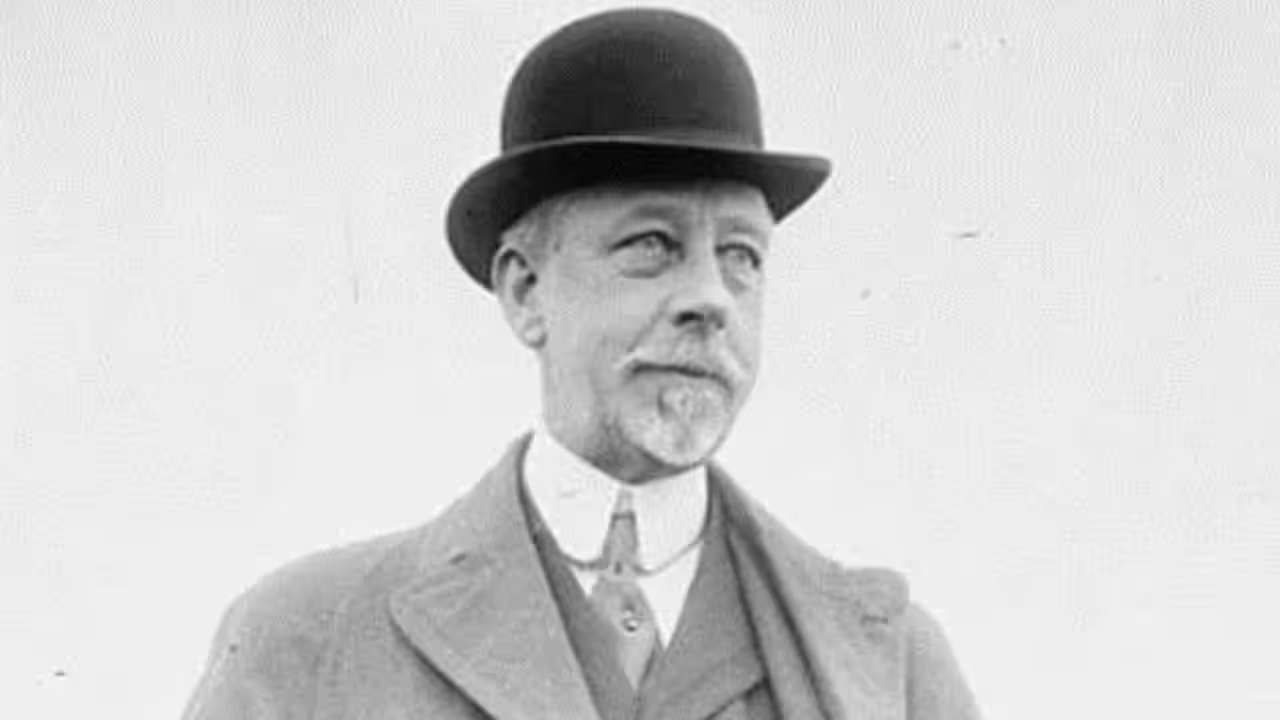
Today, millions of people drive modern cars, and driving safely is essential. People often rely on traffic signs such as stop signs, yield signs, and traffic lights to navigate the roads. However, few people know who helped create these modern traffic systems. That pioneer was William Phelps Eno. According to the Eno Center for Transportation, Eno (born in 1858) was an American businessman behind the earliest innovations in road safety and traffic control.As per the Simsbury Free Library, Eno was the youngest child of library benefactor Amos R. Eno and his wife, Lucy Jane Phelps Eno. At the age of nine in 1867, Eno was struck by the chaos he witnessed in New York City, caused by snarled traffic. Recalling the incident, he later wrote, “That very first traffic jam (many years before the motor car came into use) will always remain in my memory. There were only about a dozen horses and carriages involved, and all that was needed was a little order to keep the traffic moving. Yet nobody knew exactly what to do; neither the drivers nor the police knew anything about the control of traffic.”Regarding his education, Eno received a B.S. and an honorary M.A. from Yale University, as per the Institute of Transportation Engineers. He was also honored twice by the French government. Later on, he became a member of the New York Academy of Sciences and wrote eight volumes on traffic management that were translated into four languages.From real estate to traffic reforms Eno began his career in his family’s real estate business; however, he was more interested in transportation, which led him to devote his spare time to traffic reform. As cited by the Eno Center for Transportation, in 1899, at the age of 41, he stepped away from real estate and dedicated the rest of his life to establishing concepts for rational and systematic transportation. He authored the “Rules of the Road,” which were adopted by New York City in 1909 as an early city traffic plan. He also wrote an early manual of police traffic regulations.Known as the “Father of Traffic Safety,” Eno designed the initial traffic plans for major cities, including London, New York, and Paris. During both World Wars, he devised military signal codes that were used abroad, according to the Institute of Transportation Engineers. He helped popularize traffic features including stop signs, traffic circles, taxi stands, and pedestrian safety islands.Expanding into multimodal transportation and researchOver time, Eno embraced multimodal transportation. He devised a plan for New York City’s subways long before anyone seriously entertained the idea. As reported by the Eno Center for Transportation, he took an interest in maritime activities, backed railroad expansion, and initiated research in the 1920s on the future influence of aviation.In 1921, Eno founded the Eno Transportation Foundation (now the Eno Center for Transportation) to draw on insights from other transport specialists and create a neutral space for open debate aimed at safer and smoother transportation of people and goods. Eno died in 1945 at the age of 87. Surprisingly, he never once drove a motor vehicle in his entire life. It seems that the “Father of Traffic Safety,” who was an avid horseback rider, distrusted automobiles.You use AI every day. Now get your AI Quotient. Take the AIQ test.
Topics in this story
Gathered from external sources. Rights to this text belong to whoever originally published it.