How Paraguay’s banking crisis toppled a staunch Trump ally in Latin America
Paraguay’s ousted President Santiago Peña is facing up to 15 years in prison after the collapse of a major bank triggered the country’s biggest political crisis in years.
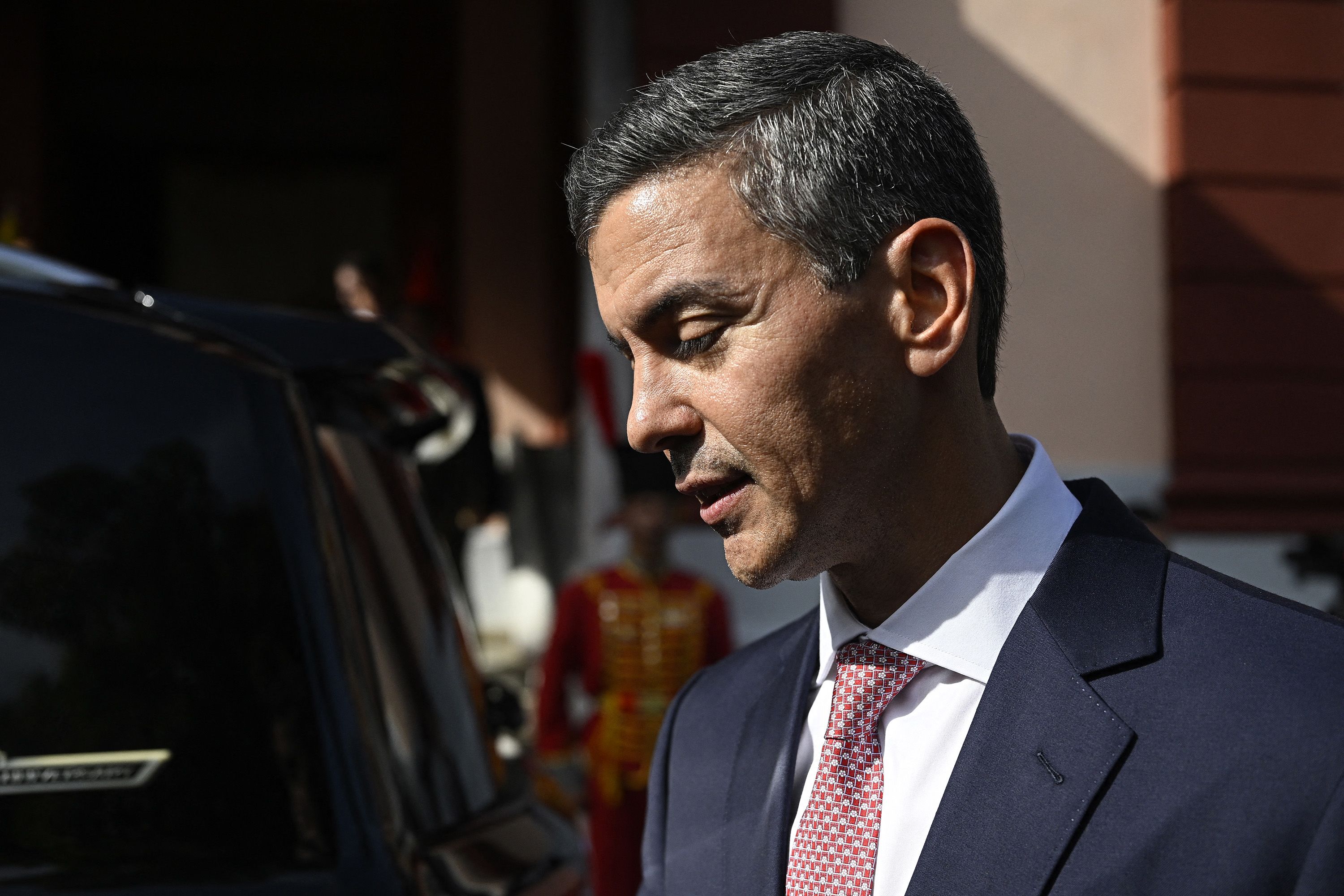
Paraguay’s ousted President Santiago Peña is facing up to 15 years in prison after the collapse of a major bank triggered the country’s biggest political crisis in years. Digital lender Ueno Bank shut down last week due to solvency concerns, leaving millions of customers unable to access their money. Peña, who until last year had business ties to the bank, submitted his resignation after its collapse, but Congress voted to impeach the president instead. The ousted leader, an economist and supporter of US President Donald Trump, is now facing criminal charges over the crisis, with prosecutors alleging a conflict of interest. He’s being held in pretrial detention at a military facility as prosecutors continue to investigate him. The crisis has shocked the country, with many people wondering how things could have spiraled out of control so quickly and how the turmoil will be resolved. Here’s what we know so far. How the scandal unfolded Paraguay’s central bank voted last Monday to put Ueno Bank into resolution after finding that its solvency ratio had fallen below the required minimum. The following day, the central bank seized the lender, freezing the accounts of nearly 2.9 million customers in a country of 6.1 million people. After days of protests, anxiety and long lines at the bank, Peña announced that he would resign on Thursday, saying he wanted to give Paraguayans peace of mind and restore stability. Both chambers of Congress convened a joint session to consider his resignation, but it was adjourned without a decision after several lawmakers walked out in the middle of the vote. If lawmakers had accepted his resignation, he would have been given immunity and special protections. Instead, the lower chamber voted unanimously to impeach him on Thursday afternoon, saying he should face charges over the financial crisis. The Senate followed up by voting to remove him from office on Friday. Vice President Pedro Alliana was sworn in as president soon after the vote. What charges does Peña face? Peña has been charged with breach of trust and administration for personal gain, with each charge carrying up to 10 years in prison, according to prosecutor Nancy Salomón. If he’s found guilty of both charges, the second conviction is halved, meaning he could potentially serve up to 15 years, according to Paraguay’s penal code. The former president, who denies any wrongdoing, held shares in Grupo Vázquez, Ueno Bank’s main shareholder, and sold his stake last year. Prosecutors allege that during his presidency, Peña “intervened in decisions related to the placement, renewal and maintenance of public and pension funds in Ueno Bank, an entity with whose business group he allegedly maintained economic and corporate ties.” Peña was initially placed under house arrest but was later transferred to a military facility for pretrial detention. CNN has contacted the former president and his lawyer Ricardo Preda for comment on the charges. Prosecutors also say the bank allegedly granted Peña “two simultaneous loans” in May 2024 for $580,000 “to finance the construction” of his luxurious summer home in San Bernardino, about 50 kilometers (31 miles) from the capital Asunción. On Sunday, authorities carried out a search warrant at the property, where they discovered a “highly sophisticated security vault.” Salomón told CNN they were expected to open it on Tuesday. Authorities also discovered computers, devices and potentially important documents at Peña’s residence. US ties to Paraguay Peña was one of US President Donald Trump’s staunchest allies in Latin America. A member of the conservative Colorado Party, he aligned with many of Trump’s political priorities, particularly immigration and security. Earlier this year, the White House invited him to attend a summit in Miami along with other right-wing Latin American leaders who are close to Trump. The White House said the gathering was meant to “promote freedom, security and prosperity.” Peña had forged strong ties with the Trump administration through deals on defense and regional coordination, such as the “safe third country” agreement, which allows asylum seekers from the US to be transferred to Paraguay. In response to Peña’s announced resignation on Thursday, a US State Department spokesperson said the relationship between both countries remains strong: “We remain committed to the enduring relationship between the American and Paraguayan people and look forward to continuing our close cooperation on shared priorities.” What we know about the new president Peña was succeeded by his vice president, Pedro Alliana, who survived an impeachment vote in the lower chamber of Congress on Thursday. Alliana had previously served as a congressman, leader of the Chamber of Deputies and governor of Ñeembucú. Before joining the Colorado Party, he was a businessman and an athlete who formed part of the Paraguayan national basketball team. He will now be the country’s president for the next two years. Upon being sworn in on Friday, Alliana vowed to assume the position with “humility, responsibility and a deep commitment to all Paraguayans.” On Tuesday, Alliana held a roundtable meeting with his ministers to discuss a path forward. “I ordered the ministers of the Executive Branch to work as a team, with austerity and zero tolerance for corruption. The state’s resources belong to the people and must be managed responsibly,” he said on X. What happens next? Paraguayans have welcomed Peña’s impeachment, but many are upset that he was succeeded by his own vice president. In parts of the capital, demonstrators have demanded the ouster of every member of government, using the rallying cry “Out with them all!” Alliana has overhauled several government ministries by appointing new leaders. Among them is Jorge Schreiner, who was approved by Congress as the new president of the central bank, replacing Carlos Carvallo whom prosecutors have also charged in the Ueno case. Prosecutors say the goal is for Ueno Bank depositors to recover all their savings. However, many questions remain about the future of the country. Analysts say Paraguay’s reputation as a stable South American economy has taken a hit and the banking crisis could impact other parts of society, including the labor market and the social security system. Schreiner told CNN that he is committed to restoring Paraguay’s credibility, which he acknowledged is “quite damaged.” “It’s possible to recover. It will take us a while, but we restore that,” he said. Alliana said that recovering lost funds will be a priority. Earlier, he announced that the government had paid most of Ueno’s customers roughly $330 million from Paraguay’s Deposit Guarantee Fund, a safety net established to protect depositors in the event of insolvency. “We will work until every family regains the peace of mind they deserve,” he said.
Topics in this story
Gathered from external sources. Rights to this text belong to whoever originally published it.