Woman who clung to Spitfire during Second World War remembered
Margaret Horton's story is being kept alive by North Lincolnshire Heritage Centre.
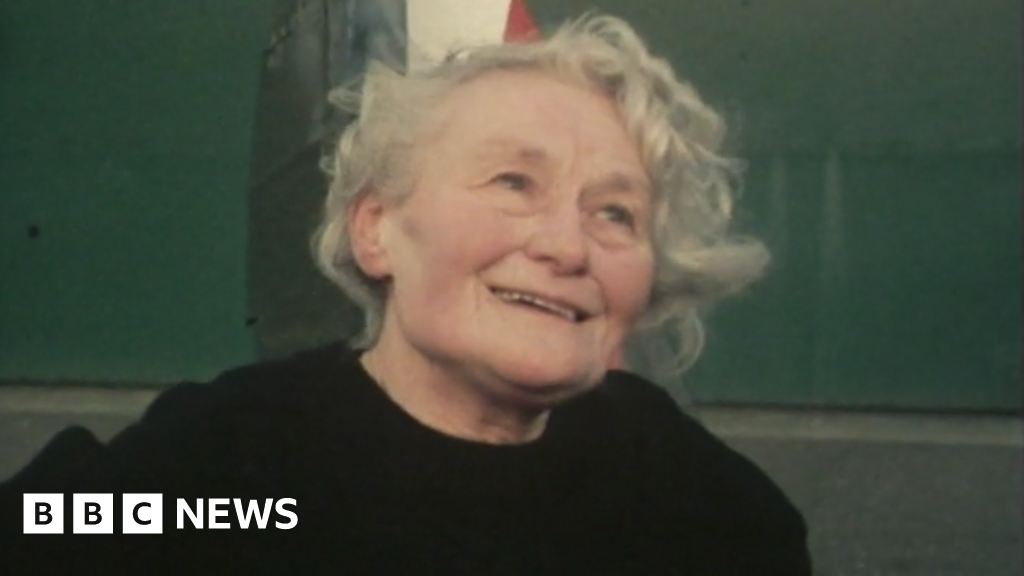
The incredible story of a woman who hung to the tail of a Spitfire in flight is being told by volunteers at an aviation centre.
Margaret Horton was a member of the ground crew working on a Spitfire at RAF Hibaldstow, in Lincolnshire, during the Second World War when the pilot took off without realising she was on the tail. The pilot landed, Horton hopped off and went about her day.
Her story is being kept alive by North Lincolnshire Aviation Heritage Centre, which is marking seven years since work began on a visitor attraction at the former RAF site.
Phil Jones, one of the centre's directors, said visitors enjoyed discovering such tales because "it's part of who we are as human beings".
In 1945, Horton was tasked with sitting on the tail of a Spitfire while it was being taxied - a routine job used to prevent the aircraft from bouncing and the propeller striking the ground.
But when Horton was doing this, the pilot taxied out onto the runway and took off, forgetting she was still on the tail.
Speaking to the BBC in the 1970s, Horton said: "When I saw things going too fast, I flung myself across the tail plane and caught hold of the accelerator. I tried to move it so he would know I was there."
Despite clinging on to the plane for a circuit of the airfield, she survived the journey.
"He made a beautiful landing," Horton said. "It was a day to remember."
According to Jones, Horton was also told off for not getting off the tail plan and for dropping her gloves. She was made to buy some replacements.
"You would joke about it, but it must have been terrifying at the time for her," Jones said.
Horton came back decades later and recreated the famous event for the camera. A magazine clipping can be found at the heritage centre.
"It was a claim to fame, wasn't it?", Jones said.
The former RAF site was discovered completely overgrown and renovations began in 2019, but were delayed due to the Covid pandemic.
A formal opening ceremony took place in June 2024.
The site features other parts of aviation heritage throughout North Lincolnshire from World War One until the present day.
Other attractions include a replica of the famous bouncing bomb used in the Dambusters raids and the former Battle Headquarters.
The headquarters were built as an underground bunker amid fears of a German invasion following the Dunkirk evacuation.
Also on display is a Turbinlite aircraft, which used a powerful searchlight to locate and light up enemy aircraft at night so an accompanying Spitfire could shoot it down before radar became widely used.
When asked why it is important to keep these stories alive, Jones said: "Why do we do anything looking back in history? I think it's part of who we are as human beings.
"We like to know where we've come from and where we're going even though we're just passing through the middle of it.
"It's just all part of the pattern of life, isn't it?"
Volunteers look after the memorabilia and people who visit the site.
"It's a hard graft, but actually being here is an enjoyable experience," Jones said.
"We're not being paid. But it's just, it's a camaraderie.
"Doing this keeps us going. It keeps you active, keeps you fit and it keeps your brain going as well."
Speaking about his fellow volunteers, Jones said: "We've all got sort of a common interest... it just seems to click and that's part of the beauty of it."
Listen to highlights from Lincolnshire on BBC Sounds , watch the latest episode of Look North .
App Store Google Play for Android devices
Former airfield opens to public as heritage centre
Film shows what happened after the Dambusters raid
'Fantastic' aviation museum to open after makeover
North Lincolnshire Aviation Heritage Centre
Topics in this story
Gathered from external sources. Rights to this text belong to whoever originally published it.