MIT historian investigates a Chinese tea label believed to be a Boston Tea Party relic for decades and traces it to a 19th-century American trading company
A Chinese tea chest label displayed for decades as a souvenir of the 1773 Boston Tea Party has been found to date from the 1860s or 1870s, following an
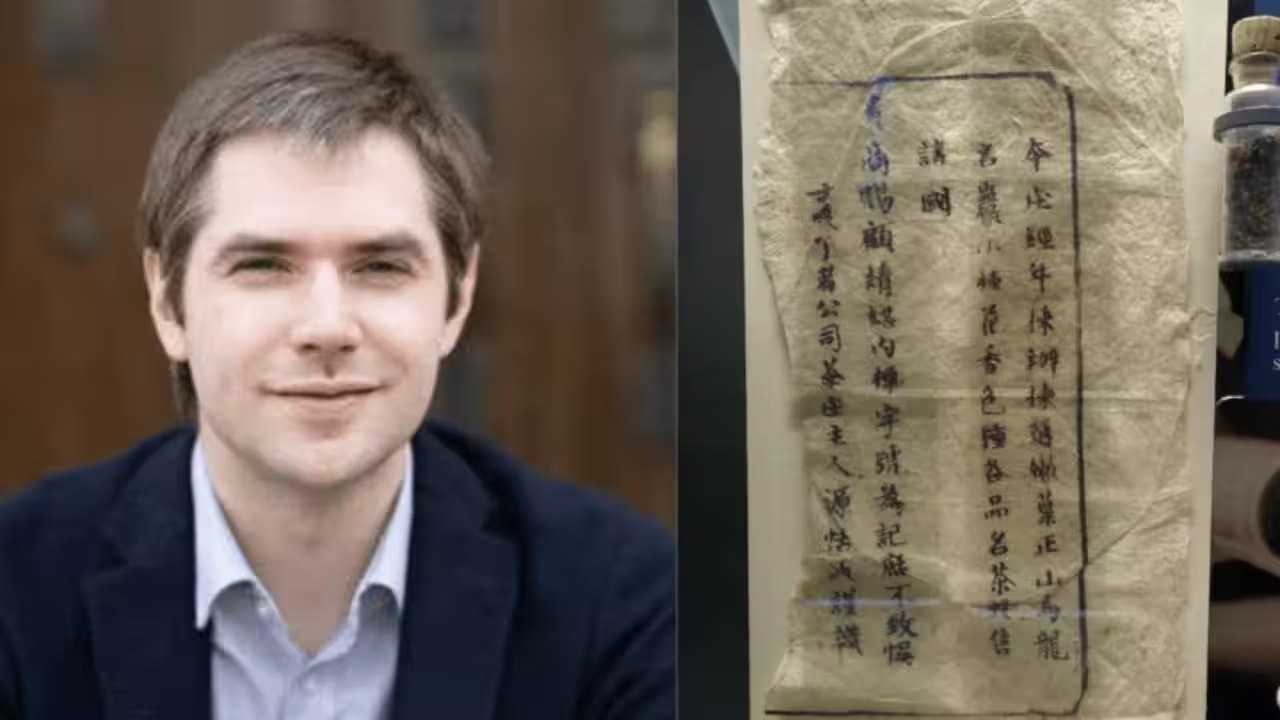
A Chinese tea chest label displayed for decades as a souvenir of the 1773 Boston Tea Party has been found to date from the 1860s or 1870s, following an investigation by MIT historian Tristan G. Brown. The label, donated to Boston’s Old South Meeting House in 1987 by descendants of blacksmith Thomas Wells, was believed to have been recovered during the historic protest. However, Brown’s examination of its Chinese inscriptions, read in Cantonese rather than Mandarin, revealed the name of Smith, Archer & Co., an American trading firm operating in East Asia. His research traced the artefact to 19th-century tea commerce and uncovered how a family story became accepted as revolutionary history.How an MIT historian began investigating the mysterious Chinese tea labelAccording to the Massachusetts Institute of Technology, Brown began investigating the object after remembering it from a visit to the Old South Meeting House. The research project started in 2024, when the American Historical Review invited historians to examine 76 objects connected to 1776, the year the United States declared independence from Britain.Brown, a historian of China who does not usually work on American history, selected the Chinese label for further investigation. He initially had no reason to doubt the family’s account, particularly because objects directly connected to the Boston Tea Party are scarce. Participants in the protest had reasons to conceal their identities and avoid punishment by the British Crown.Cantonese translation cracks the mystery of a historic tea labelAccording to the study published in American Historical Review, titled ‘Tea Chest Label’, the breakthrough came through a closer examination of the Chinese characters printed on the label. Earlier researchers had approached the text through Mandarin, but Brown recognised that a sequence of characters was being used phonetically to represent a foreign company’s name.When read in Cantonese, the characters produced the words "Smith, Archer", identifying Smith, Archer & Co., a New York-based import-export firm with offices in East Asia during the 1860s and 1870s. The company acquired Chinese and Japanese teas for shipment to American markets.The label also mentioned Yuan Tianbo, a Cantonese merchant connected to the trading network. Brown traced the merchant to Yokohama, Japan, in the 1860s. These findings established that the document belonged to the commercial networks of 19th-century Pacific trade rather than the tea-trading system operating during the American colonial period.Family tea store offers clues to the origins of a historic Chinese labelAfter identifying Smith, Archer & Co., Brown investigated how the label might have entered the Wells family’s possession. His research led him to John Milton Wells, a relative who travelled from Michigan to the San Francisco Bay Area during the California Gold Rush, between 1848 and 1855.Although John Milton Wells did not find gold, he returned to Michigan and worked as a grocer. He also operated a business listed in commercial directories as the "California Tea Store". A surviving trade card associated with Wells advertised imported Asian teas. Brown examined it alongside family letters, census records and local business directories. Together, these documents indicated the label was likely acquired through the family's 19th-century tea business rather than recovered during the Boston Tea Party.Chinese tea label became mistaken for a Boston Tea Party relicBrown also investigated how the object became associated with the 1773 protest. He argued that its revolutionary connection probably developed later, during the centennial commemorations of the 1870s, when American families were emphasising their connections to the country's founding period.By the early 1900s, the story had appeared in a local newspaper, which reported that the label had been taken from a tea chest during the Boston Tea Party. Repeated accounts in family histories, newspapers, commemorative culture and eventually museum interpretation helped establish the claim as an apparently authoritative historical account.In his research, Brown explained that the label demonstrated how 19th-century global trade, Asian migration and family storytelling helped reshape American revolutionary memory by creating objects that appeared to authenticate that history.MIT historian publishes study uncovering the true origins of a Chinese tea labelBrown's findings were published in an article titled Tea Chest Label in the June 2026 issue of the American Historical Review. The paper, published online on July 3, reconstructs the document's origins and examines how it entered the Wells family's collection before eventually reaching a Boston museum.The investigation also highlights how digitised commercial directories, searchable newspaper archives and linguistic research can help historians revisit objects whose histories have long been accepted. Brown's attention to Cantonese rather than Mandarin proved central to identifying the company behind the label.Although the label was not produced during the Revolutionary era, Brown said it remained an important educational artefact documenting China's longstanding trade with the Americas and the ways Americans have looked to China when telling stories about their own past.He said: "History is never finished. Even objects that have sat in museums for decades can reveal entirely new stories when we ask new questions."You use AI every day. Now get your AI Quotient. Take the AIQ test.
Topics in this story
Gathered from external sources. Rights to this text belong to whoever originally published it.