In 2010, a turbine failure damaged a Qantas A380’s wing and systems at 7,000 feet; its crew returned the aircraft to Singapore with all 469 people aboard uninjured
Discover how a Qantas A380's critical engine failure at 7,000 feet led to an emergency landing and the safe return of all passengers. Learn about the investigation and insights on crew resource management.
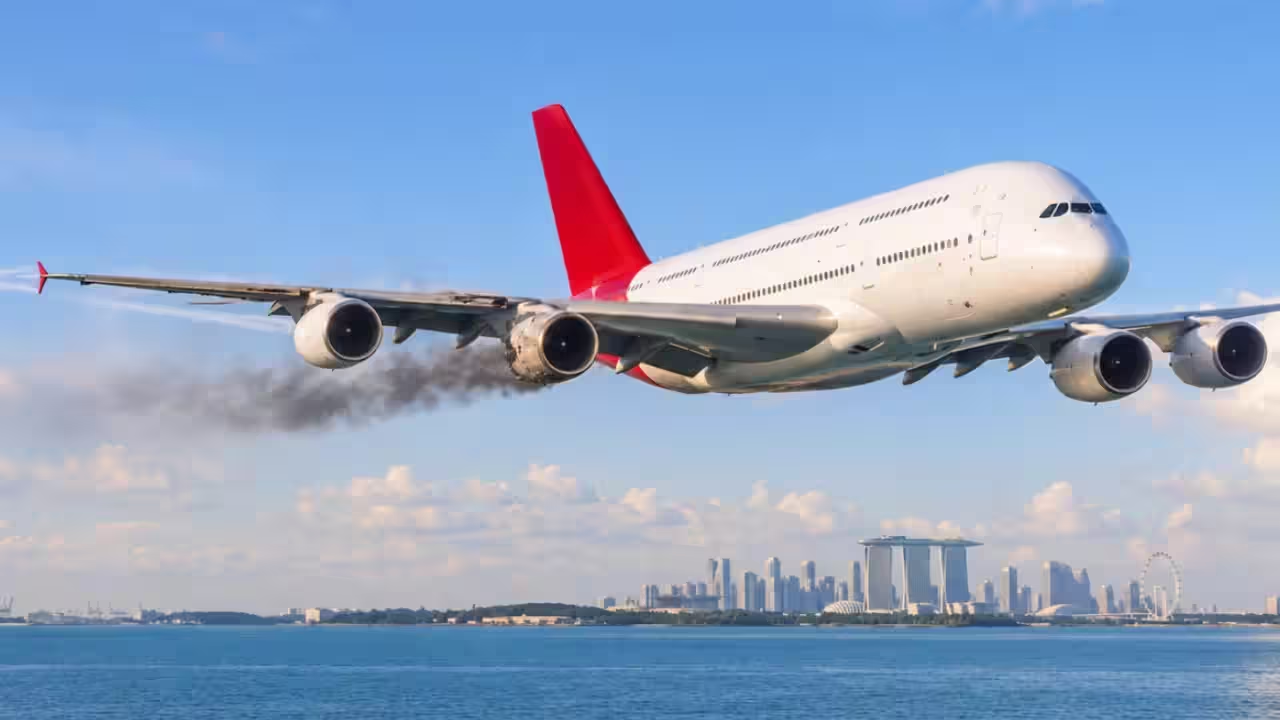
On 4 November 2010, a Qantas Airbus A380 was climbing out of Singapore when one of its four engines failed. The aircraft was climbing through 7,000 feet when the number two engine experienced an uncontained failure, according to the Australian Transport Safety Bureau (ATSB). Debris struck the wing and other areas of the aircraft, damaging its structure and systems. The crew still brought it back to Singapore. All 469 people on board came out uninjured.A routine climb that turned dangerousQantas Flight 32 was a scheduled service from London to Sydney via Singapore. The A380 was on its final leg when it left Singapore. It took off from Changi Airport in the morning. Four minutes later, there was an engine failure, and the cockpit was flooded with warning messages. The damage went beyond one engine. Debris had hit the wing, damaging several systems the crew relied on, so the pilots were facing a cascade of problems at once. Still, the aircraft managed to return to Changi at about 11:47 am local time, less than two hours after it had left.How a tiny pipe caused a huge problemThe ATSB spent more than two years and six months completing the investigation and presented its final report on 27 June 2013. It traced the problem to a thin-walled oil pump in the Rolls-Royce Trent 900 engine. A manufacturing defect had left the wall too thin. Due to this, the pipe cracked, causing an oil leak and resulting in a fire. Then a turbine disc broke apart. Aviation experts call this an uncontained engine failure, meaning that pieces break away and escape the engine casing instead of just staying inside. The bureau also issued safety recommendations to regulators in Europe and the United States.Five pilots and a lot of alertsFive pilots were on the flight deck, including Captain Richard de Crespigny. Alerts kept coming up, and each one needed a careful look. The crew went through them together and checked what the aircraft could still do before returning to land. The plane stopped about 150 metres short of the end of the runway, and emergency crews attended to it. The ATSB report praised the crew for managing the event as a competent team and following standard procedures.What research says about teamworkResearchers have used this flight as an example. A 2020 paper published in the International Journal of Safety and Security Engineering looked at crew resource management, or CRM. CRM involves teamwork, leadership training and decision-making. According to Sikora, Hari, and Hanusch, these skills were shown by the Qantas crew during the engine failure, and all occupants were able to survive the incident without injuries. The paper also arrived at a broader conclusion. It said the leadership and teamwork taught as part of CRM can help to reduce risk in rare and complex emergencies. The researchers were, however, careful. The paper only looked at three accident reports and called this an overview. So it can be a useful guide, but not the final word. This means good equipment is important, but so is how crews use it under pressure.The plane flew againThe damaged aircraft, VH-OQA, didn't remain out of service permanently. It was Qantas's first A380, named Nancy-Bird Walton after an Australian aviation pioneer. The aircraft was repaired in Singapore and returned to Sydney in April 2012, over a year after the incident. It was put back into passenger service later that month. Flight 32 is still used as a case study in crew teamwork. A thin pipe started the problem, but shared decision-making helped end it safely.You use AI every day. Now get your AI Quotient. Take the AIQ test.
Topics in this story
Gathered from external sources. Rights to this text belong to whoever originally published it.