Northern Ireland consumers face rising energy prices
Iran war continues having an impact on people in Northern Ireland as energy prices climb again.
President Trump's comments on Ireland's possible constitutional future grabbed the headlines at the weekend.
But it is his war on Iran which is having a practical impact on people across the island as energy prices climb again.
A barrel of oil, on the widely used Brent crude measurement, has started this week at $108.
That is a four-month high and close to the level reached in the early stage of the conflict, when Iran closed the Strait of Hormuz and reduced the amount of oil reaching world markets.
Some oil tankers are now moving through that important sea route but the latest price rise reflects a new front in the conflict.
A pipeline from Saudi Arabia which carries oil overland to ports on the Red Sea has been damaged in a drone strike and is closed for repairs.
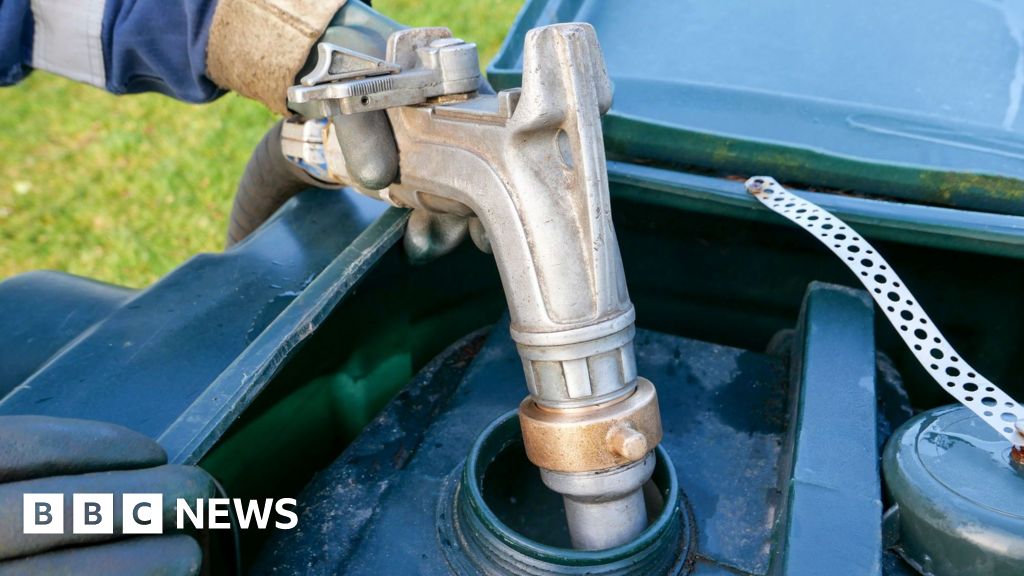
Anything which forces up the price of oil is felt more quickly in Northern Ireland than anywhere else in Europe due to its heavy reliance on home heating oil.
Around two thirds of NI households use home heating oil.
Unlike gas or electricity the heating oil market is unregulated, so global price rises are rapidly passed through to consumers.
The NI Consumer Council heating oil tracker shows this is happening.
It suggests that on Monday the average price of 500 litres was £542, up almost 10% from £495 a week ago.
That is still well below the recent peak of almost £630 reached in early April.
But it does mean that consumers are facing into autumn with heating oil prices roughly double what they were last year.
The consumer council data shows that 500 litres would have cost just £270 in early September 2025.
The Northern Ireland Executive is attempting to soften that blow - a scheme to give lower income households a £100 oil voucher opened for applications last week .
The rising oil price is also being reflected on garage forecourts.
Consumer council data shows that last week that the average price of a litre of diesel was £1.77, 10p more expensive than it had been during the summer.
Unleaded petrol cost on average £1.57 a litre, the highest it has been since the conflict began and back to a level last seen in 2022 after Russia's invasion of Ukraine.
The wholesale price of natural gas in the UK has also returned to a level last seen in the winter of 2022.
If that price level is sustained the gas companies supplying NI consumers will eventually have to impose another round of price increase beyond those announced in recent weeks.
Gas is also the key fuel for generating electricity across the island of Ireland so prices are rising there too.
Last week electricity supplier Share Energy said its price would increase by almost 13% in October.
Its chief executive Damian Wilson told the BBC that the Irish markets are at the mercy of geopolitical shocks.
"At the moment we are so reliant on gas. Power stations on the island of Ireland are predominately using gas," he said.
"We have no real storage facilities so we are susceptible to geopolitical factors.
"Before the Ukraine war gas would have traded at around 20p or 30p a therm (unit). It's now at 190p."
£100 home heating oil support scheme opens
£17m support for heating oil costs in NI is 'not enough'
What should NI drivers expect as pump prices rise?
Topics in this story
Gathered from external sources. Rights to this text belong to whoever originally published it.