Cameroon femicides: Footballer Nchout Njoya Ajara speaks out after eight women killed in a week
The killing of at least eight women in a week has sparked outrage in Cameroon.
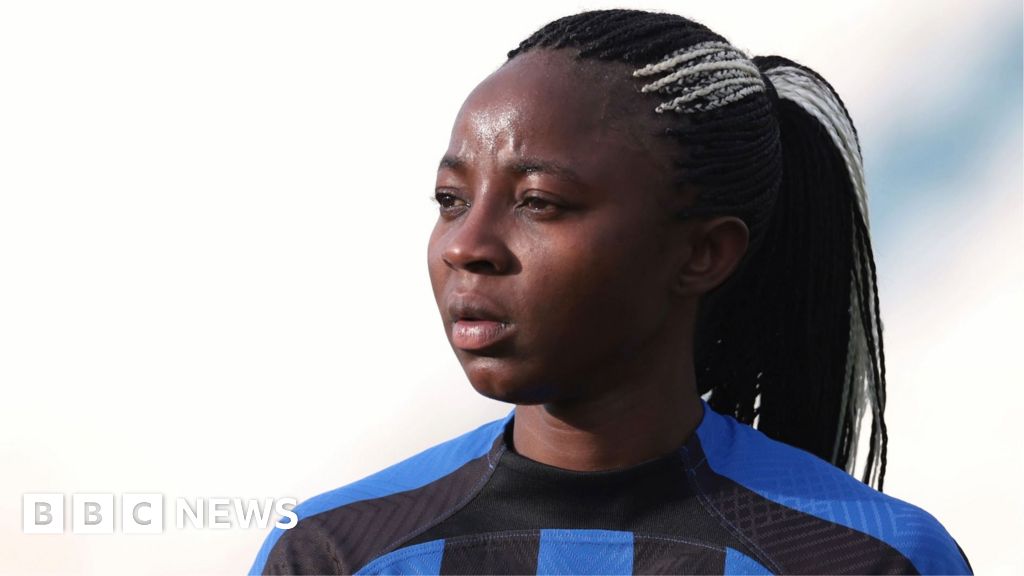
The killing of at least eight women in a week has sparked outrage in Cameroon, with many calling on the government to do more to protect women and girls.
Among those who have spoken out is renowned footballer Nchout Njoya Ajara, who has called for an end to the "tragic wave" of targeting women, saying "silence is complicity".
The government has also raised concern about the rise in attacks. At least 50 women have been killed between January and April this year, compared to 77 last year, according to official figures.
In the latest case on Tuesday, a 44-year-old woman was killed in a hotel room in the capital, Yaoundé. She was allegedly stabbed to death by a 22-year-old who was later arrested.
"Being a woman in Cameroon should never be a risk," said Ajara, who is one of Cameroon's greatest female footballers.
The 33-year-old striker has played professionally in Russia, Sweden, Norway, Spain, Italy and Saudi Arabia for clubs including Atlético Madrid and Inter Milan.
"In the face of the tragic wave of femicides that has hit our country in recent days, silence is complicity," Ajara said.
'We are the friend' - inspiring those fleeing terror
In a statement, the opposition Cameroon Renaissance Movement (CRM) party said it was outraged by the "tragic recurrence of domestic femicides" and accused the government of being passive about the issue.
The femicide cases, most of which are attributed to domestic violence, have been reported in different parts of the country.
In a video published by state media, the minister for Women's Empowerment and the Family, Marie-Thérèse Abena Ondoa, condemned the "worrying" rise in the number of the killings, and said the government was working to address the problem.
She mentioned a bill to protect women against gender-based violence, which she said was being reviewed by the prime minister.
But civil society and women's rights groups have denounced what they perceive as the government's delay in turning the bill into law.
A parliamentary session, the last one for the year, is due to be held in November. However, Viviane Tathi, whose organisation documents cases of femicide in the country, told the BBC she was not sure that the bill would be passed at the session.
"We are worried because the November parliamentary session focuses on budgetary debates…So, we don't know by what magic this bill will be passed," she said.
She has called for the creation of a special court to handle family disputes, which lead to domestic violence.
According to the latest UN data, Africa had both the highest total number of femicide victims and the highest rate relative to its population in 2024 - with an estimated 22,600 cases .
The numbers are an estimate as some cases of femicide are believed to go unreported and many governments do not consistently record the information.
South African women arming themselves against gender violence
The notorious Cameroonian prison with its own record label
Conference on complexity of gender-based violence
Why Kenyan men fail to condemn deadly misogyny
Go to BBCAfrica.com for more news from the African continent.
Topics in this story
Gathered from external sources. Rights to this text belong to whoever originally published it.