In 2025, a UK nuclear waste site replaced wooden railway sleepers with recycled plastic to make its railway more sustainable
UK News: A railway at a UK nuclear waste site has gained an unusual new feature: sleepers made largely from recycled plastic. In 2025, the Low Level Waste Repo.
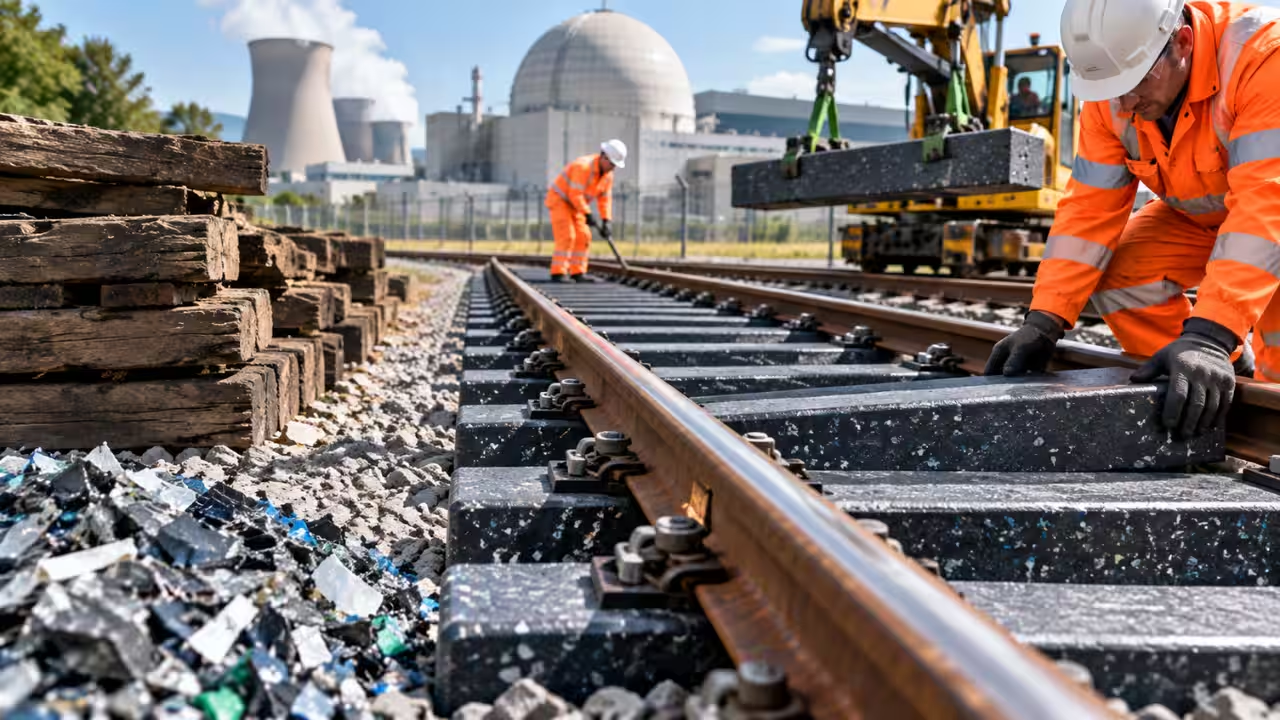
A railway at a UK nuclear waste site has gained an unusual new feature: sleepers made largely from recycled plastic. In 2025, the Low Level Waste Repository began installing composite sleepers as part of routine maintenance on its rail sidings, replacing traditional hardwood with a material designed to last for decades. According to Nuclear Waste Services, each sleeper contains approximately 90kg of recycled plastic waste, while the organisation says the products can remain in service for between 50 and 100 years. Made in the UK and fully recyclable, the sleepers mark a small but notable change in how the Repository is maintaining its railway infrastructure.Each railway sleeper uses 90kg of recycled plasticThe most striking part of the change is the amount of recycled material contained in each sleeper. Nuclear Waste Services said the composite sleepers are made from approximately 90kg of recycled plastic waste, giving material that might otherwise have been discarded another use within a working railway system.The organisation also stated that the sleepers have a claimed lifespan of between 50 and 100 years. According to the May 2025 edition of the NWS newsletter, they are made in the UK and are fully recyclable. This combination of recycled content, long stated service life and recyclability was part of the reason they were selected as an alternative to traditional hardwood sleepers.Recycled-plastic sleepers were installed during routine maintenanceThe switch was not described as a full replacement programme from the outset. Nuclear Waste Services said it had installed the recycled-plastic composite sleepers as part of the maintenance work and planned to transition fully to composite sleepers as required. The Repository therefore became the first site in the Nuclear Decommissioning Authority group to install these particular sleepers.That distinction is significant because the project was not simply about replacing worn railway components. The source describes the work as an effort to improve sustainability while maintaining an important piece of site infrastructure. The rail sidings support operations at the Repository, making the sleepers a relatively small component of a much larger nuclear waste management site.Ruth Davey welcomes the move to more sustainable railway sleepersRuth Davey, Senior Environmental Advisor at Nuclear Waste Services, welcomed the change, describing it as an example of the organisation's values being put into practice. She said the replacement showed the Repository Engineering team being “action-oriented” in securing more sustainable materials for a key asset at the site, with benefits considered both financially and environmentally.The project illustrates how sustainability measures can be introduced through ordinary maintenance rather than requiring an entirely separate infrastructure project. What it does establish is that the new sleepers use approximately 90kg of recycled plastic each, are claimed to last 50 to 100 years, are fully recyclable and have begun replacing traditional hardwood sleepers at the UK nuclear waste site.Catch the latest World News and Live updates. Download the TOI app.
Topics in this story
Gathered from external sources. Rights to this text belong to whoever originally published it.