Built in 1928, this New Zealand swing bridge was nearly demolished; locals fought to save it and are now restoring it
Rest of World News: For years, the old Kopu Bridge was a familiar landmark for travellers heading into the Coromandel, but it was perhaps best known for the traffic queue.
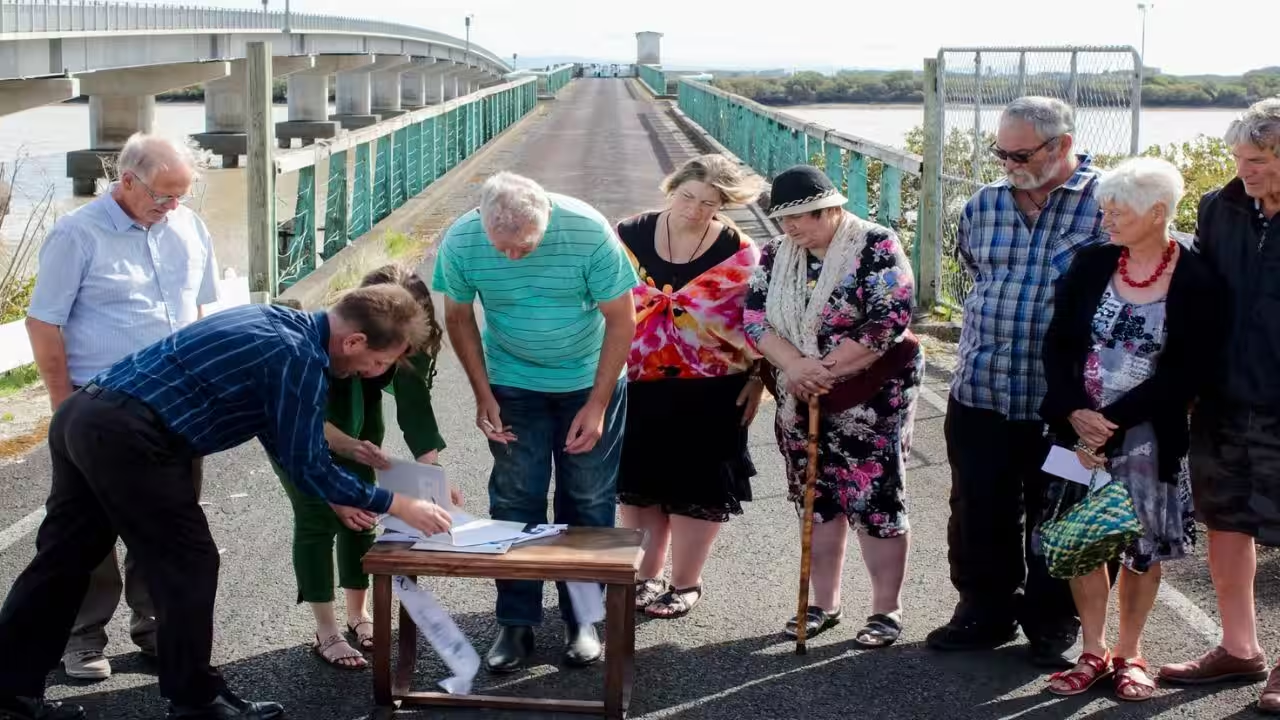
For years, the old Kopu Bridge was a familiar landmark for travellers heading into the Coromandel, but it was perhaps best known for the traffic queues that built up as vehicles waited to cross the Waihou River. The narrow bridge could carry traffic in only one direction at a time, turning busy journeys into slow ones. Its role changed in December 2011, when a new two-lane bridge opened nearby, as reported by NZ Transport Agency Waka Kotahi. The old structure was closed, and demolition was considered as its future remained uncertain. A community campaign, however, argued that the historic bridge was worth saving. After more than six years of negotiations, the Kopu Bridge and Community Trust took over the structure from the New Zealand Transport Agency in March 2018. Rather than disappear, the bridge entered a new chapter. The Trust began restoring it for pedestrians and cyclists, creating a link alongside the Hauraki Rail Trail and preserving a familiar piece of the region’s transport history.How the historic Kopu Bridge became New Zealand’s unique swing-span bridgeThe Kopu Bridge was built in difficult conditions and opened in 1928. The Waihou River had a soft and muddy bottom, which made construction challenging. Engineers divided the bridge into more than 20 spans and drove piles as deep as 70 feet into the riverbed to support the piers. The lower sections were made from timber because concrete piles could not withstand the pounding at that depth. The bridge also had to allow steamers to pass along the river. At the centre, a swing span could open to create a 50-foot passage for vessels. This feature became an important part of the bridge’s design. The bridge was built when river transport played an important role in the Hauraki Plains and helped connect the developing farming area with the wider region.How the local community fought to save the historic Kopu BridgeThe bridge’s future became uncertain after the new two-lane crossing opened in 2011. With traffic moved to the new structure, the old bridge was closed, and its future came under scrutiny. The Kopu Bridge and Community Trust, however, argued that the historic crossing was worth preserving as it was the last surviving example of a swing-span bridge in New Zealand and was recognised by both Heritage New Zealand and Engineering New Zealand for its heritage value. After more than six years of negotiations with the New Zealand Transport Agency, the Trust took over management of the bridge in March 2018. The agreement gave the Trust five years to manage the bridge, with the option of handing it back if it could no longer maintain the structure.How the historic bridge is being restored for walkers and cyclistsThe plan of the Trust is to restore the structure as a pedestrian and cycleway alongside the Hauraki Rail Trail. The bridge could also become a useful place for fishing. A wider cycleway through the Thames district could eventually connect it with other parts of the area. Restoration work has already taken place. Electrical work and conservation planning have been completed, while gates, bollards and safety signs have also been installed. The pilot house on the centre span was restored and repainted in its heritage colours in 2025. Railing restoration was completed in 2026, although more railing work and painting are yet to be completed.A historic crossing prepared for a new chapterThe restoration is intended to keep the Kopu Bridge connected to the community while protecting its historic character. The Trust says restoring it for public use will cost far less than the demolition estimate made years ago. It also expects the project to bring recreational, tourism and economic benefits to Kopu, Thames and the wider Coromandel Peninsula. The bridge has already had several different roles, as it was built to support road travel and accommodate river traffic, later became associated with summer traffic queues, and was eventually replaced by the new crossing.Catch the latest World News and Live updates. Download the TOI app.
Topics in this story
Gathered from external sources. Rights to this text belong to whoever originally published it.