Harrison Ford presents major conservation award to Mozambique’s Gorongosa Restoration Project, which rebuilt wildlife populations after more than 90% of large animals were lost during the civil war
Actor Harrison Ford has passed the E.O.
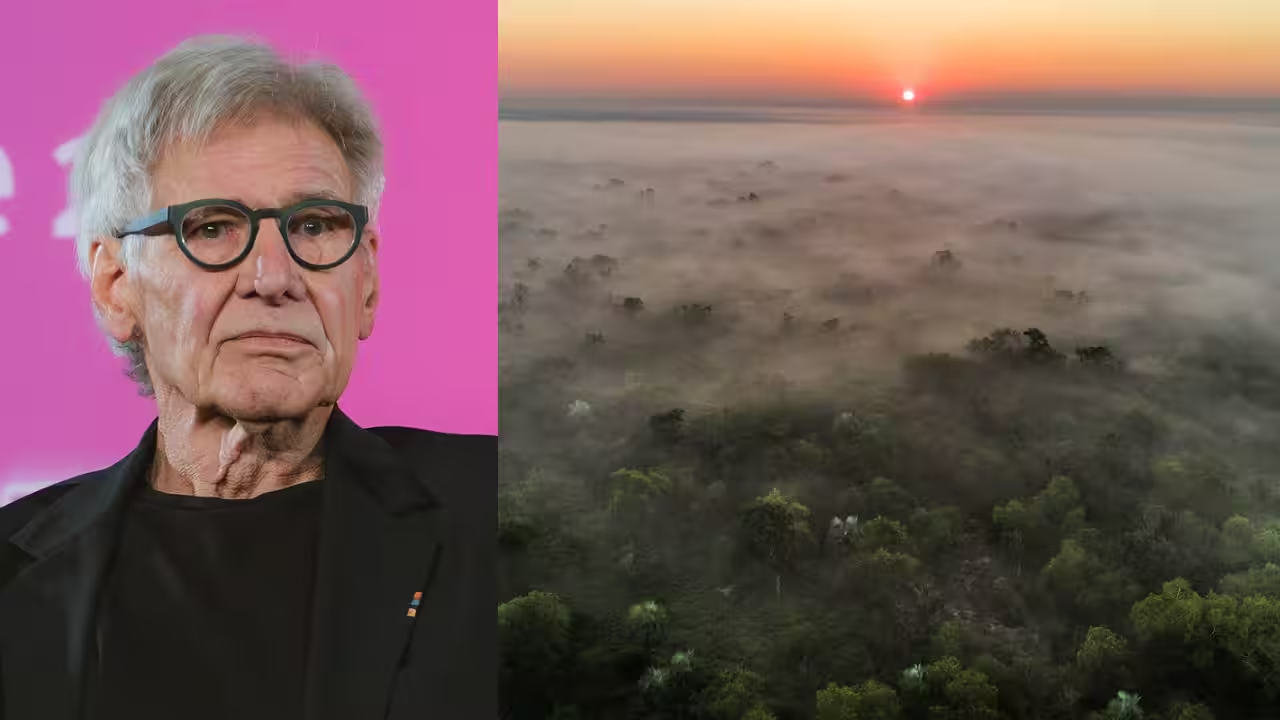
Actor Harrison Ford has passed the E.O. Wilson Legacy Award for Transformative Conservation Leadership to Mozambique’s Gorongosa Restoration Project, recognising its efforts to rebuild a national park that lost more than 90% of its large animals during the civil war and its aftermath. The project, which began in 2008, has helped restore wildlife populations, with the park now holding more than 100% of its equivalent 1960s wildlife biomass and more than 250 lions. The award was presented at Harvard’s Sanders Theatre on October 12, 2026, with the project recognised for combining scientific research, biodiversity conservation and community development.How did Gorongosa rebuild its wildlife after the civil warGorongosa National Park, located in Mozambique, experienced a devastating decline in its wildlife population between 1972 and 2000, when more than 90% of its large animals were lost during the civil war and its aftermath. The restoration effort began in 2008 under a public-private partnership between the Government of Mozambique and the Carr Foundation, led by Greg Carr. The initiative has focused on rebuilding the park's wildlife populations while supporting the communities living around it.The foundation said the park now has more than 100% of the equivalent biomass of wildlife it had in the 1960s. Its lion population, which had fallen to single digits in 2004, has since grown to more than 250. The restoration was led by a combination of conservation science, habitat management and community programmes. Carr has devoted more than 20 years to the project, with an emphasis on ensuring that Mozambicans play a central role in the park's recovery.What has research revealed about Gorongosa's biodiversityScientific research has been central to the Gorongosa Restoration Project, which has partnered with more than 80 universities, including Harvard, Princeton, Stanford, Oxford and Cambridge. According to the E.O. Wilson Biodiversity Foundation, researchers have documented more than 8,000 species across the Greater Gorongosa landscape, with roughly 200 of them new to science. Research connected to the park has also produced more than 100 peer-reviewed articles, including findings on how decades of ivory poaching contributed to the rise of tuskless elephants.The park is also home to the only Master's programme in Conservation Biology conducted entirely inside a national park, according to the foundation. Forty-eight Mozambican students have graduated from the programme, with alumni going on to work in national parks, universities and government institutions. Six members of the park's staff also hold competitive PhD scholarships at universities in the United Kingdom, Portugal and South Africa. A survey conducted in July 2026 by a team led by Dr Jacinto Mathe documented approximately 592 plant, animal and fungal taxa over 11 days. Of these, 48 had never previously been recorded in the park, including what appeared to be a dung beetle new to science.What is Gorongosa doing to improve lives around the national parkThe Gorongosa Restoration Project has also worked to support communities living near the national park, following a One Health philosophy that recognises the connections between human health, wildlife and the environment. Its programmes include education, healthcare, forestry and agriculture initiatives designed to support local communities alongside wildlife conservation. In 2025, the project organised 353 mobile health clinics that reached more than 160,000 people, while 28 new schools were completed to serve 15,000 students.The same year, the project also planted more than 355,000 indigenous trees across 312 hectares. These initiatives formed part of the foundation's recognition of Gorongosa's wider conservation work, which combines the recovery of wildlife with community development. In 2025, the Gorongosa Restoration Project received the BBVA Foundation Worldwide Award for Biodiversity Conservation in recognition of its achievements over 20 years. Aurora Malene said: “Perhaps the greatest measure of restoration is not only what we bring back. It is what we make possible.”What is the E.O. Wilson Legacy Award and why was it createdThe E.O. Wilson Legacy Award for Transformative Conservation Leadership was established by the E.O. Wilson Biodiversity Foundation in 2025. It recognises individuals and organisations that advance the vision of the late biologist E.O. Wilson through scientific research, public engagement and efforts to encourage wider conservation action. Wilson had a longstanding connection with Gorongosa, having visited the park three times after learning about its restoration agreement in 2008.During his visits, Wilson recorded more than 200 ant species, including 20 that were new to science. He also wrote about the park in his 2014 book, A Window on Eternity, and the research centre at Chitengo was named the E.O. Wilson Biodiversity Laboratory in his honour. The foundation said the award was designed by sculptor and coin designer Heidi Wastweet and cast in bronze. Its central thumbprint represents the impact of human activity on the natural world, while a great blue heron symbolises natural wisdom and resilience. Three leaf-cutter ants along the base pay tribute to Wilson's research on ants. The award was presented during Half-Earth Day 2026, which also marked 10 years since Wilson launched the Half-Earth movement, calling for the protection of half the planet's land and sea for the rest of life.You use AI every day. Now get your AI Quotient. Take the AIQ test.
Topics in this story
Gathered from external sources. Rights to this text belong to whoever originally published it.