In 1987, after sketching castles as a teen, Pete Kelley began preparing land for one in Tomahawk, Wisconsin; nearly 40 years later, its tower rose 35 feet
Discover how Pete Kelley transformed childhood sketches of castles into a majestic 35-foot structure in Tomahawk, Wisconsin, a project decades in the making and open to visitors each September.
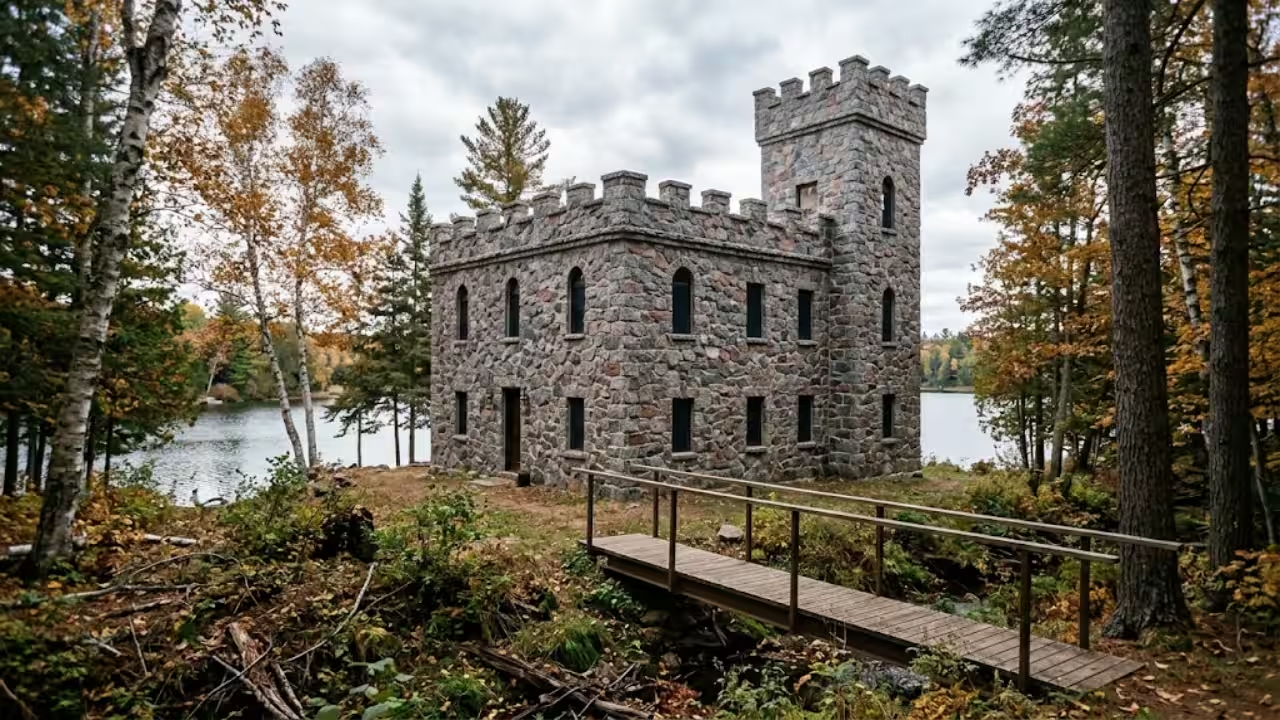
Many youngsters sketch things in notebooks and never return to them. Pete Kelley was different. He spent his teenage years drawing castles and decided at 19 to build one, while many of his peers dreamed of playing quarterback for the Green Bay Packers. He started clearing family land near Tomahawk in Oneida County, Wisconsin, in 1987. Almost forty years later, the result is a three-story castle next to Killarney Lake that is 35 feet (10.7 metres) high and accessible on foot via a small footbridge.This project is local in more ways than its address suggests. The castle uses concrete block walls faced with locally sourced granite. Wisconsin Life reports that Wisconsin red granite and reclaimed tombstone scraps were also used in its construction. These descriptions refer to several materials, but the available accounts do not fully explain how the concrete blocks, granite facing and tombstone pieces fit together. The Wisconsin Historical Society says much of Wisconsin's granite was cut into paving blocks and curbing, with a smaller share used for monuments and buildings. Using local stone in a handmade castle gives it an unusual role. The story traces how Kelley began the project, built the structure and opened it to visitors once a year.From sketches to a siteKelley is an electrician by trade and had no formal architectural training. His family has owned the land for more than a century. He began clearing it in 1987, surveyed the site and installed water and a septic system. About five years later, he was ready to lay the first block. One visit made the whole strategy. WXPR reports Kelley flew to meet another castle builder, Harry D. Andrews, who spent his life building a castle near Loveland, Ohio and was over 80 when Kelley visited at age 19. Andrews advised him that 19 was the appropriate age to begin a project like that, because it takes a lifetime. The SPACES Archives describes how, while serving in the Marines, Kelley collected books about castle architecture and later travelled through Europe to study historic buildings. He has said that his own design draws on features from many castles rather than copying a single example.Built one block at a timeThe footings are 32 inches (about 81 cm) wide and four feet (about 1.2 metres) deep. According to Wisconsin Life, the outer wall weighs about 5,000 pounds (2,270 kg) per running foot. The castle consists of two buildings connected by a shared stairway, with a Great Hall on one side and private rooms on the other. Three flights of stairs lead to the tower, which has a barbecue, a refrigerator and a pulley system for carrying ice to the top. The parapet walls have flat tops about the width of a beer can.Kelley does most of the work himself, occasionally getting help from a mason and a plumber. His training as an electrician also shaped the construction. He planned the wiring in advance and concealed conduits inside the block walls, sometimes using pipes installed many years earlier. Supplies arrive by different routes in different seasons. Large trucks carry stone and other heavy materials across the frozen water in winter, once the ice is frozen. During summer, when the site is accessible only on foot, Kelley moves materials across the footbridge one load at a time with a dolly kept near the bridge. The transportation details are not inherently contradictory. The distinction is that trucks bring supplies across the frozen water in winter, while the dolly helps move materials across the footbridge during summer.Annual opening of the castleThe castle remained closed to the public for most of its construction. A sign near the entrance carried a tongue in cheek warning: “If you can read this, you are in range.” The sign was meant to discourage casual visitors and reflected Kelley's playful medieval humour. After friends kept arriving in autumn, he began opening the gates during Tomahawk’s annual Fall Ride. He mows the grass, cleans the floors and unlocks the gates himself. WSAW reported that about 2,000 people had arrived by midday on the final Sunday in 2022, and young visitors were knighted when they arrived. In 2026, the castle was open to visitors from September 18 to 20.The castle's height appears tied to local building rules. Northwoods News reports that Kelley kept it at 35 feet to meet the residential building code. Oneida County's zoning ordinance generally limits buildings within 75 feet of the water to a height of 35 feet and may require a conditional use permit for taller buildings or those with more than two floors. The ordinance does not establish how the rules apply to Kelley's castle, so this remains background rather than a conclusion about the castle's legal status.Kelley has said he does not expect the castle ever to be finished. Wisconsin Life estimated that it was about 75% complete in 2022. In a short video, Kelley says he will keep working on the castle until he dies. His daughter hopes to take over the project, and he chooses one job to complete each year. For Kelley, the castle remains a lifelong project, with new work planned each year.You use AI every day. Now get your AI Quotient. Take the AIQ test.
Topics in this story
Gathered from external sources. Rights to this text belong to whoever originally published it.