Omar Hossino: Chief counsel and national security adviser, House Republican Policy Committee
For many in Washington, being sanctioned by America’s adversaries is a badge of honor. Omar Hossino, the national security lead for the House Republican Policy Committee, is viewed as the staffer who has helped members get on those blacklists. “His greatest achievement: He had me identified by the Assad dictatorship [in Syria] as an enemy…
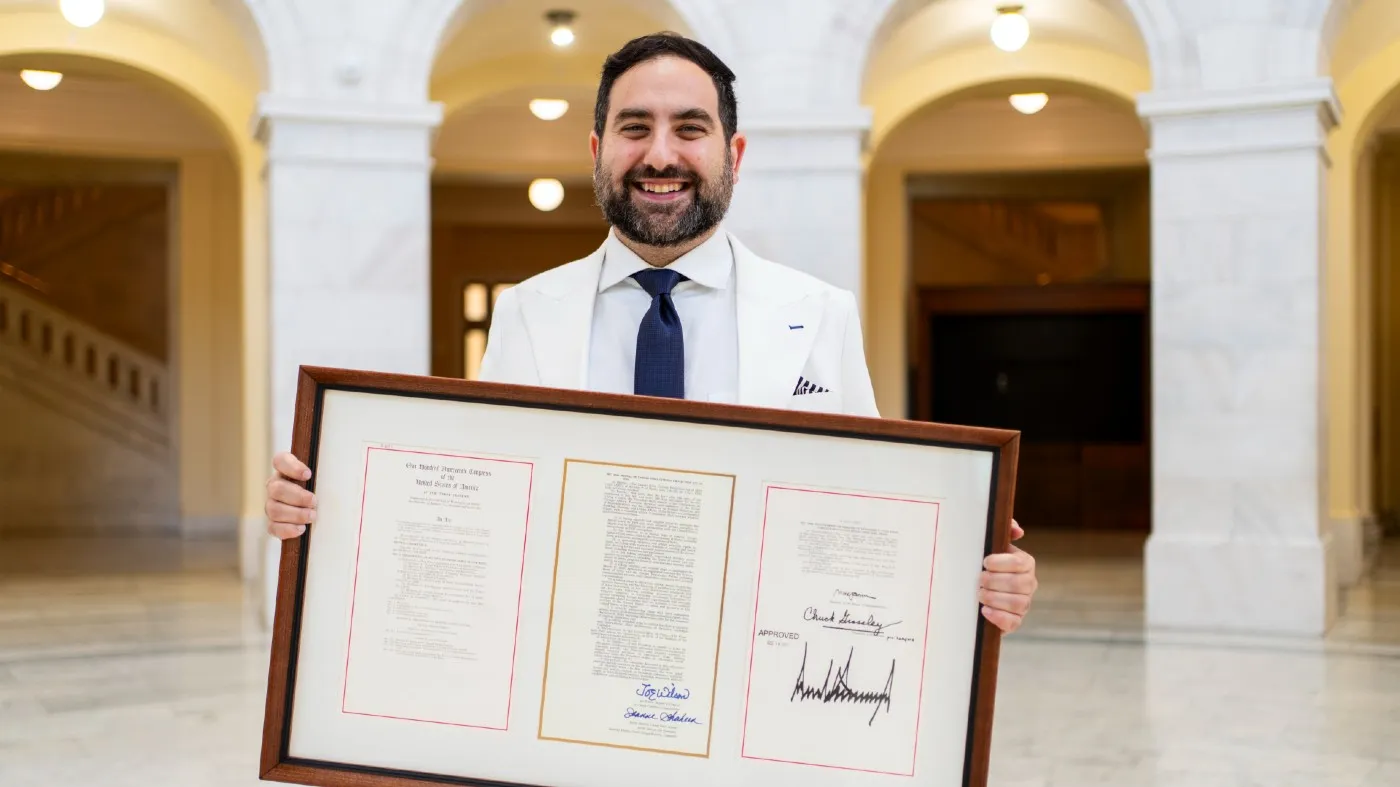
For many in Washington, being sanctioned by America’s adversaries is a badge of honor. Omar Hossino, the national security lead for the House Republican Policy Committee, is viewed as the staffer who has helped members get on those blacklists.
“His greatest achievement: He had me identified by the Assad dictatorship [in Syria] as an enemy of the state,” Rep. Joe Wilson (R-S.C.) said. “That means you’re really being very effective.”
Growing up in Charleston, W.Va., as the son of Syrian immigrants, Hossino said he developed an obsession in the fourth grade with watching C-SPAN, which in turn helped forge his Republican identity. He saw firsthand how “socialism and dictatorship … destroys the human spirit,” motivating him to confront authoritarians and human rights abusers around the world.
Congress is a dream job for Hossino, who named the Caesar Syria Civilian Protection Act of 2019 as one of the bills he’s most grateful to have worked on. The legislation is viewed as helping usher in Syrian dictator Bashar Assad’s downfall, robbing the regime of funds through comprehensive sanctions and punishing it for its gross human rights abuses.
When Assad was overthrown by Syrian rebels in December 2024, Hossino found himself advocating to repeal the Caesar Act in order to give the new governing authorities a chance to access badly needed capital to stabilize the country.
“When it [Caesar] did its duty, we were able to meet our objective there, the Congress repealed the law, and illustrated that its time was over,” he said. “That shows you Congress had a major role in foreign policy.”
While Hossino’s work on the House Republican Policy Committee and the Republican Study Committee is focused on advancing a conservative foreign policy, he points out that successful legislation is built on bipartisanship, with compromise on both sides.
In April 2024, then-President Biden’s request for supplemental aid for Ukraine was receiving increased GOP pushback — coming as then-presidential nominee Donald Trump was campaigning against U.S. aid for the country. Getting key GOP members to a “yes” included making the funds for Ukraine a loan, strict oversight provisions and increased sanctions on Russia.
When asked about weathering partisan whiplash, Hossino leans on a maxim a colleague once shared with him: “The administration writes in pencil, and Congress writes in pen.”
“It’s sometimes a very painfully slow, tough process. But when things pass, there’s a certain permanence to it in shifting U.S. policy,” he said.
Topics in this story
Gathered from external sources. Rights to this text belong to whoever originally published it.