US shelves Sudan arms embargo proposal amid UN Security Council divisions
The Trump administration is shelving its proposal for an arms embargo on Sudan amid divisions on the United Nations Security Council (UNSC), which will instead vote Thursday on a short-term extension of a more regional arms embargo that would just impact Darfur. The vote on UNSC Resolution 1591 would extend the Darfur arms embargo until…
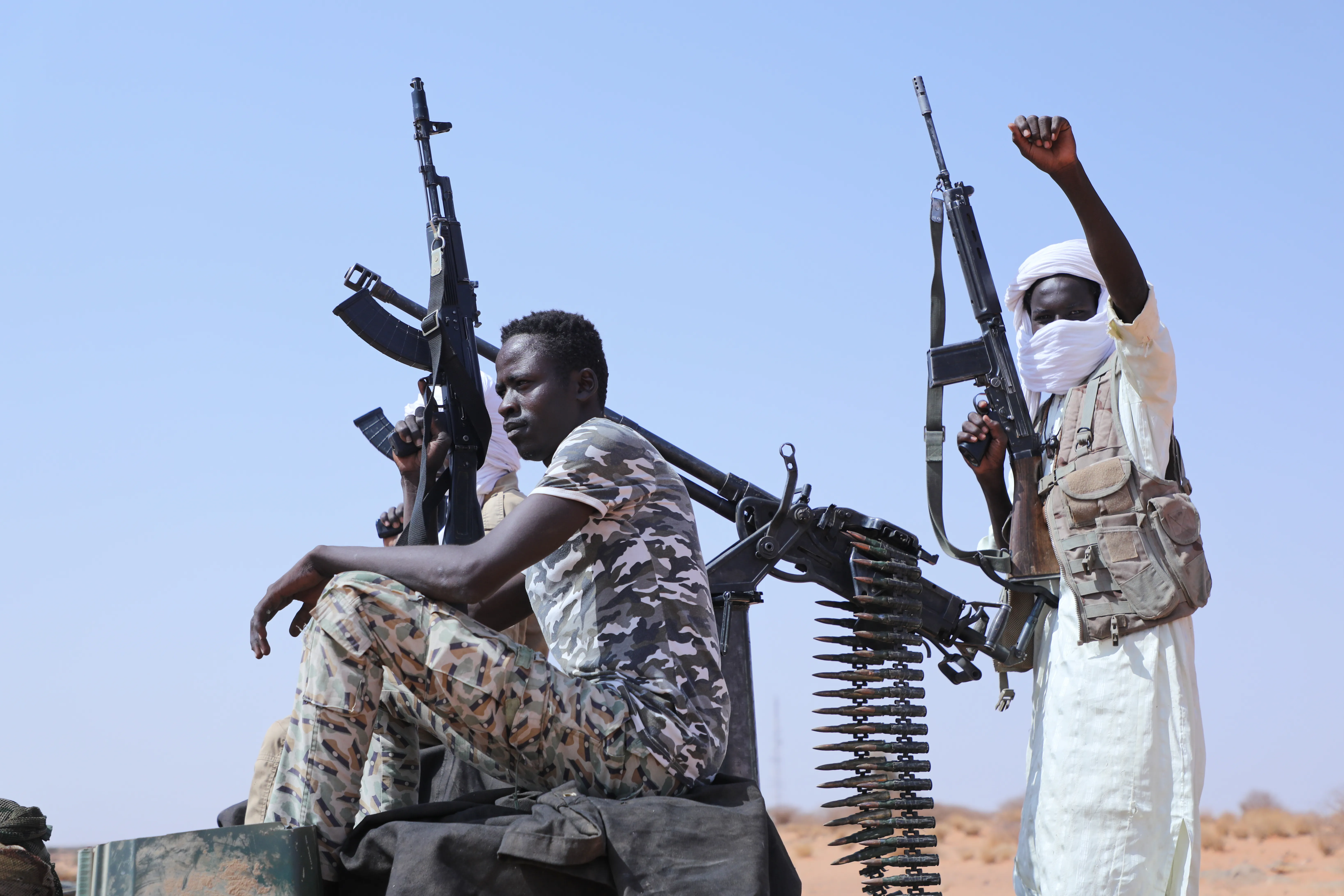
The Trump administration is shelving its proposal for an arms embargo on Sudan amid divisions on the United Nations Security Council (UNSC), which will instead vote Thursday on a short-term extension of a more regional arms embargo that would just impact Darfur.
The vote on UNSC Resolution 1591 would extend the Darfur arms embargo until Dec. 11, according to a draft of the resolution obtained by The Hill.
The draft resolution is proposed by the U.S., which holds authority for drafting text related to Sudan sanctions, the so-called penholder.
The vote on the extension was confirmed by Sudan’s deputy permanent representative to the United Nations, Ammar Mohammed Mahmoud.
“Sudan welcomes the Security Council’s decision to technically renew the measures under resolution 1591 for sixty days without expanding their geographic scope. Sudan has consistently maintained that the priority should be to enforce the existing sanctions regime, not expand it,” Mahmoud said in a statement to The Hill.
The vote for a short-term extension underscores the deep divisions on the Security Council over the U.S. proposal to expand the arms embargo to the entire country.
While the arms embargo has failed to halt weapons flows, 1591’s reporting requirements are viewed as an important tool in documenting the networks facilitating arms transfers and recommending individuals and entities for sanctions. The U.S. draft resolution extends the mandate for the Panel of Experts — an independent UNSC body established to monitor the implementation of sanctions — until Jan. 11.
The expanded arms embargo was initially proposed in August by Massad Boulos, President Trump’s point person on peace negotiations for Sudan. The county is embroiled in a devastating three-year civil war that has been one of the world’s worst humanitarian crises.
The fighting is centered around rival generals: Gen. Abdel-Fattah Burhan, the head of the Sudanese Armed Forces (SAF); and his former deputy, Gen. Mohamed Hamdan “Hemedti” Dagalo, the head of paramilitary group the Rapid Support Forces (RSF).
Both sides are accused of war crimes, although U.N. experts and the U.S. have accused the RSF of carrying out genocide. The fighting is further complicated by the participation of approximately 150 militias on the ground, and a constellation of external backers to the SAF and RSF.
Boulos, backed by U.S. Ambassador to the U.N. Mike Waltz, sought to use a more than two-decade old arms embargo on Sudan’s Darfur region — Resolution 1591 — to increase pressure on the SAF and RSF by expanding sanctions to the whole of the country.
“The United States has presented a resolution to the Security Council that would expand the arms embargo nationwide, making clear that sanctions and member state implementation of those rules apply to all the networks keeping this war alive—on both sides, with no carve-outs,” Boulos and Waltz wrote in an op-ed for Foreign Policy in September.
“Yes, it will even apply to the arms traffickers, procurement agents, mercenary recruiters, state-backed patrons, established financiers, drone suppliers, and genocidal commanders who have for so long evaded justice.”
But pushback from veto-wielding powers China and Russia — and a number of the nonpermanent members of the Security Council — have delayed the U.S. putting its proposal to a vote.
That opposition was on display in a vote in September, when the U.S. was forced to put forward a short-term one-month extension of 1591 to allow time for more negotiations on its expansion proposal.
Opponents of the U.S. proposal say it undermines the SAF, who they view as a legitimate institution of the Sudanese state, and draws a false equivalency with the genocidal RSF.
Mahmoud, in a statement to The Hill, said “the fundamental problem” with 1591 is that it has failed to stop weapons flows in Darfur, particularly to the RSF.
“A failure of enforcement cannot be remedied by expanding sanctions against the State suffering the consequences of those violations,” he said.
“Sudan therefore remains firmly opposed to extending the arms embargo nationwide. Such a measure would blur the fundamental distinction between Sudan’s legitimate national armed forces and militias and mercenaries operating outside State authority, while potentially weakening the State’s ability to protect its territory and population.”
The Trump administration rejects that the SAF — and Burhan — hold legitimate governing authority.
“Neither the Sudanese Armed Forces, the Rapid Support Forces, nor their respective leaders, represent legitimate, constitutional governance for Sudan – they rule through force of arms alone” Tommy Pigott, the State Department’s spokesperson, said in a statement last month.
“The conduct of each leader of the warring factions renders them ineligible to govern the country. We seek to restore peace and give power back to the Sudanese people.”
Topics in this story
Gathered from external sources. Rights to this text belong to whoever originally published it.