Jennifer Lawrence wanted to talk about her hair. The internet had other ideas.
The reaction to Lawrence's new beauty launch has been less about hair and more about cosmetic surgery speculation. Many say that's unfair.
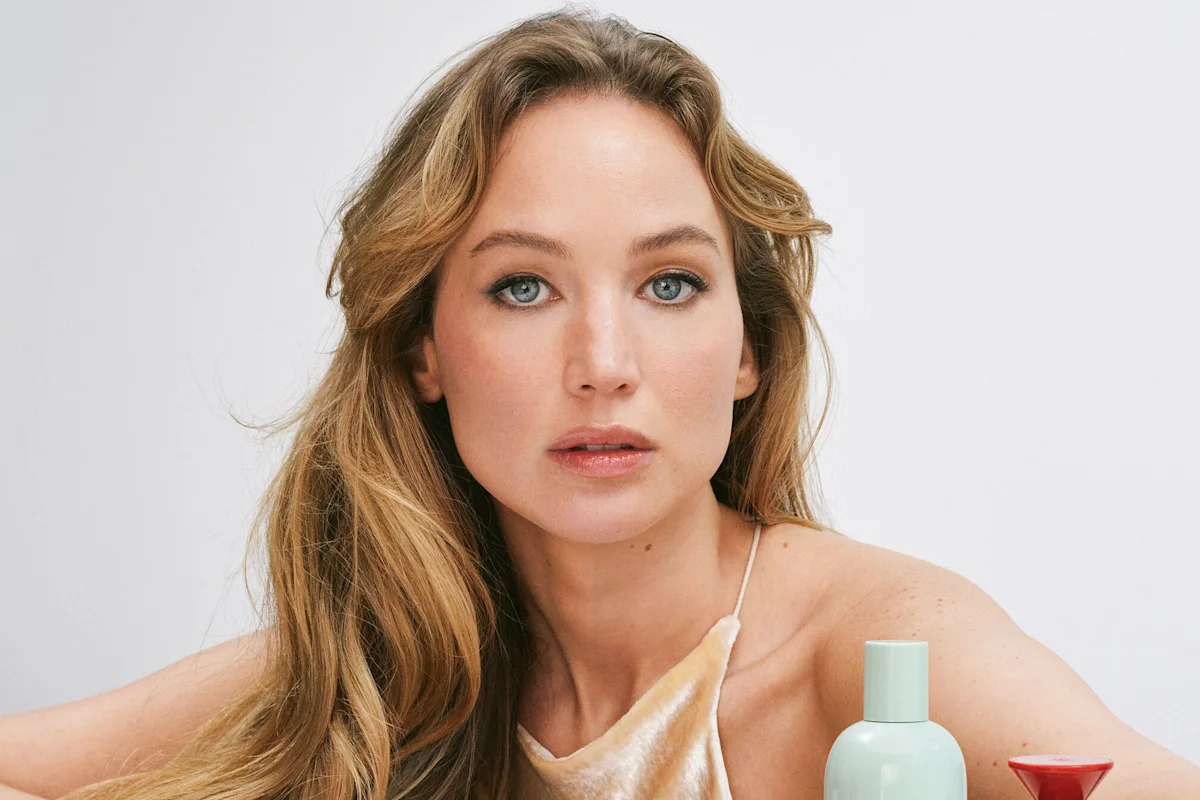
Jennifer Lawrence launched a hair care brand, but the only thing anyone wants to talk about is her face.
The Academy Award-winning actor began a press tour last week to boost her new low-fuss line, named Mes, and made the rounds. She appeared on the cover of the Cut, showing off said effortless hair. She did Alex Cooper's Call Her Daddy podcast and numerous Q&As with beauty publications. She opened up about motherhood, her breast lift and her anxiety over trying something completely new in launching her brand.
"For the last three years, I have been in this kind of delusional bubble where I can't let doubt in," she told the Cut . "Now I'm experiencing doubt."
But the reaction to her announcement seems to be a collective shrug. Celebrity beauty brands have become nearly ubiquitous, and not everyone can translate their personal brand from the screen to the store. For every huge success like Hailey Bieber's Rhode, there are failures like Scarlett Johansson's recently shuttered the Outset , and fans raised an eyebrow at the idea that Lawrence is known for her hair. (Others questioned her brand's name , pronounced "mess," pointing out similarities to Drybar founder Alli Webb's Messy hair care brand.)
To some, it all felt a bit random; to others, more like a recession indicator. But many felt they didn't need to test the products to find out why the star was making this move.
"I'm good with established haircare and skincare brands with a proven track record," wrote one person on Reddit . "You may be good at singing and acting, but that does not mean I have to buy your brand."
They'd rather talk about Lawrence's appearance. On social media sites like TikTok and Reddit, they called the 36-year-old mother of two "unrecognizable," with many commenters saying they had no idea who she was when they first saw her latest photos.
"She was so beautiful. She doesn't look like herself at all anymore," wrote one person on Reddit . "I keep seeing more and more photos of her recently and had no idea at all it was her until I scrolled enough to see someone say it was her! Mind blown."
Many began to assume that Lawrence had undergone at least an upper blepharoplasty , maybe a facelift and, most likely, both. Never mind the fact that the star herself has said she hasn't had a facelift, though she admitted she wants one eventually and occasionally gets "baby Botox." Speaking to the Cut, she noted the invisible labor that "low-maintenance" women do to appear chill yet also extremely hot.
"I want to be a sexy mom," she said. "At drop-off, I want to look like a woman that has her shit together even when I've just woken up and don't have my shit together."
Despite these revelations, women online felt as if Lawrence was ignoring the elephant in the room: how her face has changed. They began to call out what they saw as a talented, popular and "cool" celebrity giving in to anti-aging culture.
"You can't tell me the patriarchy doesn't exist when the culture we live in and the male gaze is making women's bodies unrecognizable," wrote one person on TikTok.
All of this drama has surpassed the coverage of Mes, the whole reason Lawrence opened herself up to the public in the first place, with tabloids couching the online speculation as " rumors " about what she may have had done.
"Jennifer Lawrence likely underwent multiple plastic surgery procedures costing $30K for 'more youthful' look," read one Page Six headline . A second New York Post story bemoaned the "culture of plastic surgery" that has made famous women "puffed-up, plastic clones."
Why has Lawrence's face sparked so much ire? For some, it's less about what she has or hasn't had done and more about the image she has cultivated of herself and what it means to women writ large.
Writer and brand consultant Natalie Reilly says as much in a recent edition of her Substack newsletter I Say This With Love . "Could it also be that this outrage over Jen's appearance and foray into haircare is really about our semi-conscious desire to have JLaw remain our parasocial TomBoy, down home bestie?" Reilly writes.
Lawrence has always presented herself as a fun and lighthearted girl, the type you might want to have as your best friend. Even the stated purpose of Mes, which is meant to make your hair look great with minimal effort, fits with that same ethos; its slogan is "less time fixing your hair, more time living." If Lawrence can't avoid the constant pressures of the plastic surgery industrial complex — with maintenance Botox in your 20s and deep plane facelifts by 50 — what hope do the rest of us have?
But holding Lawrence to this impossible standard is unfair, Amanda M. Czerniawski, a sociologist and professor at Temple University, tells me. Mainly, because J.Law's face and body are integral to her continued success.
"She's an actress," Czerniawski says. "She is supposed to invest in her body and be an extreme. We as the public are like, Oh no, that is what I should be doing too . But you're not her. That's not your job. But it's blended all together."
Therefore, the overwhelming response to Lawrence's "new face" is really not about her at all, but a symptom of women's general anxiety over the pressures they face. Sure, we expect the Kardashians and the Instagram models to get this and that procedure, but J.Law was supposed to be above all that. Any suggestion that she's not can feel like a personal betrayal.
"Is this now the new standard for the average 36-year-old woman? Like, yeah, you need to get cosmetic surgery and prevent the signs of aging, even though you probably don't really have wrinkles yet?" says Czerniawski. "It's like the bar keeps shifting."
But there are also those women who refuse to take the bait. "Jennifer Lawrence doesn't make me feel pressure about my eyeballs," content creator Jennifer Latch vented in a TikTok calling out the scrutiny the actor has gotten.
"Women can't win," Latch continued. "If we age, it's bad. If we don't age, it's bad. If we do this, it's bad. If we don't do this. … Can we just stop talking about women's bodies?"
Topics in this story
Gathered from external sources. Rights to this text belong to whoever originally published it.