Two men rescued from flood-stricken Nepali power plant where scores feared trapped
Two people have been rescued from inside the tunnels of a stricken Nepali hydropower plant, and voices have been heard, nine days after massive flash floods and landslides trapped hundreds of workers inside multiple Himalayan energy projects.
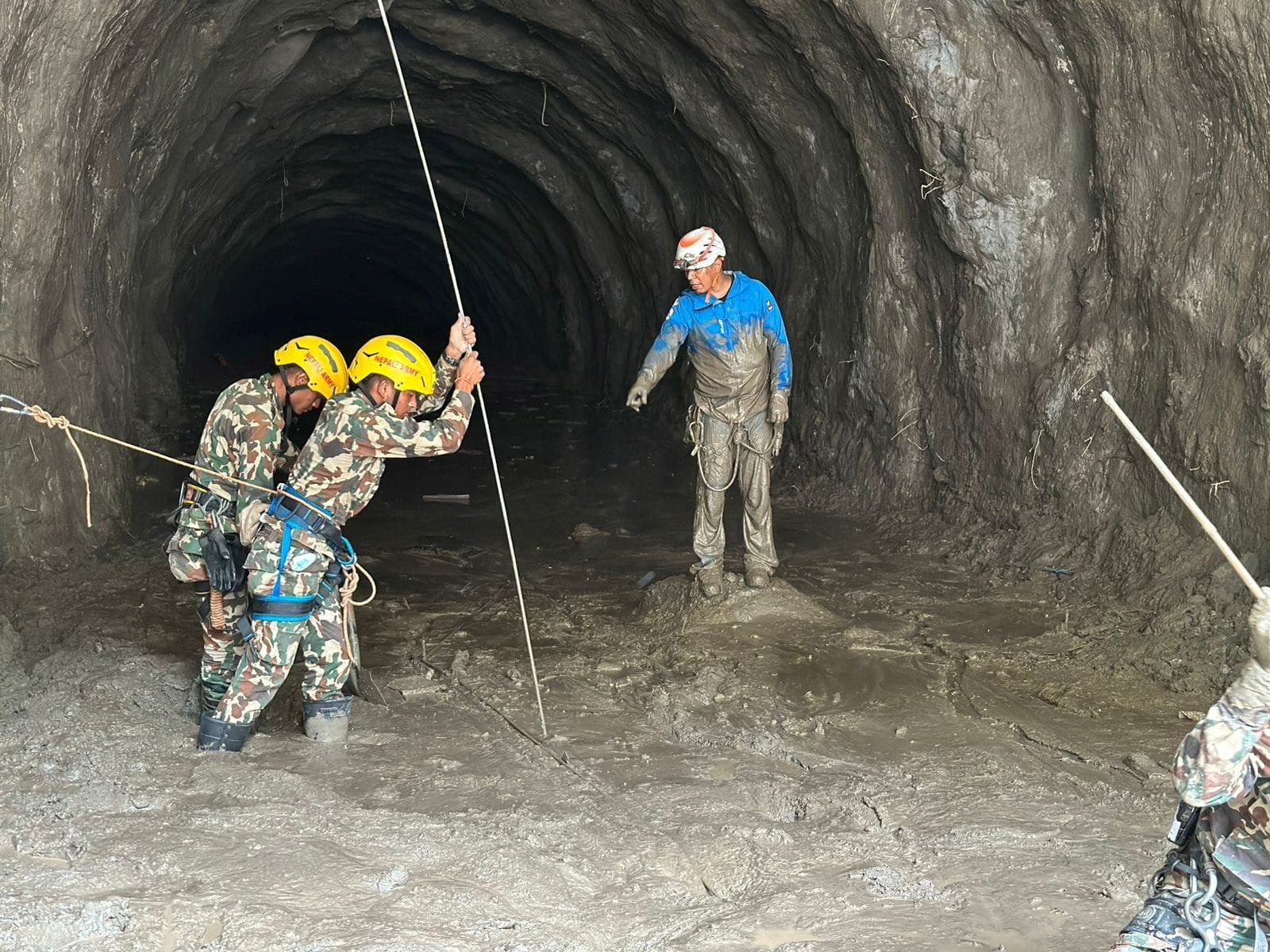
Two people have been rescued from inside the tunnels of a stricken Nepali hydropower plant, and voices have been heard, nine days after massive flash floods and landslides trapped hundreds of workers inside multiple Himalayan energy projects. In a dramatic breakthrough for what has been a desperate, round-the-clock rescue effort in treacherous conditions, the two men were pulled in quick succession from inside the Trishuli 3A hydropower plant, where an operation has been underway to bore into a tunnel to search for 42 workers that were unaccounted for. Video showed about a dozen rescuers pulling a man from a small hole in the ground and clapping as he reached safety. “Rescuers heard voices,” Bipin Regmi, police chief in the flood-hit district of Nuwakot told CNN, adding a medical team was on its way to the site. The tunnel that leads to the underground powerhouse there, where dozens of people were working when the catastrophic flood hit, is more than four kilometers (2.5 miles) long. Hopes had been fading for the safe rescue of the workers at the plants that run along Nepal’s Trishuli River – among them foreigners from China, South Korea and India. A torrent of cement-like floodwater had engulfed the river and its surrounding areas, killing more than 1,200 people in Nepal. It’s not clear how many people may still be alive inside the tunnel where the rescue effort is unfolding. Nepali authorities say there are more than 900 workers missing at multiple energy projects in the Himalayas including many foreign national workers. Parikshit Mehra, an Indian army colonel, told CNN’s Anderson Cooper, who reported from the Trishuli 3A site earlier this week, that for a rescue mission like this one, “the first 48 hours are the most crucial.” “People who are stuck tend to panic much more than when they are outside in the open,” Mehra said in an interview with Cooper earlier this week, outside the tunnels where the colonel was leading a team of specialized troops. “Getting stuck in a tunnel you can’t see anything. Generally if you stay in the dark you get disoriented in about 24-25 hours,” he said. “Beyond that, (after) 48 hours, you start hallucinating. And then I think from there on it’s always a fight.” But, Mehra added: “There have been miracles.”
Topics in this story
Gathered from external sources. Rights to this text belong to whoever originally published it.