After earning 50 cents a day as a bookkeeper, John D. Rockefeller used $1,000 in savings and a $1,000 loan to start a business in 1859; eleven years later, he co-founded Standard Oil
Explore the life of John D. Rockefeller, from his humble beginnings as a bookkeeper to co-founding Standard Oil and becoming a billionaire, amidst controversies and antitrust challenges.
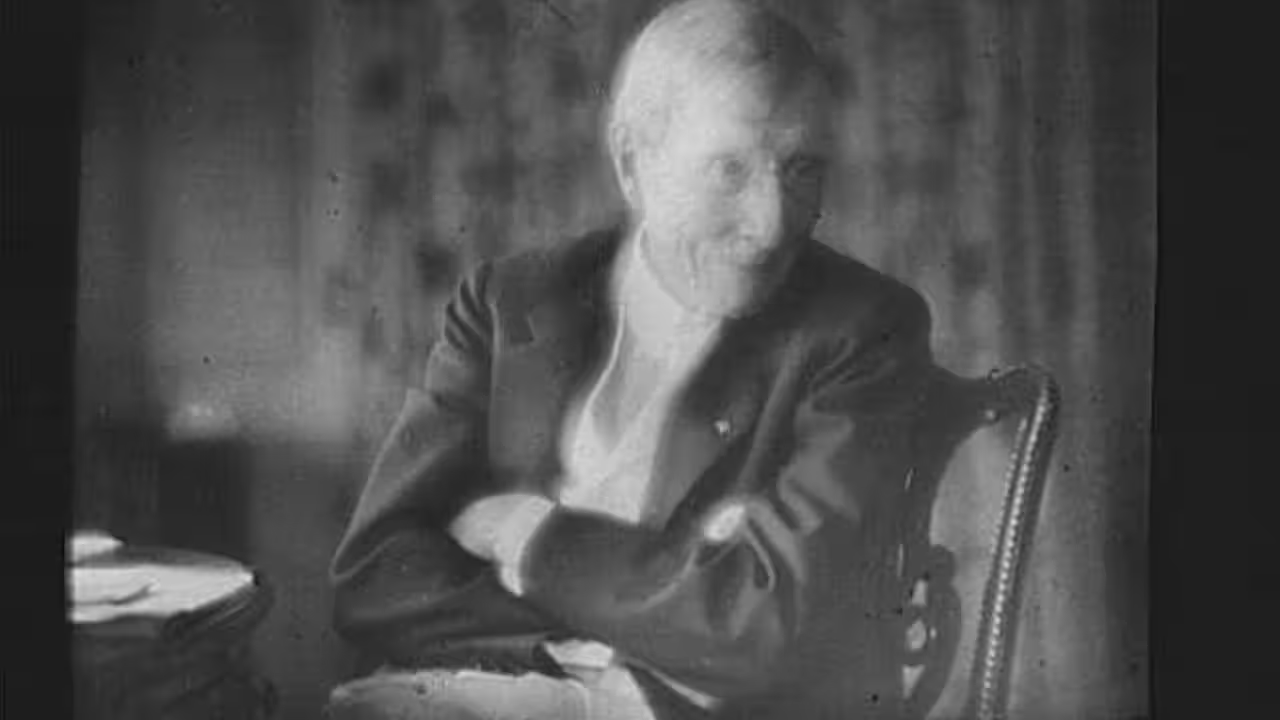
A career that started with ledger books would eventually place John D. Rockefeller at the heart of a legal tussle over monopoly power. His path between the two ran straight through Cleveland’s oil refining trade, which he entered at the cusp of the American oil industry's growth.Early ambition and the first refinery bet According to the Rockefeller Archive Center, Rockefeller was born on July 8, 1839, in Richford, New York, the second of six children of William A. and Eliza Davison Rockefeller. His family moved to Ohio in 1853. He attended Central High School in Cleveland, then left in 1855 to study at Folsom Mercantile College. He completed its six-month business course in just three months and joined Hewitt & Tuttle, a firm that dealt in commission sales and shipments. He initially started as an assistant bookkeeper there, earning 50 cents a day, and climbed up to the rank of cashier and head bookkeeper.In 1859, he entered into a partnership with Maurice B. Clark in the commission business, using $1,000 in savings and a $1,000 loan. This was the same year when the first oil well was drilled at Titusville, Pennsylvania. This discovery helped establish the petroleum industry. Cleveland subsequently became a refining centre, and Rockefeller and Clark entered the business in 1863. With Samuel Andrews, they built and operated an oil refinery named Andrews, Clark & Co., and simultaneously continued their commission work.Two years later, in 1865, there was, however, a disagreement over the management of their business, and they decided to sell the refinery to whichever partner offered the highest bid. The situation ended with Rockefeller buying it for $72,500. He then sold his other interests and joined Andrews in a new firm, Rockefeller & Andrews, the Rockefeller Archive Center noted.How Standard Oil cornered the refining market Against this backdrop, the oil trade was expanding as kerosene became more widely used for lighting. In 1870, along with his brother William, Andrews, Henry M. Flagler, Stephen V. Harkness and other partners, Rockefeller established the Standard Oil Company. The business centred on refining oil rather than sourcing or drilling oil wells.Rockefeller’s business acumen paid close attention to operating costs and the use of refinery by-products. Standard Oil brought more of its labour and supporting work, such as barrel-making and pipelines, in-house. It also invested in research for materials other refiners discarded or overlooked. After the company purchased an Ohio oil field that contained sour crude, it developed a process that removed impurities from oil.According to the Library of Congress, in the first three months of 1872, it bought 22 of the 26 refineries in Cleveland, which were either closed or on the cusp of bankruptcy. Standard Oil also secured favourable railway rates and promised large and regular shipments. The company had one edge over other refineries: it moved oil at a lower cost.The Rockefeller Archive Center records that in 1882, Standard Oil’s properties were brought together under the Standard Oil Trust. The trust had an initial capital of $70 million and 42 certificate holders, of which Rockefeller owned one-third of its certificates, the Archive Center noted. By the late 1880s, Standard Oil controlled 90% of American refineries.Antitrust backlash and a billion-dollar legacyBut the company’s market power and railway arrangements attracted political scrutiny. States and federal lawmakers adopted measures against monopolies and railway rebates. One such strong critic was journalist Ida Tarbell, who published a detailed criticism of Standard Oil’s business practices.In 1911, the US Supreme Court ruled that Standard Oil had violated the Sherman Antitrust Act and ordered the dissolution of Standard Oil, according to the Library of Congress. The separate units endured as independent businesses, and later some developed into major oil corporations, including ExxonMobil. Irrespective of the controversy, Rockefeller’s wealth continued to grow. Newspapers at the time had touted him as the world’s first billionaire in 1916, the Library of Congress noted.He had begun to give away part of his wealth decades earlier, and supported his church and other causes. His later philanthropic legacy included the University of Chicago, the Rockefeller Institute for Medical Research, the General Education Board and the Rockefeller Foundation established in 1913. The university achieved incorporation in 1890 after others pledged the balance of its $1 million endowment within 90 days of Rockefeller’s conditional offer of $600,000, the Rockefeller Archive Center noted. Rockefeller passed away on May 23, 1937. He was 97 when he died at his home in Ormond Beach, Florida.You use AI every day. Now get your AI Quotient. Take the AIQ test.
Topics in this story
Gathered from external sources. Rights to this text belong to whoever originally published it.