In 2022, Delaware sank the 180-foot Texas Star, once a floating casino and scallop vessel, at Redbird Reef as the state’s third reef ship in three years
US News: In June 2022, Delaware sunk the Texas Star, a former floating casino and scallop vessel, to enhance the Redbird Reef, boosting marine habitats and recreational opportunities.
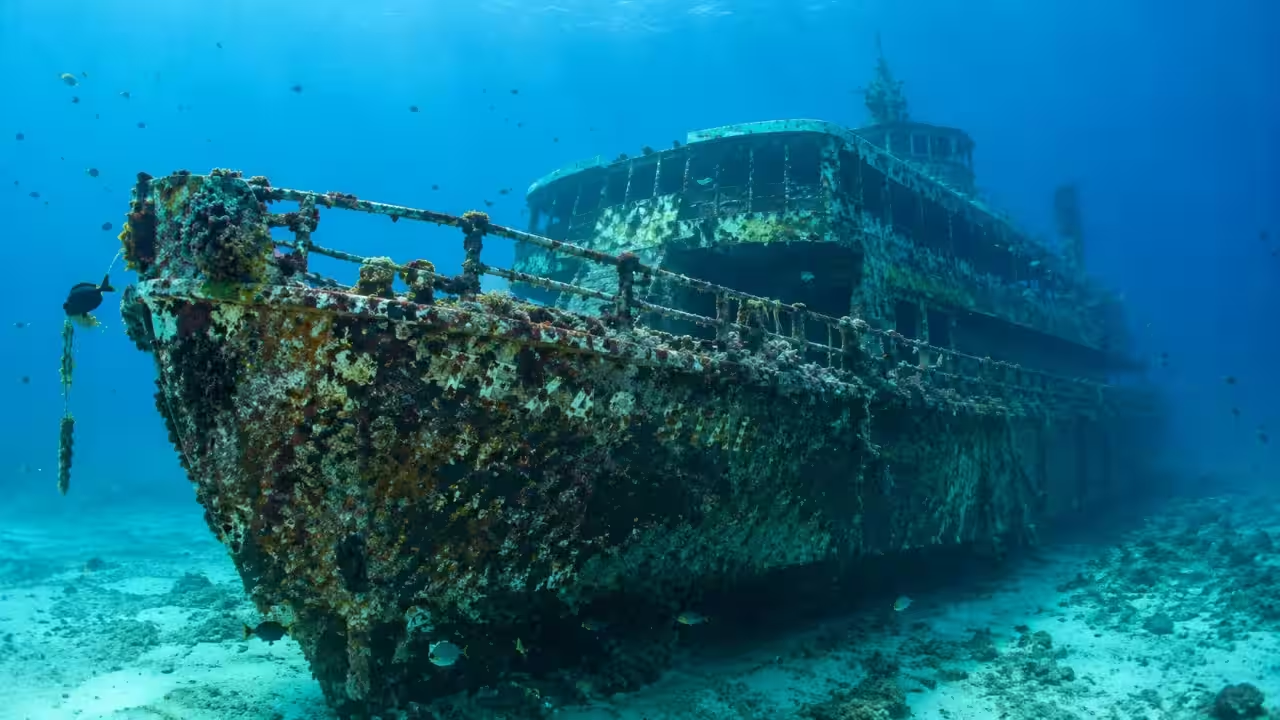
A 180-foot ship that once served as a floating casino and commercial scallop vessel found a final role off the Delaware coast in June 2022. The vessel, named the Texas Star, was deliberately sunk by Delaware's Department of Natural Resources and Environmental Control (DNREC) to become part of an artificial reef system. Instead of being dismantled on land, the retired ship was prepared for life on the seafloor, where its steel structure could provide a new surface for marine life and create another destination for recreational fishing and diving.According to DNREC, the Texas Star was sunk on June 29, 2022, at Redbird Reef, about 16.5 miles offshore, where the water was approximately 86 feet deep. Its deployment was the third vessel sinking carried out by the state's reef programme in three years. The project was part of Delaware's wider effort to create underwater habitat in an area where the natural seabed is largely sand and mud.From supply ship to floating casinoThe history of the Texas Star can be traced back well before it sank to the bottom of the ocean. The ship was constructed in 1977 using the hull of a multi-purpose supply ship. During its career as a working ship, the ship was equipped as a floating casino and was used to catch scallops commercially. Before being sunk by Delaware, the Texas Star had been used in many different ways. Sinking the ship required more than simply towing it offshore and dumping it into the water. According to the DNREC, the vessel was sunk only after being cleared for environmental and safety standards by the US Environmental Protection Agency and US Coast Guard.The state invested $325,000 in federal Sport Fish Restoration funds to acquire the Texas Star from marine contractor Coleen Marine. The contractor carried out the sinking, which took place at around 4:20 p.m. local time. Once it settled on the seabed, the vessel became a permanent piece of the artificial reef rather than a working ship. The conversion illustrates one of the unusual ways retired infrastructure can acquire a second function. A ship that had once been designed to carry out industrial and commercial work was deliberately placed where its hull could provide three-dimensional structure in an otherwise relatively flat marine environment.A new structure on the seafloorRedbird Reef was already an unusual seabed before the Texas Star arrived there. This reef covers around 1.3 square miles. It is known for its collection of more than 700 retired New York City subway cars, which gave the reef its name because of their reddish paint. The reef also includes tanks, armoured vehicles, tugboats, fishing trawlers and barges.The purpose is not simply to create an underwater collection of unusual objects. Delaware's artificial reef programme uses stable, cleaned and non-toxic materials to create hard surfaces where marine organisms can attach and grow. Over time, those surfaces can become covered with organisms and provide shelter and feeding areas for fish. According to research published in PeerJ, scientists examining 12 artificial reef sites off the coasts of Delaware, Maryland and Virginia found that fish abundance was significantly associated with the amount of sea-whip coral growing on the reefs. The study also found that sea whips contributed much of the reefs’ vertical structure, adding complexity to the underwater habitat and providing additional surfaces and spaces for marine life.The third vessel in three yearsThe Texas Star marked an addition to a second wave of artificial reef development for Delaware. The state began establishing its reef sites as far back as 1995, and today there are 14 reef sites that have been permitted in Delaware Bay and the Atlantic Coast. The chain of vessels that were sunk included the Reedville first in August 2020 on Redbird Reef; this ship previously served as a Navy and Army freighter, and later as a menhaden fishing ship. This was followed by the sinking of the menhaden ship named John S. Dempster Jr. in early 2021 on the Del-Jersey-Land Reef.For Delaware, the reefs offer more than habitat for fish species. They also provide recreation for anglers and divers, giving retired vessels a new purpose. This artificial reef project, as described by its initiators, forms part of a wider plan to promote fisheries, recreational angling and diving, and tourism. Beneath the Atlantic waters, the ship became another addition to Delaware’s man-made reef structures, which are designed to provide habitat.Catch the latest World News and Live updates. Download the TOI app.
Topics in this story
Gathered from external sources. Rights to this text belong to whoever originally published it.