Chris Mason: Budget needs to go some way towards delivering PM's promises
Support on the cost of living, and in particular energy bills, as well as announcments on devolution will be central to John Healey's first Budget.
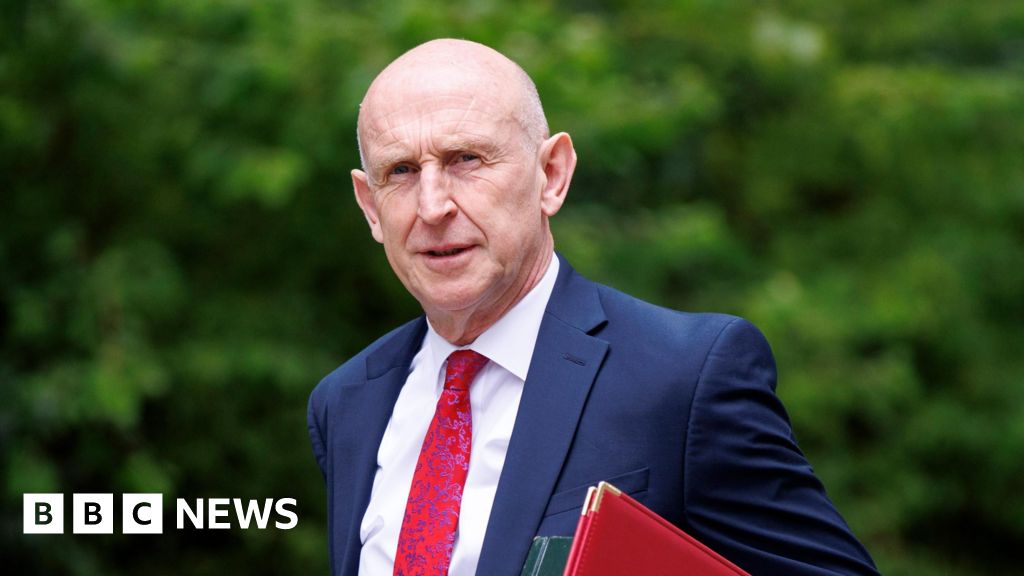
Two quotes from the chancellor and the prime minister get to the heart of this Budget.
"The money New Labour had in the 90s is simply not there now….Britain has it harder now," the Chancellor, John Healey, said last month.
And from Andy Burnham, days before he became prime minister: "This change...is the most significant change moment in our politics for 40 years."
So what happens when the economic realities confront the political ambitions of this new government?
As Helen Miller, director of the Institute for Fiscal Studies (IFS), puts it : "We have a relatively new government with seemingly big ambitions but facing a long list of constraints.
"Some of those constraints…are self imposed, others are being worsened by global events, most noticeably war in the Middle East."
Let's be clear, plenty in Westminster in all parties will say that the amount of money around isn't everything – how well taxpayers' money is spent and where it is spent matters too.
And spending less and taxing less, plenty argue, should be a priority.
But in the bones of many in the Labour Party is an instinct that the government, the state, can and should be a vital agent in driving change and improvements in people's lives – a worldview grounded in a sense that governments should proudly step in, rather than one that believes they should get out of the way.
And how do you deliver a proudly proactive state, delivering for people in a noticeable way, when the tax burden is generationally high, the national debt is sky high, energy bills are rising and inflation is higher than expected?
Minimum wage set to rise but 18-20 year-olds will not get bigger increase
Tax on banks, energy bill help and minimum wage rise - what could be in the Budget?
Healey's Budget needs to sustain the stronger economy through gathering clouds
But ministers argue all of this doesn't mean the government is powerless.
Many are expecting support on the cost of living, and in particular energy bills, to be targeted at the most vulnerable. The banks are braced for a levy or surcharge that may pay for this.
There will be an announcement about further spending on defence, but not yet how spending 3% of national income on our security will be delivered by 2030 – that will come in next year's Spending Review.
And one of the prime minister's key ideas - handing power away from Westminster and closer to you, devolution - will be central too.
There will be, the chancellor told BBC Newscast, a "really radical devolution of powers and resources to local leaders that are often better placed to get beyond the departmental systems."
But some at Westminster fret extra money for mayors and others in local government are not yet accompanied by adequate checks and balances to ensure that money is well spent.
The chancellor will argue the economy is becoming more robust – and yes, there are some economic indicators that are more positive than forecast: growth is better than expected, as is productivity and unemployment is down.
But as the Resolution Foundation think tank points out : "John Healey's problem is that conflict in the Middle East has once again pushed up energy prices and interest rates.
"So, despite the signs that the UK economy is becoming more resilient, household and public finances are in for another shock."
Four ways Labour could raise money in the Budget without hiking income tax
Chris Mason: Jackdaw approved but tricky energy trade-offs remain
In essence, we can expect a smaller Budget this time, compared to some in recent years, when it comes to the scale of tax and spending changes.
The chancellor has been talking up a desire to offer "breathing space" and "hope" - a tacit acknowledgement that there is a limit to what the government can do given the constraints it faces.
It has promised not to raise income tax, national insurance or VAT, a self imposed constraint, as the IFS put it. And there are the international ones beyond its control too.
The big question for many will be whether the Budget is – or can be - big enough to meet the moment? Opposition parties will argue it amounts to tinkering.
The government will try to convince you it is one of many moments in the coming weeks and months that will attempt to deliver the scale of change the prime minister has promised.
Topics in this story
Gathered from external sources. Rights to this text belong to whoever originally published it.