In 2025, Mowi launched Chileâs first floating solar salmon farm; now it supplies 57% of its power and saving 36,750 gallons of diesel a year
Rest of World News: For years, diesel has been a practical part of running salmon farms in remote coastal waters, where connecting to a conventional electricity grid is o.
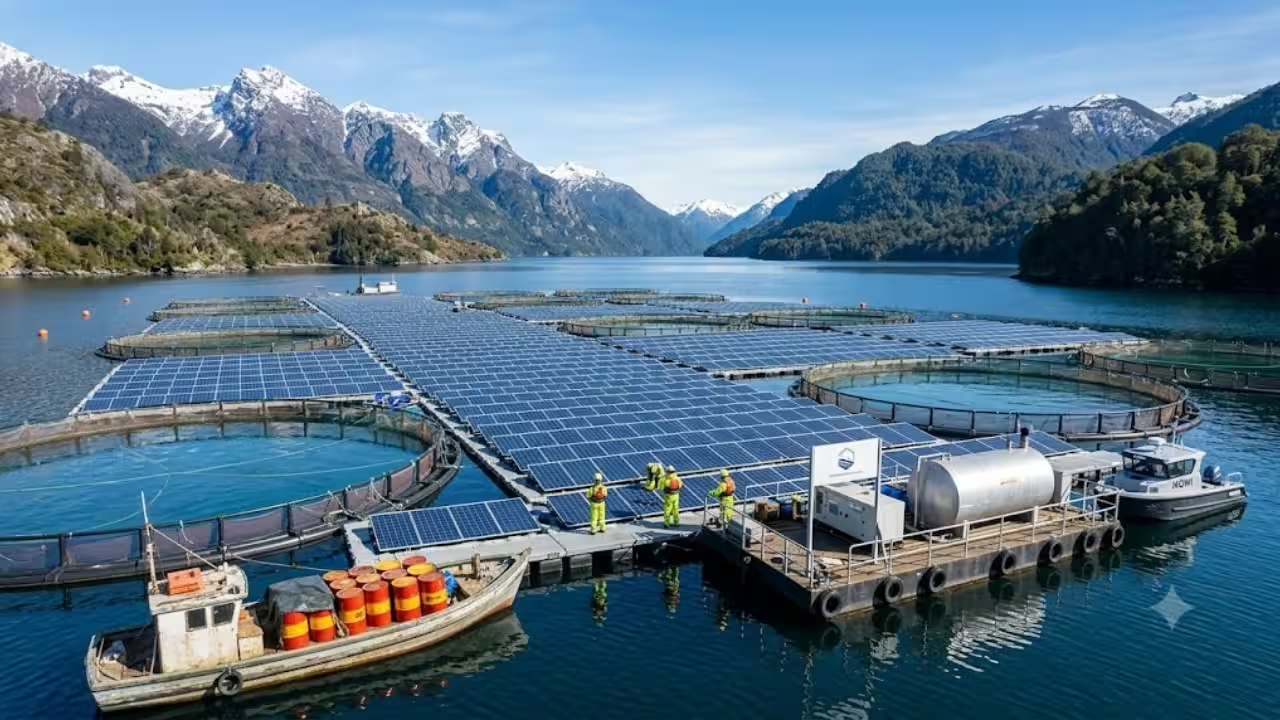
For years, diesel has been a practical part of running salmon farms in remote coastal waters, where connecting to a conventional electricity grid is often difficult. That is beginning to change at one of Mowiâs sites in southern Chile. In June 2025, the company introduced what it described as Chileâs first floating solar cage at its Isla Huar salmon farm in the Los Lagos region. The installation combines solar panels fitted to the farming structure with batteries that can store electricity for use when sunlight is unavailable. A year on, the project is reported to be supplying about 57% of the siteâs power requirements. It is also expected to save around 139,200 litres of diesel each year, equivalent to roughly 36,750 US gallons. The figures offer an early indication of what renewable power can do for an offshore salmon farm operating far from the grid.Why Mowiâs 2025 floating solar cage in Chile mattersMowi announced the project in June 2025, describing it as Chileâs first floating solar cage. The installation was developed with AKVA group, Alotta Energy and Fjord Maritime at the companyâs Isla Huar operation. Rather than placing solar panels on land, the system puts them directly on the floating farming infrastructure, where they have to cope with wind, waves and the demands of an offshore working environment.According to the official Mowi site, the hybrid arrangement was designed to reduce fuel use and cut emissions. The company estimated an annual reduction of 350 tonnes of COâ. Its announcement also explained how the electricity would be handled: power from the floating solar plant could either be used immediately or stored in batteries for later use. The system was initially expected to cover up to half of the centreâs energy requirements.How battery storage keeps Mowiâs floating solar salmon farm runningThe panels are only part of the system. Battery storage is what allows electricity generated during periods of sunshine to remain available when solar production falls. Alotta, which supplied the floating solar technology, describes the installation as a hybrid system designed to provide power continuously rather than simply producing electricity when the sun is shining.In its account of the Chilean project, Alotta said the system covers approximately 50% of the siteâs energy requirements and combines solar generation with integrated battery storage. The company also operates the project under an energy-as-a-service model, meaning Mowi purchases renewable electricity rather than having to operate the entire energy installation itself. Alotta described the arrangement as a way of making the technology easier to use at remote aquaculture sites.Why cutting diesel use matters for Mowiâs remote salmon farmThe newer figures from AKVA group put the renewable contribution at around 57% of the farmâs energy needs. The company says the system is expected to reduce annual diesel consumption by approximately 139,200 litres. That is roughly 36,750 US gallons of fuel that would no longer need to be burned each year. The same reduction is associated with about 350 tonnes of COâ emissions annually.That reduction matters at a farm that operates away from a conventional electricity grid. Diesel is not only used as a fuel source; it also has to be transported to the site. Cutting consumption therefore reduces the amount of fuel that has to be delivered by boat. AKVA says the project is also expected to reduce noise from diesel generators, changing the working conditions around the farm while lowering the amount of boat traffic associated with refuelling.Why Mowiâs floating solar project could become a model for remote salmon farmsThe project is attracting attention because remote aquaculture sites often need reliable electricity but are located far from conventional power grids. Solar panels and battery storage can provide local power, while diesel generators remain available when renewable energy is insufficient. As per Alotta, its floating solar technology was previously tested along the Norwegian coast before being introduced in Chile. Mowi developed the project with AKVA group, Alotta Energy and Fjord Maritime to improve energy efficiency and reduce emissions.For Mowi, the goal is to reduce diesel use rather than eliminate it. The reported 57% renewable contribution means solar power and batteries supply a significant share of the farmâs electricity, with diesel kept as backup. If the projected 139,200-litre annual reduction is achieved, the system could also reduce the amount of fuel that needs to be transported to the remote site.Launched in 2025 as Chileâs first floating solar-powered salmon-farming installation, the project demonstrates how renewable energy and battery storage can be added to existing offshore operations. The technology partners say the system is designed to provide about 57% of the farmâs electricity and cut diesel use by roughly 36,750 gallons a year, potentially offering a model for other remote aquaculture sites.Catch the latest World News and Live updates. Download the TOI app.
Topics in this story
- floating solar technology
- battery storage in aquaculture
- diesel reduction salmon farms
- Mowi floating solar salmon farm
- Chile first floating solar cage
- COâ emissions reduction
- remote power solutions for aquaculture
- renewable energy salmon farming
- Isla Huar salmon farm
- sustainable aquaculture
- World news
- World news today
Gathered from external sources. Rights to this text belong to whoever originally published it.