Scotland's recycling rates fall to lowest level in five years
Environmental regulator Sepa says households recycled 42.8% of waste in 2025 - down from 44.3% the previous year.
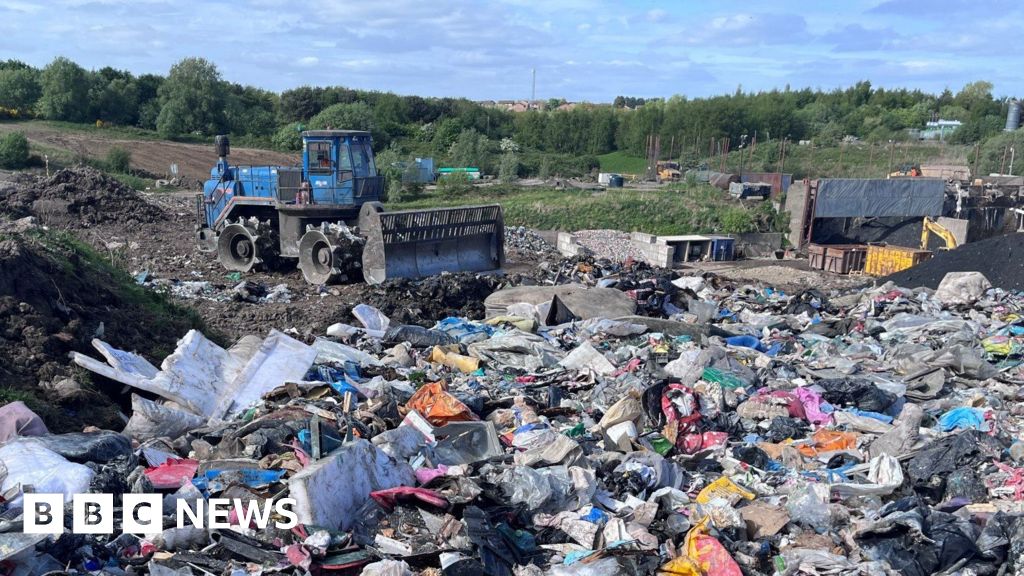
Scotland's recycling rate has fallen to its lowest level in five years, according to figures from the Scottish Environment Protection Agency (Sepa).
The Scottish government's environmental regulator says households recycled 42.8% of waste in 2025 - down from 44.3% the previous year.
According to a roadmap set by the Scottish government in 2010, recycling rates should have hit 70% last year but are falling well short.
The share of waste processed at an incinerator remained broadly the same at 82% but the amount being diverted to landfill fell by 10%.
Recycling rates vary massively by local authority. South Ayrshire's residents recycled 55% of their waste, compared to 26% in Glasgow.
The islands have the lowest rates, with Orkney recording a figure of just 18.2%.
A total of 2.31 million tonnes of waste was created by households in 2025, which represents a fall of just 1,500 tonnes.
Recycling rates have remained similar - at about 45% - for more than a decade.
The biggest change has been seen in the way black bag waste is treated.
A rapid growth in the construction of energy-from-waste plants, which generate electricity by burning rubbish, has seen a shift away from landfill.
But this has not happened quickly enough to meet a landfill ban which was due to come in at the start of the year. It has now been effectively delayed to 2028.
The figures do not reflect a disruption to Scotland's waste management by the long-term repairs being carried out to the incinerator at Polmadie in Glasgow.
The Glasgow Recycling and Renewable Energy Centre in Glasgow was shut down in April this year, with much of the waste being diverted to other incinerators or landfill.
The centre is operated, along with a facility at Dunbar, by Viridor.
Karen MacCormick from the company says waste incineration is a greener option than landfill because it can also generate electricity.
She added: "When it's in landfill you've got the landfill gasses, you've got methane, etc.
"This is a more sustainable way of dealing with the waste, coming through an energy recovery facility, and obviously we can create something at the end of it which is low carbon energy going straight to the grid."
A deposit return scheme for bottles and cans, which has seen recycling rates increase significantly in other countries, has been repeatedly delayed .
Experts have also suggested that the lack of consistency in what is collected by local authorities across the country makes it confusing for households.
While some councils take glass at the kerbside, for example, others are forced to drop them off at bottle banks.
Research from Zero Waste Scotland also suggests that more than half of the waste placed in black bins could be recycled.
Sepa's chief scientific officer, Dr Richard Allan, says the figures highlight an "ongoing challenge" with how waste is managed.
He added: "It's clear that where waste ends up is important, but we need to focus on preventing waste in the first place and recycling more of that material when it is produced."
Waste sector crisis could see rubbish piling up on streets, experts warn
Truckloads of Scotland's rubbish will be sent to England, experts say
Sabotage, betrayal, secrecy... and recycling
Kim Pratt, senior circular economy campaigner at Friends of the Earth Scotland, said there had been a "shocking decline" in recycling rates.
She said this showed that Scotland had "lost its way", with households missing the 2025 target of 70% recycling "by a mile".
"Recycling levels have stalled in Scotland since the Scottish government encouraged a new generation of waste incinerators to be built, meaning that household waste which could have been recycled is being burned instead," she said.
"The Scottish government is expected to consult on new circular economy targets this year.
"If these are to be meaningful, it must learn the lessons from the past – setting targets is the easy part, meeting them requires real commitment and planning that puts people and nature first."
The Scottish government has been approached for comment.
Topics in this story
Gathered from external sources. Rights to this text belong to whoever originally published it.