Nearly 400 people helped carve Mount Rushmore; workers climbed 700 stairs and dangled over the mountain as dynamite removed most of the rock
Discover the extraordinary effort behind Mount Rushmore, where nearly 400 workers transformed a granite mountain into a national monument using dynamite and manual labor, climbing 700 stairs daily.
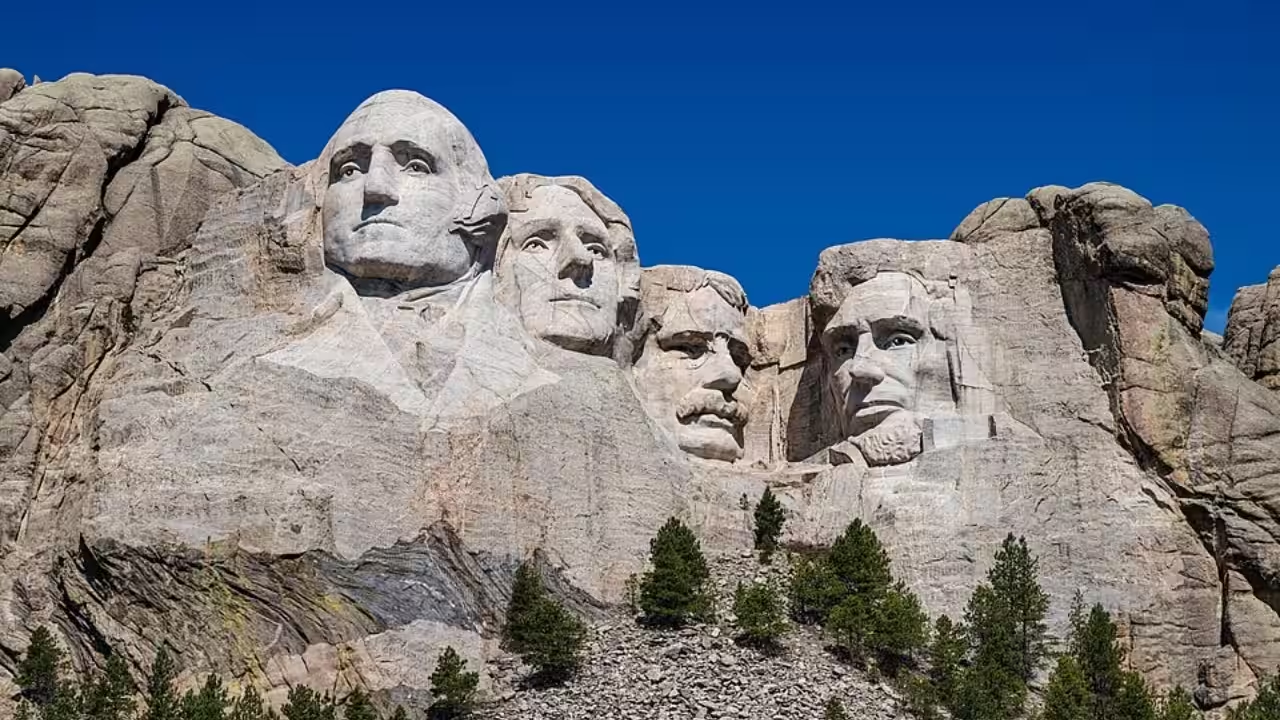
For 14 years, hundreds of workers helped transform a granite mountain in South Dakota into one of America’s most notable monuments. This required more than just sculpting skills, as workers climbed 700 stairs to reach their positions, operated heavy machinery and, in some cases, worked while being suspended above the mountain face in small seats which were attached to steel cables. Though dynamite removed most of the rock, drillers and carvers had to shape the remaining granite by hand.According to the National Park Service (NPS), nearly 400 men and women contributed to the Mount Rushmore project. These workers’ responsibilities included drilling and operating machinery, as well as blacksmithing and housekeeping.A climb of 700 stairs before work beganSouth Dakota’s state historian, Doane Robinson, proposed a large-scale sculpture in the Black Hills to attract visitors to the area. The concept was developed by sculptor Gutzon Borglum to turn it into a monument featuring four US presidents: George Washington, Thomas Jefferson, Theodore Roosevelt and Abraham Lincoln.Reaching the worksite in itself was a demanding part of the job. The NPS records that the workers had to climb 700 steps to reach the top of the mountain to clock in for the day before beginning their duties. Notably, this was part of the routine while the project was operating, not an uninterrupted daily schedule across all 14 calendar years. The construction of the monument faced several interruptions, such as funding shortages and weather-related stoppages.The ones who were assigned to work on the steep granite face were usually lowered in bosun chairs attached to steel cables. These cables were approximately three-eighths of an inch thick. The federal agency describes the mountain’s face as roughly 500 feet high. Call boys helped coordinate this operation. They were positioned near the edge of the mountain and shouted messages between the workers in the suspended chairs and those operating the winches.How dynamite removed most of the mountainExplosives were central to the project due to the scale of the excavation. Around 90% of the carving was reportedly accomplished using dynamite. Powdermen prepared charges of specific sizes to remove calculated amounts of granite, instead of just blasting it indiscriminately. The workers were cleared from the mountain before a charge was detonated.Dynamite was used until only around three to six inches of rock remained beyond the intended carving surface. The process then shifted to a more precise method called honeycombing. Drillers made closely spaced holes in the rest of the granite. This weakened the granite, making it easy to remove the pieces by hand. Facers or bumper tools were then used by the workers to smooth the surfaces of the presidential faces.A dangerous project with lasting consequencesWhile there are no records of fatalities despite the hazardous conditions, the record should not be mistaken for an absence of serious occupational harm. Workers were exposed to fine granite dust. PBS’s American Experience reports that the lungs of several people who were associated with the project were permanently scarred by the dust.The project reached its final stage after Borglum died on March 6, 1941. His son, Lincoln Borglum, took up the responsibility for the remaining work. The final drilling took place on October 31 of that same year. The original plan depicted the presidents being sculpted down to their waists, but due to insufficient funding and practical constraints, the completed memorial consisted of four heads.You use AI every day. Now get your AI Quotient. Take the AIQ test.
Topics in this story
Gathered from external sources. Rights to this text belong to whoever originally published it.