Riyadh airport attack another dangerous moment in already tense conflict
The Houthis have stepped up their attacks on Saudi Arabian soil, and while the physical damage can be quickly repaired, its reputation for stability is taking a battering.
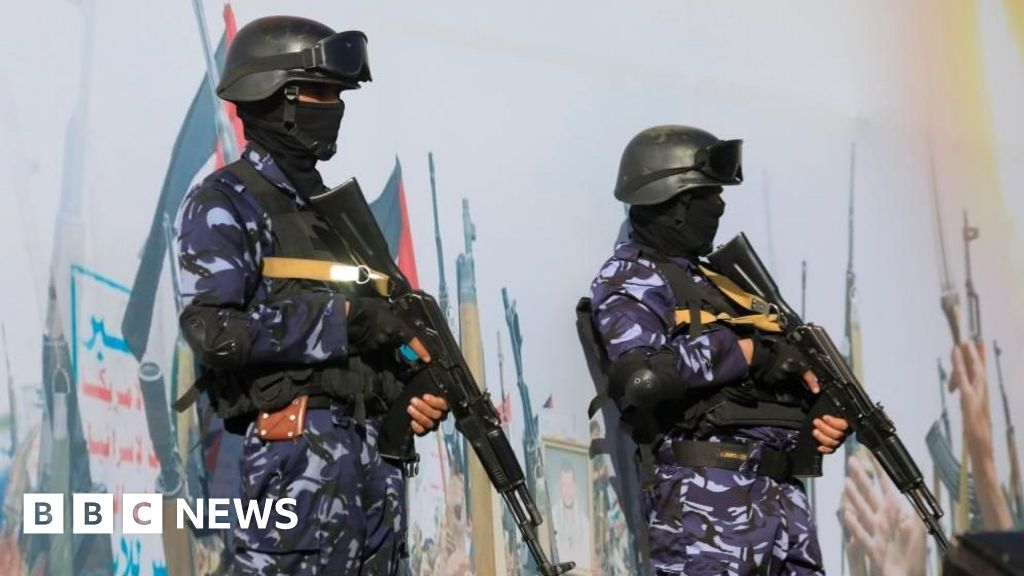
Saturday's attack on King Khalid Airport in Riyadh is another dangerous moment in a region that is already fraught with tension and conflict.
In recent weeks the Houthis have stepped up their attacks on Saudi Arabian soil, but their attacks over the past few days have hit the country's critical infrastructure in the form of the capital's main airport , apparently penetrating Saudi air defences with ease.
The physical damage can be quickly repaired, but the country's reputation as a safe haven of stability is taking a battering.
As well as all the airport attacks, the Houthis have sought to take control of strategically significant positions along the Red Sea coast and around the Bab al-Mandeb Strait. This further increases the risk to safe navigation along the vital maritime corridor - although the Yemeni government says it has "secured" the strait .
The civil war in Yemen between the country's government - which is internationally recognised and supported by Saudi Arabia - and the Houthis, who are backed by Iran, has been going on for more than a decade. It has left many thousands of people dead and plunged Yemen into one of the world's worst humanitarian crises.
It is a complex and often confusing geopolitical conflict, and this latest escalation needs to be seen in the broader context of the tension between Iran, the United States and Israel.
Who are the Houthis and what do they want?
Houthi attacks raise fears of wider Middle East conflict and more global economic damage
Children brave snipers and mortars to go to school near Yemen front line
Not since the al-Qaeda insurgency of the mid-2000s has the Kingdom faced such a serious threat.
The Saudi government overcame that challenge through an effective hearts and minds campaign. Then it weathered the Arab Spring uprisings around the region which saw off leaders in Tunisia, Libya, Egypt and Yemen.
It even shrugged off – with some annoyance – an Iranian ballistic missile attack on Riyadh in March.
But this is different. Saudi Arabia may have one of the most powerful air forces in the Middle East, and it has been carrying out devastating air strikes on Houthi positions. Despite this, the opposing forces have managed to seize large portions of the country, particularly in the north and west.
But the Houthis know exactly where to hit back: at the soft underbelly of the Saudi economy.
As part of the " axis of resistance ", the Houthis are a vital strategic partner for Iran. From Jizan on the Red Sea to the petrochemical complex at Khurais, the Houthis are delivering explosive drones and missiles with deadly accuracy.
The Red Sea shipping route has become increasingly important, because the Strait of Hormuz, on the other side of the Gulf, has still not fully reopened since the US and Iran have failed to reach a deal to end their war .
Targeting ships in the Red Sea is another way that the Houthis are trying to exert leverage - the attacks cause global economic damage, which is a key bargaining chip for Tehran.
In early September, the White House stated it would not directly intervene in the Yemen conflict, but could provide intelligence support to the Saudis. It later confirmed that it was supplying intelligence and had deployed military experts to Saudi Arabia.
However the situation may have taken a new turn following the latest attack on Riyadh, which killed a US citizen.
Speaking to reporters, US President Donald Trump called Saturday's attack "terrible" and indicated he may intervene militarily with the Saudis.
"We just found out about the recent attack, so we'll make a decision. We move very quickly," Trump said.
But that now seems unlikely, at least before crucial US midterm elections next month.
When he was re-elected in 2024, Trump promised to end America's role in wars around the world. Despite this, the US is currently involved in three unresolved conflicts in the Middle East - in Gaza, Lebanon and Iran.
Should Trump get embroiled in another one, this time in Yemen, it is unlikely to go down well with voters.
This war now looks like it will intensify before it ends in another shaky truce - with or without US involvement.
Additional analysis from Abdelbassir Hassan, BBC Arabic
Inside Yemen's front-line city as Houthis battle for control
Yemen's government announces all-out war to reclaim land from Houthis
How escalating Saudi oil crisis could drive up prices everywhere
Topics in this story
Gathered from external sources. Rights to this text belong to whoever originally published it.