Bluetongue restriction zone extension a 'positive thing' for farmers
The whole of Scotland is now a restricted zone but the agriculture minister says it will make it easier to get livestock to market.
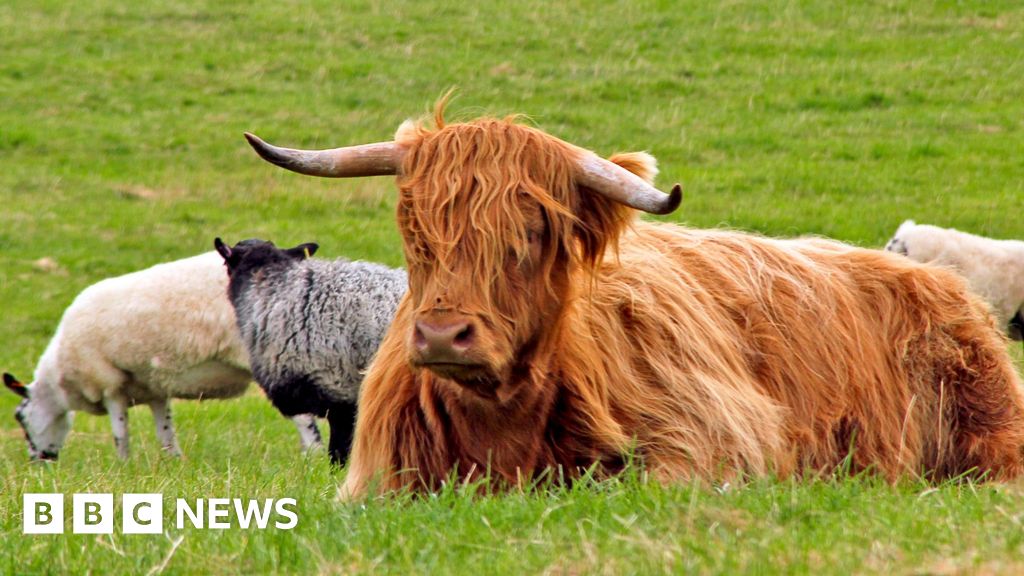
Restrictions aimed at controlling bluetongue, a virus that affects sheep, cattle and other livestock, are now in force across the whole of Scotland.
The Scottish government said they should be seen as a "positive thing" which would make it easier for farmers to get uninfected animals to market without requiring an individual licence.
The disease, which can be spread by insects such as midges, does not affect people and poses no risk to food safety.
Bluetongue was first detected on farms in south-west Scotland in August and there have now been more than 100 infected animals in 41 locations, including four outside the original restriction zone .
While no danger to humans, Bluetongue can cause fever, swelling, lameness, birth defects and difficulty eating for cows and particularly sheep.
In some cases, animals die or become so ill they have to be euthanised.
'I feel guilty': The farmer whose lamb had Scotland's first case of bluetongue
What is the potentially deadly bluetongue virus?
Scientists believe the disease probably spread to Scotland after infected midges were blown across the border from England but the risk of transmission is now falling as the midge season draws to a close.
Agriculture Minister Jim Fairlie said extending the restriction zone was a "sensible step" at the current time that would make trading easier for the livestock industry.
It means the whole of Scotland, along with England and Wales, is now covered by a restriction zone, removing the movement barriers between high and low-risk areas because they all now have the same disease status.
He told BBC Scotland News: "It's a bit counterintuitive but extending restrictions is actually a positive thing because it means we've got the ability to move stock freely anywhere in the country now."
October is traditionally a time when many Scottish farmers sell "store" cattle or lambs to other farmers who will fatten them up further.
"We don't want people to be restricted given the fact that it's now at this time where the vets think there's unlikely to be transmission of the disease," Fairlie added.
Farmers must still notify the authorities immediately when an animal displays symptoms.
Infected animals are generally required to remain on-farm for a minimum of 60 days, but the majority of healthy, non-infected animals can be traded.
Fairlie said vaccination remained the most effective way for farmers to protect their animals from the worst effects of bluetongue.
"People need to be thinking about the vaccine programme for next year," he said.
"There is no other way to protect their stock properly so they should be speaking to their vet and looking forward, thinking about what the vaccination programme looks like for them."
Some farmers reported difficulty getting hold of the vaccine this year as demand rose suddenly as cases were reported in England.
Fairlie said having early conversations about next year's vaccination programme would spur on manufacturers to ensure there are adequate supplies.
Bluetongue restriction zone to be expanded across all of Scotland
Topics in this story
Gathered from external sources. Rights to this text belong to whoever originally published it.