Henry Zankov is no longer fashion’s best kept secret
New York Fashion Week’s designer of the moment, Henry Zankov, takes us inside his swirling creative universe partly inspired by ’60s French cinema.
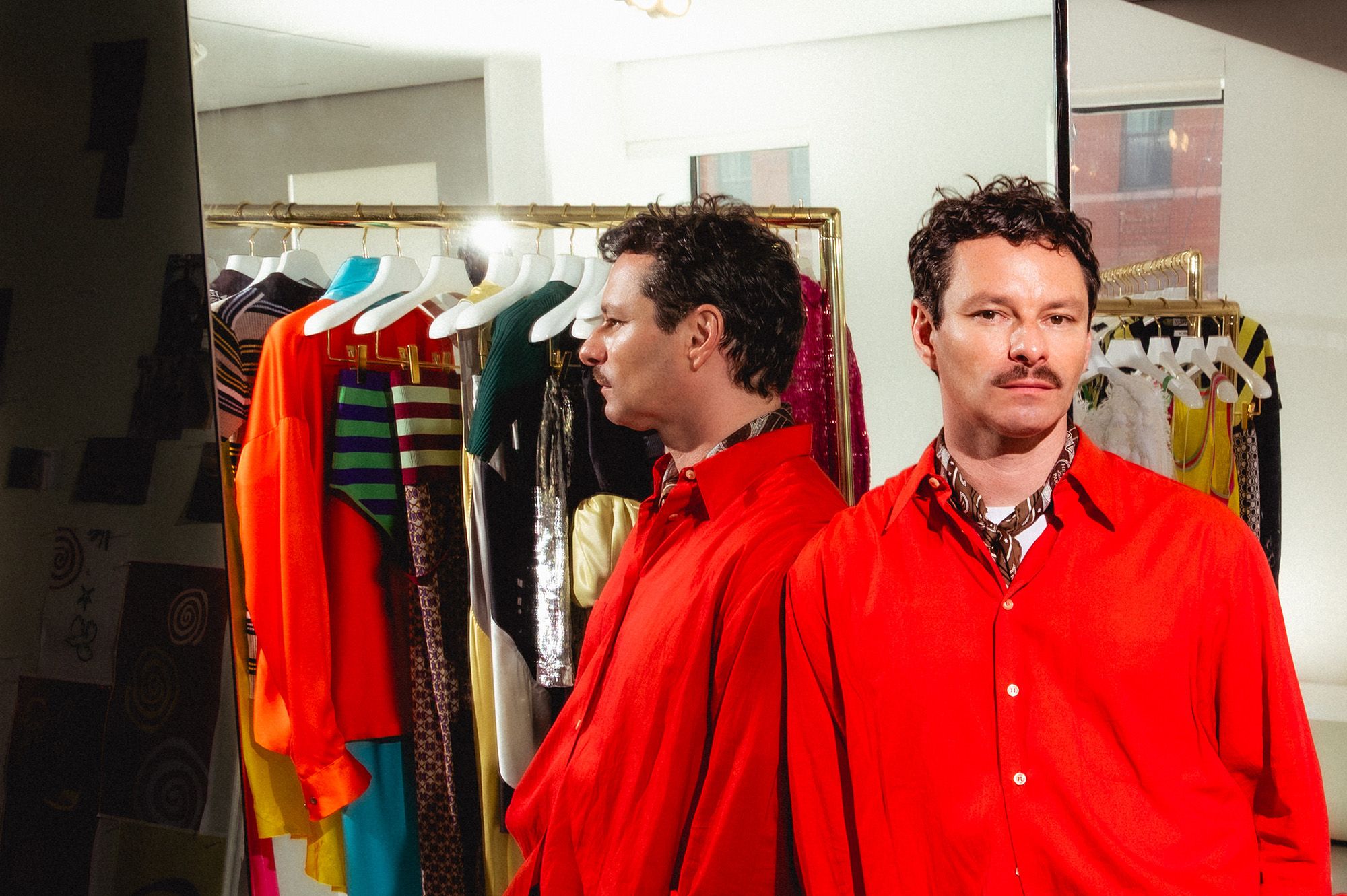
Every few seasons, New York Fashion Week is in need of a savior. Someone who shakes up what can often be a monotonous cycle of all that goes into the jampacked show calendar. Someone who reminds a likely very jaded and fickle crowd of editors, buyers, and industry observers that fashion can still be thoughtful, genuine, and most importantly, fun. This season, Russian American designer Henry Zankov — the creative auteur behind his namesake label Zankov, and the newly appointed first-ever artistic director of Diane von Furstenberg — feels like that person. Zankov is the definition of the type of personality who has quietly and efficiently “done the work.” Before launching Zankov in 2020, he spent years at New York brands such as Donna Karan and Diane von Furstenberg, as well as consulting for a number of labels under LVMH. In just six short years, his eponymous brand has become a regular go-to for New York’s most clued in — and adventurous — dressers. Known for its knitwear, Zankov’s label embraces unconventional pairings that end up being delightful pieces; think sequin embellished sweaters, color-blocked cardigans, spectacular prints, and endless examples of texture — flowing fringe, peek-a-boo cutouts, scrunched satin, and more. For Zankov, establishing a clear “visual vocabulary” was imperative, even before he fully comprehended what the final line would end up being. “I always really wanted the brand to not be about trends, and really about having a strong visual identity first and foremost. I wanted us to be almost when you see it down the street, or when you see it in the store, or see it on someone else, you automatically know what it is,” Zankov said during an interview in the lead up to New York Fashion Week. “Pattern and color are the two major hallmarks of the brand and its very much rooted in knitwear, but not necessarily only knitwear. I’ve been wanting to grow the collection in a meaningful way, but still everything has to be rooted in color and pattern and incredible materiality with a sense of ease and effortlessness.” Kindred spirits, with a kooky twist The Zankov and Diane von Furstenberg brands have a clear design connection when it comes to playing with prints, pattern and bold color. In a way, the two very different brands –– one an established pillar of New York fashion famed for its ‘70s wrap dress, and the other a respected darling with prime promise — have a sort of big-little sister or kindred spirit association. “There’s definitely similarities. They both very much move through life at their own pace. They’re definitely very much extremely curious and open,” Zankov said. While both brands “share a strong sense of color and a visual vocabulary,” there is one big difference, he added. “I think Zankov is a little bit more freaky. It’s a little bit more subversive and maybe cerebral. And I think DVF is really all about confidence and seduction and effortlessness.” When Zankov first started as artistic director at DVF, he kept thinking, “I’ve got to figure out what the difference is” between the two brands. Now, more than ever, he feels that “the Zankov girl or woman would definitely shop at the new DVF, and vice versa.” The designer’s Spring-Summer 2027 collection saw Zankov dive even deeper into his technicolor universe. Skirts were so heavily encrusted with sequins you could hear them swish over the music on the runway. Oversized spiral print sweaters were paired with chunky platforms. Sheer chiffon cape gowns provided a subtle sex appeal. While his reimagined DVF is sultry and sophisticated, Zankov is refreshingly off-kilter and eccentric. Equal parts cool and kooky. While there’s undoubtedly pressure in reviving a brand as well-known as Diane Von Furstenberg while also continuing to build his own namesake label, it helps that Zankov’s two jobs have two vastly different creative goals and business trajectories. “I think about my friends who love the brand, but can’t really see themselves in it,” he said of bringing a new perspective to DVF. “That’s been my approach — how do we take this and make it desirable to them as well.” Furstenberg’s own personal style remains a creative constant as well, with vintage photos of the designer featured on the studio mood boards. “She is always the ultimate inspiration,” he added. And while the designer dedicates different days to each job, he’s still wearing far more hats while steering Zankov. “Zankov is still so small, so I have to think about production and our development and sales — I don’t get to just design for Zankov, so it’s a little bit more complicated,” he said. “I mean, I just did accounts payable today,” he laughed. Futuristic vision, inspired by the past While crafting his own latest collection, Zankov said he kept turning back to the word “analog” and how that reverberates differently across generations. “I was thinking a lot about my mom in the ‘60s when she moved to St. Petersburg in her 20s, and how that was a time where they went into space and you really felt like the future was around the corner,” said Zankov. “For me, that was in the late ‘90s, early 2000s, when the internet came out, and that also felt like that was the next step of the future.” Zankov also referenced a handful of stills from the 1963 French film, “Bay of Angels.” The story stars actor Jeanne Moreau, and in Zankov’s words is about a woman who “goes to Cannes to gamble her life away.” “It feels very 1960s –– it’s a little bit sexy, but it’s also kooky and weird, but a little sad,” he said of the scenes featuring Moreau that inspired the Zankov show. “It’s vulnerable.” And while Zankov does keep carefully curated mood boards (both for Zankov and DVF) at his dual studio at Furstenberg HQ, his biggest form of inspiration remains simple. “I pull things from everywhere,” he said, pointing to the French word “inspirer” which means to both breathe in and give creative inspiration. “It’s just about being open and keeping your eyes open,” he added. “It starts with a feeling…. but for me, really the inspiration is the work itself — the process, really, going from A to Z.” And now, with two deservedly hyped runway shows behind him, Zankov merely hopes that people — in and out of the industry — continue to see and celebrate the underlying energy that both Zankov and his new vision at DVF share. “It’s about embracing color, embracing a sense of play in the clothes, embracing this idea that not everything has to match. I want clothes to feel easy, and I want everything to feel playful,” he said. Zankov added that he wanted people to feel like they were able to truly play with the clothes, to see themselves wearing items “in their own way, as opposed to everything being a formula, and this is how it is.” “That’s why the whole idea of ease is really important to me,” he added.
Topics in this story
Gathered from external sources. Rights to this text belong to whoever originally published it.