The Trump-Xi meeting was heavy on pomp, light on substance. China is just fine with that
Four months after their last meeting, President Donald Trump and Xi Jinping traded niceties during the Chinese leader’s first visit to the US capital in over a decade.
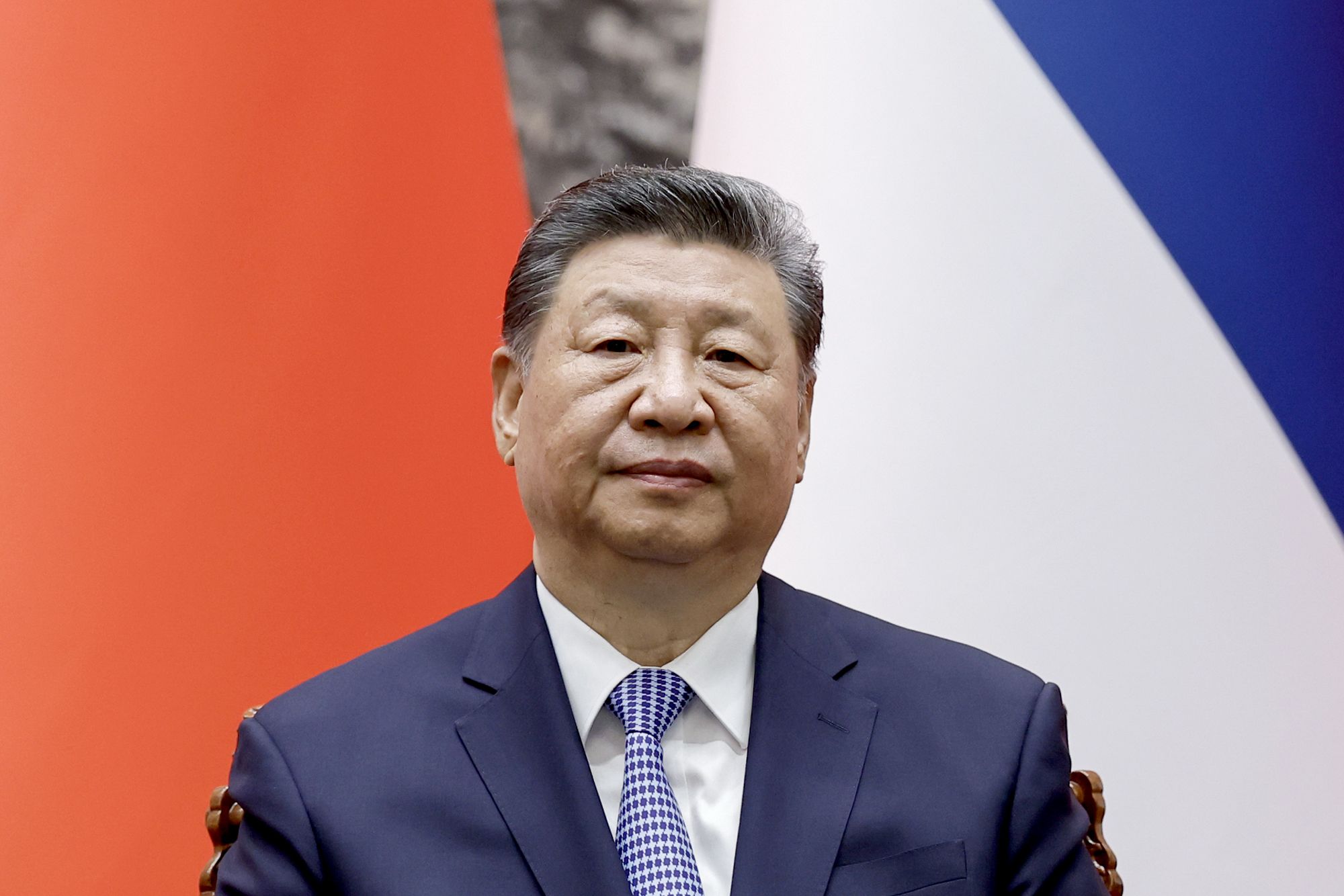
Four months after their last meeting, President Donald Trump and Xi Jinping traded niceties during the Chinese leader’s first visit to the US capital in over a decade. The two leaders extended a trade truce, exchanged gifts and compliments, and acknowledged the possibility of working together to contain the dangers of AI development. For a historic summit meant to address rising tensions between the world’s largest economic and geopolitical powers, the Washington trip was relatively uneventful. But for Xi’s own ambitions, China didn’t need much else. At the White House state dinner Thursday, the Chinese leader emphasized the importance of cooperation, in remarks that framed China’s rise as a boon to America rather than a threat. “The friendship between the two peoples is a worthy cause that holds great promise,” he said. “Let us join hands and move forward side by side.” One key difference between May’s meeting and this one was the chaos surrounding Trump’s decision to bar some reporters from the White House, and the impact that had on images being broadcast – a stark contrast to the choreographed, government-approved coverage on Chinese state media. The rhetoric, however, was by and large the same. Xi likened Trump’s signature slogan, “Make America Great Again,” to his own plan for the “Great rejuvenation of the Chinese nation,” a decades-long strategic vision to transform China into a global powerhouse with world-class military, industrial and technological capabilities. But his remarkable progress in achieving those objectives has prompted US officials to take protectionist measures, including restrictions on Chinese imports, investment and use of US technology. Despite what Beijing sees as an attempt to constrain its advancement, China has maintained record exports, strong AI and robotics development, and a firm grip on goods and materials that the US needs, such as rare earth metals. All that grants Xi far more leverage than he had during his last time in Washington, which means that style over substance may be enough for him – for now. A diplomatic replay Given how US-China clashes have upended global geopolitics and supply chains, a stabilization in their relationship earlier this year was already a win to many observers. But this state visit was largely a muted replay of Trump’s time in Beijing in May, which featured grand symbolic gestures without many concrete actions. Since then Trump has faced increasing political pressure, from the protracted war with Iran and rising inflation, ahead of midterms in November. Major TV news networks did not air the meeting, after Trump barred reporters from CNN, MS Now and Politico from the White House press pool. While a court later overturned the ban, Trump’s actions raised concerns among US and Chinese officials over how the summit would be perceived, according to CNN reporting. Unlike Trump in Beijing, Xi traveled to Washington without a cabal of business executives. Cui Hongjian, an international relations scholar with Beijing Foreign Studies University, told CNN the lack of corporate representation indicated that the US-China relationship had yet to make any substantial breakthroughs in business or trade. “Right now, both sides are still in a phase where they want to stabilize the political situation a bit more,” Cui said. There were also concerns in Beijing that some of Trump’s team were less positive about US-China relations than the US president, Wu Xinbo, a Chinese Foreign Ministry adviser, told CNN. Xi said Thursday that he hoped the US would welcome Chinese companies and business. In his speech, Trump also detailed a long history of trade and friendship between the US and China. “President Xi and I both understand that we represent different systems, but the ties between our people endure. We’ve never gotten along better,” he said. But beyond the red-carpet welcome and flowery praise, core contentions remained. Sticking points One of Xi’s main priorities is to chip away at US support for Taiwan, which Beijing considers a part of its territory. Bringing the island democracy under Communist Party control is a key component of Xi’s goal for Chinese rejuvenation. In closed-door discussions, the Chinese leader pressed Trump to “oppose” Taiwan’s independence, according to state news agency Xinhua. The US has long been intentionally ambiguous about its stance on Taiwan’s sovereignty, though it is obligated to sell it weapons for self-defense, under the Taiwan Relations Act. China has previously warned that supporting Taiwan independence could lead to military conflict. The US has not issued a statement on Thursday’s meeting. Xi also called on the US to responsibly manage the development of artificial intelligence with China. The ability of cutting-edge AI models to break out of human control has spurred calls for greater oversight, particularly for the US and China as the world’s leading players. While the leaders of America’s biggest AI companies, OpenAI and Anthropic, have agreed that the race to develop better models needs to slow down, Trump has claimed that the fears over AI are a “hoax” that benefits China. The rapid advancement of Chinese AI, despite US tech export controls, has caused alarm among US officials, who accused Chinese companies of essentially ripping off US models and raised the possibility of sanctions. China threatened to take countermeasures if the US tries to hinder Chinese AI. But on Thursday, Xi’s message was that the relationship didn’t have to come to that. “We should coexist in peace,” he said.
Topics in this story
Gathered from external sources. Rights to this text belong to whoever originally published it.