When Should You Replace Nonstick Pans? | NBC Selected
I spoke with multiple culinary experts to find out how often you should replace your nonstick pans, and what signs to look for to know when it’s time to throw them out.
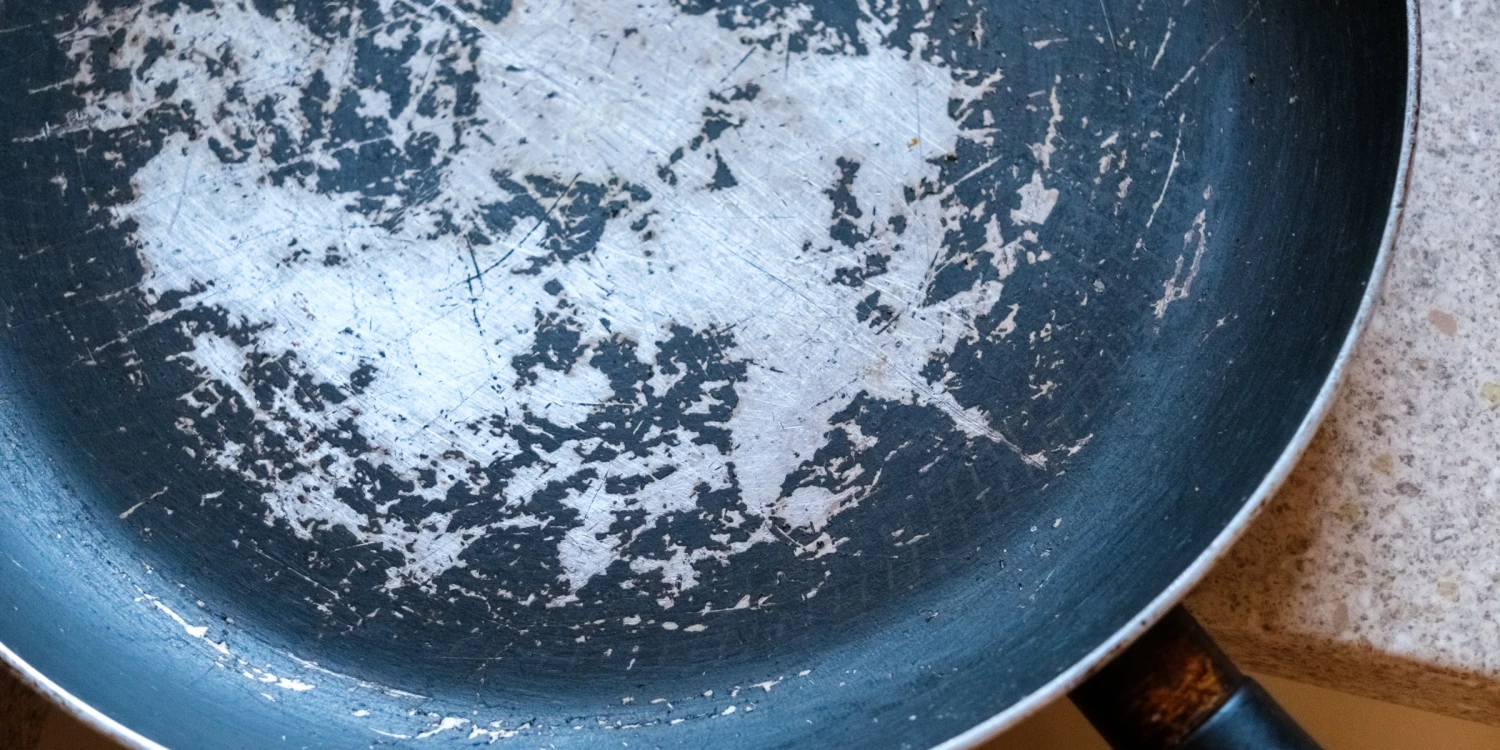
Almost everyone you know probably has at least one or two nonstick pans in their kitchen. Nonstick pans are easy to clean and often lightweight, and there are lots of non-toxic options available today. But, depending on how long you’ve had those pans and what they’ve been through, it may be time to throw them out and get a new set. I spoke to multiple experts, including culinary instructors with decades of experience, to find out how long is too long to keep a nonstick pan, and how to know when it’s time to get rid of one. Plus, I offer a variety of options to shop if you find that you’re actually due for a new set of nonstick pans, including picks from some of our favorite brands, like Caraway, GreenPan and Our Place. Want more from NBC Selected? Sign up for our newsletter, The Selection, and shop smarter. The best nonstick pans to shop now All the products below are either direct recommendations from NBC Selected staff members and/or have at least a four-star average from shoppers at various retailers. A few years ago, I got this nonstick pan (from the brand to test) as part of a set from Stanley Tucci’s collection with GreenPan, and it’s been one of my most used pieces of cookware. After three years, all of the frying pans and saute pans from the set are in great shape, including this frying pan. The surface is truly nonstick and it isn’t hard to clean by hand even when I’ve made things like seared chicken or steak, though, I also love that it’s completely dishwasher safe; I’ve put it in the washer many times and it hasn’t gotten messed up or scratched at all. Plus, I love that it comes with a glass lid that has a metal handle. The glass lets me check on my food as it cooks, and the handle on the lid doesn’t get hot (just like the handle on the frying pan), so it’s easy to remove without oven mitts. Lastly, I also appreciate that the pans are all non-toxic and free of “forever chemicals” like PFAS, according to the brand. One of our favorite kitchen brands, Caraway, has a large variety of high-quality pans, pots and food containers, including this popular fry pan, which you can get by itself or with a heatproof glass lid for $60 more. It has a non-toxic ceramic coating that’s made without PFAS, cadmium or lead, and it is easy to clean by hand (it isn’t dishwasher safe). It’s safe to use with heat above 500 degrees Fahrenheit, so in addition to the stovetop, it’s oven safe and great for making something like a frittata or a crisp, which needs to finish the oven. You can also get the pan as part of a set of two, four or seven pieces. This bestselling pan from Our Place is available in 8.5, 10.5 and 12.5 inches and each pan comes with a wooden spatula for sauteing and a stainless steel steamer basket for vegetables, dumplings and more. It also comes with a lid that allows you to vent your food and let steam escape as needed. The Always Pan, which is oven-safe up to 450 degrees Fahrenheit, has a ceramic nonstick coating, making it easy to clean by hand. All of the brand’s pans, including this nonstick pan, is PFAS- and lead-free, according to the brand. NBC Selected editor Mili Godio has multiple pieces from Our Place and loves them. “I’ve had Our Place’s Always Pan (both the regular size and the mini) and Perfect Pot for several years now, and they’ve survived hundreds of uses (and multiple apartment moves) since 2022” she says.”The nonstick on the small pan and pot is still going strong. They’re also easy to clean: I hand wash the cookware so it lasts longer and any food residue just falls right off.” Our Place also sells the Titanium Always Pan, which is a nonstick, PFAS-free pan that doesn’t have a coating, according to the brand. If you want an alternative to nonstick pans altogether, cast iron is a great way to go, according to Michael Handal, a chef instructor at the Institute of Culinary Education in New York City. “Stainless steel and cast iron cookware would be the best alternatives. These are very durable and scratch resistant, especially when you are using metal utensils,” he says. “Small surface scratches may appear over time, but these small imperfections in the surface of the cookware will not affect the performance of the pans. And in most cases, stainless steel and carbon steel are non-reactive cooking surfaces.” A non-reactive pan is one that does not have a chemical reaction with food or affect the flavor of it. While a cast iron pan isn’t as easy to clean as a nonstick pan, it isn’t that hard to maintain one, particularly ones with an enamel coating on the bottom, such as this Le Creuset pan. In addition to having multiple handles, it also has a pour spout on each side for pouring and transferring food to containers or other pans. This set of Martha Stewart pots and pans is ideal for someone who cooks occasionally, according to NBC Selected senior editor Shalwah Evans. The nonstick enamel — which is PFOA-, PTFE-, lead- or cadmium-free according to the brand — allows food residue to wipe right off of the surface and they look nice for serving when you have guests. “I’ve had these pans for more than a year now and I use them a lot, and they’re just starting to look a bit beat up,” says Evans. “I love cooking eggs in the small fry pan because they come out buttery and soft and I never have to scrape them with a utensil to get them out. I cook in these pans almost daily so my set is getting some wear (and noticeable tear) but if you don’t cook often you could have these for several years before needing to replace them.” How often should you replace nonstick pans? “The question of when to replace nonstick cookware will depend on the surface condition of the individual pans themselves,” says Handal. “Well maintained pans could last many years, while frequently used pans that have accumulated multiple scratches should be replaced ASAP.” If it’s easy to see the bottom of the pan through severe scratches, you should replace it immediately, since this will usually lead to pieces of the coating chipping and ending up in your food. How do you know when it’s time to replace your nonstick pans? “More than likely you will know when it is time,” says Tracy Zimmerman, an assistant professor at New York City College of Technology’s Department of Hospitality Management. Be sure to take notice of things like whether the coating is starting to flake, blister or separate from the base of the pan, according to Zimmerman. Additionally, while small scratches are fine from time to time, you should replace your pan if it has scratches showing the metal under the coating, or if it has a worn out appearance. “The most important sign is when you use them appropriately and food is still sticking,” says Zimmerman. What are alternatives to nonstick pans? Cast iron is one of the best alternatives to nonstick pans, according to Handal, Zimmerman and Michael Makuch, a chef instructor at Johnson & Wales University’s College of Food Innovation and Technology. “It is great for high heat cooking and gets better the more you use it. The downside to [using] cast iron [pans] is they are heavy, and they require a little more care to avoid rusting and pitting,” he says. And while they’re typically not nonstick, you can also consider using stainless steel pans, which are much more lightweight than cast iron pans. How do you take care of nonstick pans so they last? Taking care of your nonstick pans depends a lot on how often you use them, but also how you store them and what else you use with them, according to Zimmerman. For example, when you store them in a cabinet or shelf, you should layer your pans with a cloth so that they don’t get scratches from each other. You should also use wooden or heat-resistant silicone or rubber utensils with nonstick pans to help maintain them, according to Zimmerman. Also, only use your nonstick pans for medium high heat that’s between 400 and 500 degrees Fahrenheit. When cleaning, wash them with damp soft towels, do not scrub with anything abrasive. Meet our culinary experts At NBC Selected, we work with experts who have specialized knowledge and authority based on relevant training and/or experience. We also take steps to ensure all expert advice and recommendations are made independently and without undisclosed financial conflicts of interest. Michael Handal is a chef instructor at the Institute of Culinary Education in New York City.Tracy Zimmerman is an assistant professor at New York City College of Technology’s Department of Hospitality Management. Michael Makuch is an associate professor and department chair at Johnson & Wales University’s College of Food Innovation and Technology. Why trust NBC Selected? I’m a commerce editor at NBC Selected, where I write about home and kitchen appliances. I’ve written about the best stainless steel cookware, nontoxic grilling utensils and how to season a cast-iron skillet. For this story, I talked to multiple culinary experts for their guidance on when to throw away a nonstick pan. Catch up on NBC Selected’s in-depth coverage of tech and tools, wellness and more, and follow us on Facebook, Instagram, Twitter and TikTok to stay up to date.
Topics in this story
Gathered from external sources. Rights to this text belong to whoever originally published it.