Britain rebuilt 3.5 miles of the A46 using 17,432 tonnes of material from the old road; the project cut its carbon footprint by 23%
Contractors resurfacing the A46 Warwick Bypass recycled 56% of the materials from the old road back into the new one, cutting the scheme's carbon
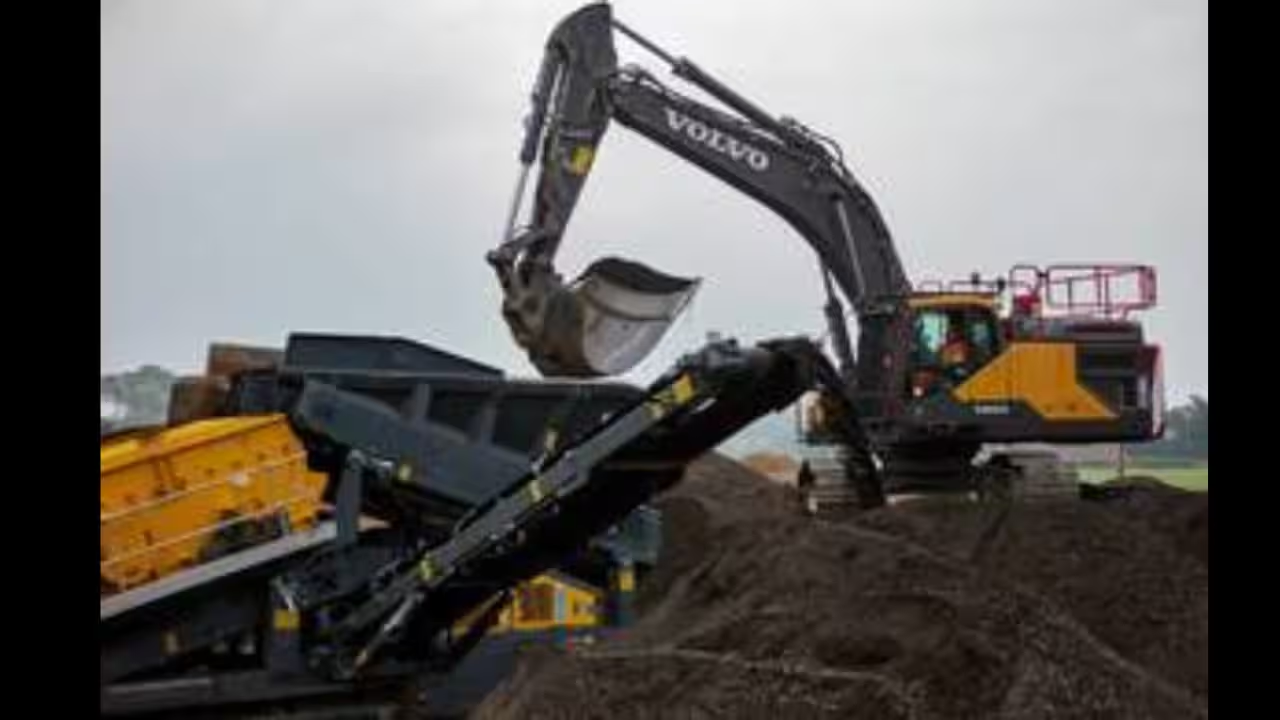
Contractors resurfacing the A46 Warwick Bypass recycled 56% of the materials from the old road back into the new one, cutting the scheme's carbon footprint by 23%, according to a National Highways press release published on 17 November 2021. According to a National Highways press release, some 17,432 tons of material were reused and saved from landfill across 3.5 miles of the northbound carriageway between Sherbourne roundabout and the Leek Wootton roundabout. Kier led the project on behalf of National Highways and recruited Aggregate Industries to carry out the resurfacing. The work, which ran between late July and September, saved around 82,000 road miles.How did the A46 project cut its carbon footprint by 23%Kier led the project on behalf of National Highways and recruited Aggregate Industries (AI) to carry out the resurfacing. It says the scheme ran between late July and September. Any material not used on the scheme was recycled back into the road network through other projects.Kier Managing Director Scott Cooper is quoted as saying this was the first time Foamix had been used on this type of road on the Area 9 Strategic Road Network. He said the work showed that innovation and collaboration across the value chain are needed for Kier and its partners to reach their net zero ambition. AI's National Technical Manager, Neil Leake, said good collaboration and an innovative approach were at the heart of the scheme. He added that the team had to overcome significant challenges to deliver on time while still meeting its low-carbon goal.How was tar-bound material from the old A46 safely recycledMuch of the material in the lower levels of the road contained tar, which is classed as carcinogenic, meaning it has the potential to cause cancer. Material of this kind must be dealt with as hazardous waste and disposed of at a licensed waste processing facility. The release says, however, that tar-bound material can be safely recycled and encapsulated back into the pavement layers by processing and re-mixing it.Kier and AI devised a low-carbon pavement solution for the project. According to the release, they found the greenest and most cost-effective approach was to recycle the existing carriageway material, which reduced the amount that would otherwise have gone to landfill. The old layers of road were recycled into the new carriageway using AI's ex situ cold recycled Foamix asphalt.How does Foamix reduce asphalt fumesFoamix is a fully cold process that can be laid and compacted at a much safer ambient temperature. This reduces the asphalt fumes on site to which workers are exposed. The material was mixed on site to minimise vehicle movements and reduce the scheme's carbon footprint. Using recycled material also meant less raw material was needed for the works. Together with the avoided trips to the waste site, this meant around 82,000 road miles were saved on the scheme.The project sits within National Highways' wider net zero carbon plan. Project Manager Ryan Davies said the organisation has committed to "rapidly cut carbon from road construction, maintenance and operations". He added that the support of the supply chain is a vital part of meeting its objectives. The release says the plan has three key commitments: net zero for National Highways' own operations by 2030, net zero road maintenance and construction by 2040, and support for net zero carbon travel on its roads by 2050.You use AI every day. Now get your AI Quotient. Take the AIQ test.
Topics in this story
Gathered from external sources. Rights to this text belong to whoever originally published it.