In 1902, Rudyard Kipling bought 33 acres in the English countryside; 37 years later, the estate had grown past 300 acres and was left to the National Trust
Rest of World News: Discover how Rudyard Kipling transformed a humble farmhouse into a sprawling estate, now managed by the National Trust, preserving the legacy of one of England's most renowned authors.
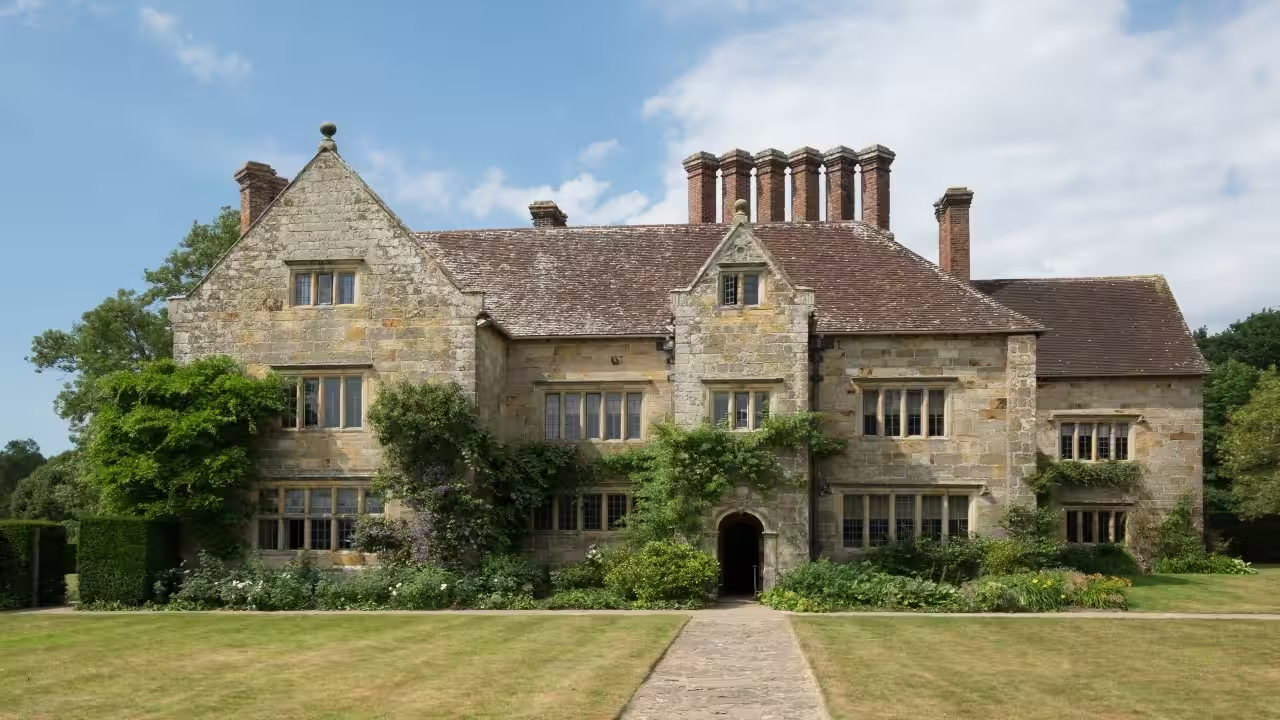
Writers who unexpectedly become affluent typically spend their money on travel, opulent city homes, and the kind of ostentatious extravagance that befits their elevated status. Rudyard Kipling had a more subdued approach. He decided to invest his riches in a dilapidated farmhouse in rural Sussex at the height of his career, having already written a number of widely read poems and The Jungle Book. He spent the remainder of his life expanding the little land he had initially bought.For £9,300 in 1902, Kipling and his wife, Carrie, purchased Bateman’s, a home in the village of Burwash, along with 33 acres of surrounding land. It had been two years since the couple had first seen the house. According to records held by the National Archives, the formal purchase of Bateman's and its adjoining land, along with Park House Watermill and part of Dudwell Farm, was completed on 28 July 1902.A prominent writer settles at Bateman’sBy then, Kipling was an internationally celebrated writer earning around £5,000 a year, and he had recently declined both a knighthood and the post of Poet Laureate. Bateman’s offered the privacy and rural setting he was seeking after the death of the couple’s eldest daughter, Josephine, in 1899. The house required substantial modernisation, which Kipling undertook with help from his cousin, architect Ambrose Poynter. Electricity was installed using a dynamo at the mill, while the plumbing, kitchen and servants’ quarters were also upgraded.An estate that quietly kept growingOver the next decades Kipling continued to buy properties around Bateman’s, including the adjoining Dudwell Mill and Farm, which he bought in 1905. What began as a 33-acre parcel with a farmhouse and watermill grew into a large rural estate of approximately 120 hectares, or over 300 acres. Kipling lived at Bateman’s until his death in 1936 and gradually expanded the surrounding estate to more than 300 acres.His widow, Carrie, remained at Bateman’s until her death in 1939. In her will she left the whole estate to the National Trust in memory of her husband so that the home and its enlarged grounds would be conserved and not sold off. Historic England, which is listed on the Register of Historic Parks and Gardens, mentions how much of the plan personally designed by Kipling, including a lily pond and a formal rose garden, remains largely as it was created.From private hideaway to public memorialSince taking ownership in 1939, the National Trust has maintained Bateman's as a public museum dedicated to Kipling's life and work, leaving his study as he had left it and letting guests wander the larger estate, including the mill. Kipling also designed the rose garden, and his original plan survives at Bateman’s. It is a unique example of a writer's personal enlargement of his land becoming, almost by mistake, a permanent public inheritance.Catch the latest World News and Live updates. Download the TOI app.
Topics in this story
Gathered from external sources. Rights to this text belong to whoever originally published it.