Ontario man with Stage 4 cancer won court battle after OHIP denied US treatment, then province changed the rules; doctors sought funding for US$600,000 TIL therapy in Florida
An Ontario man with Stage 4 melanoma who successfully challenged the province in court over access to potentially life-saving cancer treatment says he is
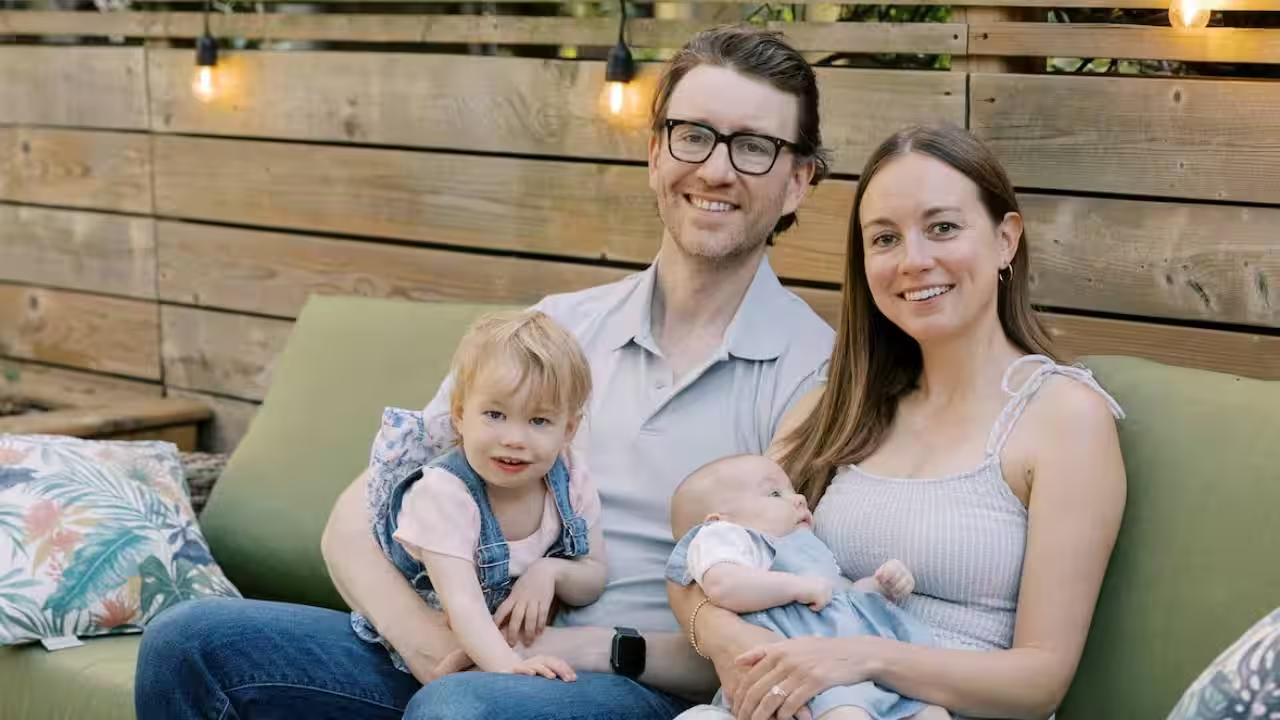
An Ontario man with Stage 4 melanoma who successfully challenged the province in court over access to potentially life-saving cancer treatment says he is now “incredibly disappointed and disheartened” after Ontario changed the rules governing public funding for out-of-country drug treatments.According to CBC News, Alex Shved, 37, took the province to court after the Ontario Health Insurance Plan rejected his oncologist’s request for him to receive tumour-infiltrating lymphocyte therapy, or TIL therapy, in the United States.Shved, a father of two young daughters, has cancer that has spread to his lungs and bones. He has been pursuing every available option in the hope of remaining with his children for as long as possible.His oncologist sought OHIP funding for TIL therapy in Florida, a treatment that would cost approximately US$600,000.Court ruled OHIP had to reconsider his treatment requestOHIP had rejected Shved’s request, citing in part the fact that TIL therapy was under consideration for possible public funding in Ontario.The executive officer of Ontario’s public drug programs argued that routinely paying for out-of-country treatment while a drug is undergoing review could undermine the incentive for manufacturers to participate in Canada’s drug-review and pricing process.Shved challenged the decision in court.In September, the Ontario Divisional Court quashed the OHIP decision and ordered the province to reconsider his application. The court found that OHIP had not provided a sufficient basis for its reasoning, while the judges described the matter as one involving potentially life-or-death consequences for Shved.Following the ruling, however, OHIP rejected Shved’s request for a third time.The development came alongside a change to Ontario’s regulations governing out-of-country drug funding.Shved says government made its previous actions lawfulSpeaking about the province’s response, Shved said the outcome has left him deeply frustrated.“The courts concluded that the government's actions were unlawful, and the government's response was to change the law to make those same actions now lawful,” he said, according to The Canadian Press report.Under the amended rules, Ontario will fund drugs outside the province only when the treatment is already publicly funded in Ontario but access is temporarily unavailable or delayed.Health Minister Sylvia Jones defended the changes, saying the province was protecting Ontario patients and taxpayers from high drug prices while preserving access to treatments that might otherwise be available only in the United States or overseas.The government has also said it is exploring a “mutually satisfactory resolution” in Shved’s individual case. However, Shved said he remains unclear about what that resolution would mean for him.His cancer has spread to his lungs and bonesShved first discovered a growing mole in 2020 and has since undergone multiple treatments.Despite those efforts, his melanoma has progressed and spread to his lungs and bones. His doctors have determined that he could be a suitable candidate for TIL therapy.The treatment is a form of immunotherapy that uses the patient’s own immune cells.Doctors remove tumours from the patient and extract immune cells that have already infiltrated the cancer. Those cells are then multiplied in the laboratory into billions of cells. After chemotherapy prepares the body, the expanded immune cells are infused back into the patient with the aim of attacking the cancer.For Shved, the timing of access is critical.He previously told The Canadian Press that he does not know whether he will remain medically fit, or alive, by the time the treatment is potentially approved for public funding in Ontario.TIL therapy is approved in Canada but not yet publicly funded in OntarioThe dispute comes as TIL therapy moves through Canada’s regulatory and funding systems.A version of the treatment known as lifileucel was approved for sale by Health Canada last year. However, provincial drug plans are still reviewing whether the therapy should be publicly funded.That process can take years.The distinction has become central to Shved’s case. Although the treatment has received regulatory approval in Canada, it is not currently publicly funded in Ontario, meaning patients who need it urgently may face significant barriers to accessing it through the province.Shved’s case has therefore become a broader dispute over what happens when a patient needs an expensive treatment immediately while governments are still negotiating whether and at what price the therapy should be publicly funded.Ontario says the changes protect patients and taxpayersThe Ontario government maintains that its revised regulations are intended to protect the province’s ability to negotiate affordable drug prices and ensure that public funds are used within the established provincial funding system.For Shved, however, the changes have come after he successfully challenged the province’s original decision in court.His legal victory forced OHIP to reconsider his request, but the subsequent regulatory change and third rejection have left him uncertain about whether he will ultimately receive public funding for the treatment he says he urgently needs.As reported, Shved’s court victory has not translated into access to the treatment he was seeking in the United States. Instead, Ontario has moved to clarify and narrow the circumstances in which such out-of-country drug treatment can be publicly funded.You use AI every day. Now get your AI Quotient. Take the AIQ test.
Topics in this story
Gathered from external sources. Rights to this text belong to whoever originally published it.