1929: Roland Callingham opened his family’s miniature world; Bekonscot remains the world’s oldest surviving model village
Discover Bekonscot Model Village in Beaconsfield, the oldest surviving model village since 1929, featuring six miniature villages and a 10-mile railway. Perfect for family fun and charity support!
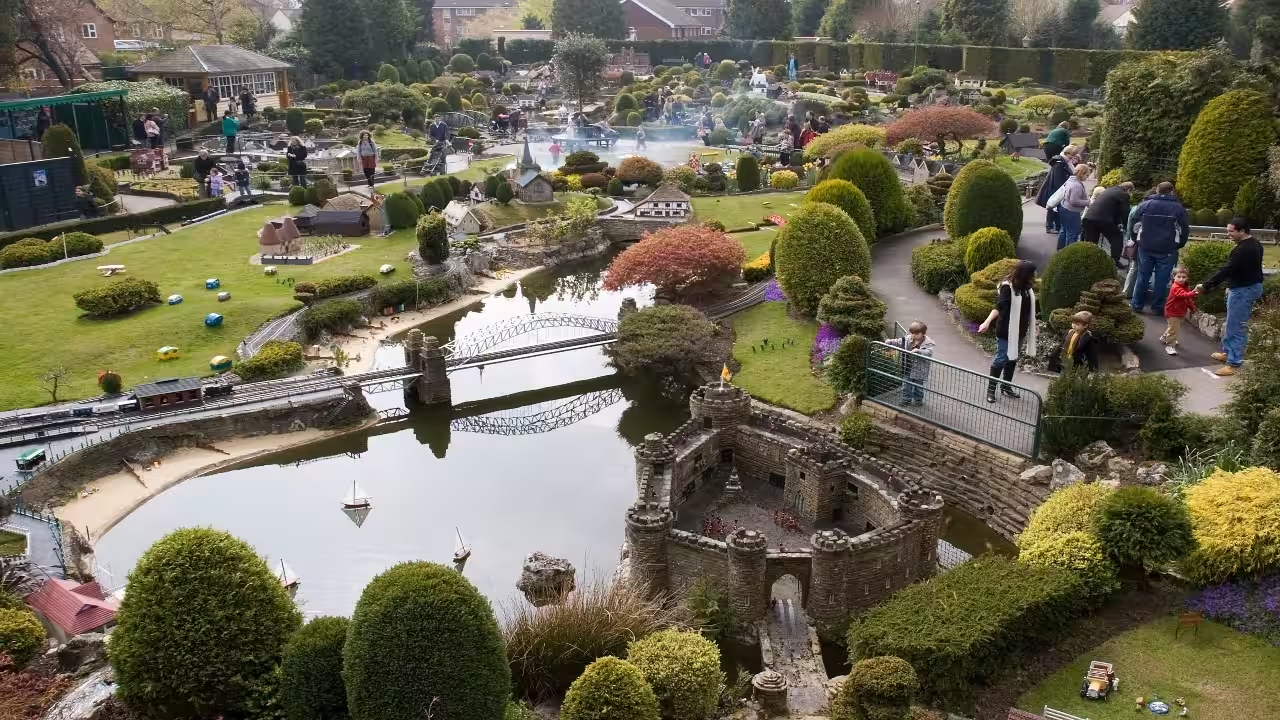
By the late 1920s, London accountant Roland Callingham’s model railway had outgrown the family home. After his wife objected to the trains indoors, he moved the hobby into the garden of their house in Beaconsfield, Buckinghamshire. The railway and surrounding miniature landscape gradually grew into Bekonscot Model Village, which opened to visitors in 1929 and continues to operate today.Callingham first created the railway for private family entertainment. As the garden layout grew, visitors encouraged him to open it to the public. Guinness World Records identifies Bekonscot as the world’s oldest surviving example of a model world. Its profile describes six miniature villages, hundreds of buildings and a railway with a reported length of 10 miles. That figure should be understood as a scale equivalent, not ten miles of physical track. At a 1:32 scale, ten miles at full size would correspond to about 1,650 feet of model track. The attraction opened to visitors in August 1929.An interest that expanded beyond the houseThe story began before the model village opened to the public. Callingham had planned an indoor model railway by 1926, then began work on a garden swimming pool in 1927. A historical dossier from the Buckinghamshire Gardens Trust records that he used mounds of soil from the pool excavation to build the first model houses. The railway moved outdoors in 1928, and the landscape developed with rockeries, paths, water features and additional buildings.The name Bekonscot combines Beaconsfield, where Callingham lived, with Ascot, where his friend James Shilcock lived. Callingham worked with head gardener Tom Berry, Mr Clark and other household staff to extend the layout. The attraction grew over several years as more stations, houses and landscape features were added. Its early public days also raised money for charity.A village in miniatureBekonscot presents an imagined version of England, although many of its buildings draw on real places. The village buildings are roughly 1:12 scale, or one inch to one foot, while the railway uses a smaller 1:32 scale. The difference is intentional: the attraction was designed to be playful and full of character, rather than to follow one consistent scale. Today it contains more than 200 miniature buildings, along with thousands of figures, animals and vehicles. The Buckinghamshire local heritage record confirms the different scales and explains that strict proportional accuracy was not Callingham’s main aim.Callingham prioritised enjoyment and character over exact scale. The miniature residents stand about 10 centimetres tall, and a team of twelve maintains the attraction throughout the year, with additional staff during the summer.Bekonscot initially changed with the times, adding modern buildings and vehicles, but in 1992 its managers chose to restore a 1930s setting. Princess Elizabeth marked her eighth birthday with a visit in April 1934, accompanied by Queen Mary and her younger sister, Princess Margaret, who was three at the time. Elizabeth returned for her tenth birthday in 1936 and visited again later. Some models came from other attractions: the cottages in Greenhally were moved from Ramsgate Model Village and restored in 2003. Bekonscot also helped inspire later miniature attractions, including Madurodam in the Netherlands, which opened in 1952, and Legoland in Denmark, which opened in 1968.Built to raise money for charityBekonscot attracted coverage in newspapers, newsreels and magazines as visitors came to see the miniature landscape. Money from public visits went to charitable causes, and a formal association was established in 1934 to manage the attraction and distribute surplus income. Callingham died in 1961. The Church Army took over the village’s operation in 1978, and the site is now run by the Roland Callingham Foundation, which distributes profits to other charities. Today, the Roland Callingham Foundation operates Bekonscot and uses profits to support charitable causes. Opened to visitors in 1929, the attraction grew from Callingham’s garden railway into six miniature villages. It remains a carefully maintained snapshot of rural England as imagined in the 1930s.You use AI every day. Now get your AI Quotient. Take the AIQ test.
Topics in this story
Gathered from external sources. Rights to this text belong to whoever originally published it.