China is digging up a 110-metre-high garbage mountain; the 2.55-million-cubic-metre landfill is being turned into new land
China News: A huge mountain of rubbish that once stood 110 metres above Shenzhen is being dug up as China turns a former landfill into valuable urban space. The Y.
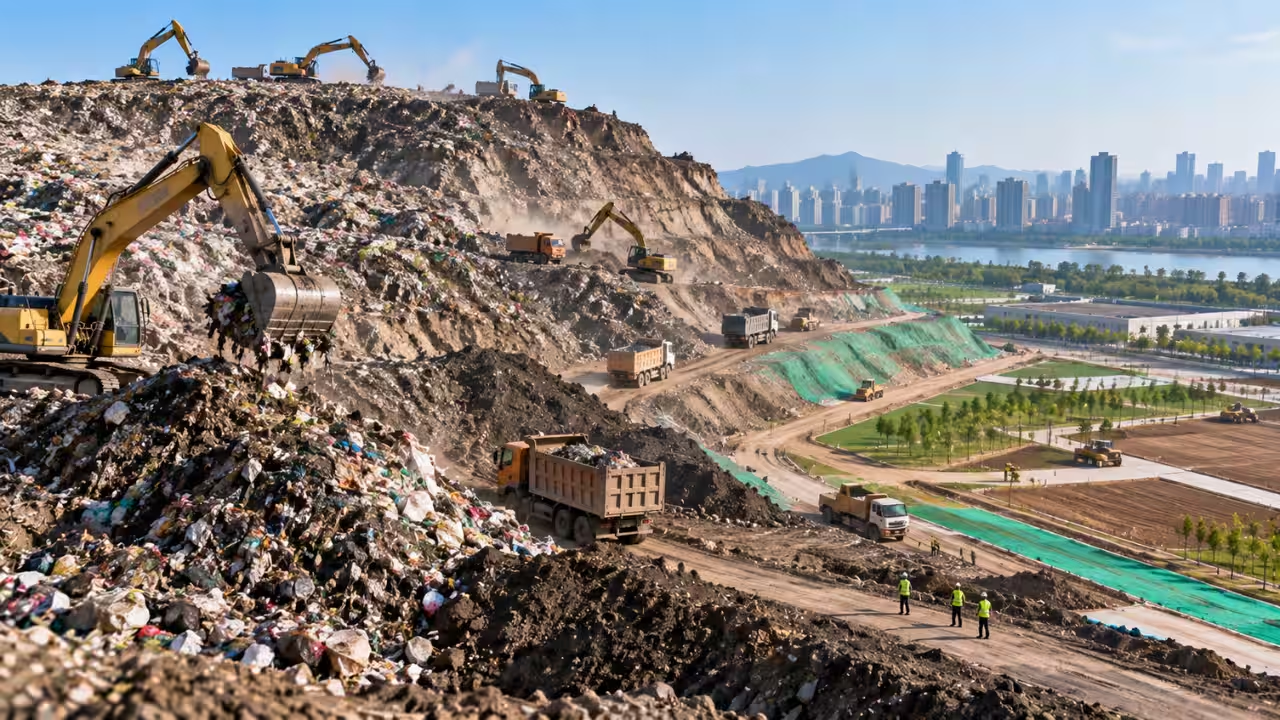
A huge mountain of rubbish that once stood 110 metres above Shenzhen is being dug up as China turns a former landfill into valuable urban space. The Yulong landfill, which held 2.55 million cubic metres of waste, is now at the centre of the country’s largest landfill excavation project. Workers are removing around 6,000 tonnes of buried waste each day, separating material that can be sent for energy recovery. The operation is expected to free about 300,000 square metres of land for a planned digital industry cluster and ecological green valley. It marks a striking shift in how China is dealing with its ageing waste sites.China is digging up a 110-metre-high garbage mountainThe operation is substantial, with around 6,000 tonnes of buried waste excavated each day. Rather than treating everything removed from the old landfill as useless material, the project separates different types of waste and light combustible materials, including plastics and rubber, can be used for power generation.According to Xinhua, Rao Yiming, an official with Qingshuihe Subdistrict in Luohu District, described the work as more than an environmental clean-up. “This is not just about settling environmental debts, but also about reclaiming space for development,” Rao said. The approach reflects a broader change in how Chinese cities are dealing with older waste sites, particularly as land once considered suitable for dumping has increasingly become surrounded by urban development.More than 80% of Chinese cities have cleaned up old waste sitesChinese cities were once affected by what it called a “garbage siege”, as landfills filled with untreated waste. Beijing, Shanghai, Guangzhou and Shenzhen, for example, each produce more than 20,000 tonnes of household waste every day. Yet the role of traditional landfilling has changed sharply, with the four cities now having no landfill that receives untreated household waste.The closure of old landfill sites is also taking place beyond Shenzhen. Xinhua reported that more than 80 per cent of Chinese cities had completed the remediation of aged waste mountains, with landfill capping and ecological restoration becoming mainstream. The Beijing Garden Expo Park was cited as another example, where construction waste, former gravel pits and waste dumps were incorporated into a landscape that was transformed into an ecological park in about three years.China is moving from landfills to waste-to-energyChina’s approach to waste management is also moving towards recovering energy and materials from rubbish rather than simply burying it. Xinhua reported that most household waste is now incinerated, with modern facilities designed to generate electricity, heat and construction materials. In Foshan, Guangdong, an eco-industrial park processes 4,500 tonnes of household waste each day and produces high-temperature steam that is supplied to nearby factories, replacing some fossil-fuel use.The change has been particularly rapid over the past decade. In 2010, China had 119 household waste incineration plants, which handled about 20 per cent of waste, while landfilling remained dominant. By November 2025, incineration accounted for 78.1 per cent of China’s urban household waste treatment capacity, according to official data cited by Xinhua. Modern plants operate furnaces above 850°C, while activated carbon, bag filters and treatment systems are used to control pollutants.China is reclaiming 300,000 square metres of land from wasteThe Yulong project is part of China’s effort to deal with its historic landfill sites. Instead of leaving the 2.55-million-cubic-metre waste deposit beneath a capped surface, workers are excavating the material and processing it as part of a wider restoration project. The aim is to replace the former waste mountain with a new landscape while making the land available for other uses.Once completed, the Shenzhen site is expected to provide around 300,000 square metres of land for a digital industry cluster and ecological green valley. Xinhua presented the project as part of a wider national shift from simply disposing of waste towards recovering resources and restoring land.Catch the latest World News and Live updates. Download the TOI app.
Topics in this story
Gathered from external sources. Rights to this text belong to whoever originally published it.