'Double-tap' attacks: How Iran is making Strait of Hormuz riskier for ships
Iran has stepped up its attacks on vessels passing through the Strait of Hormuz, adopting what security experts term as a “double-tap” tactic.
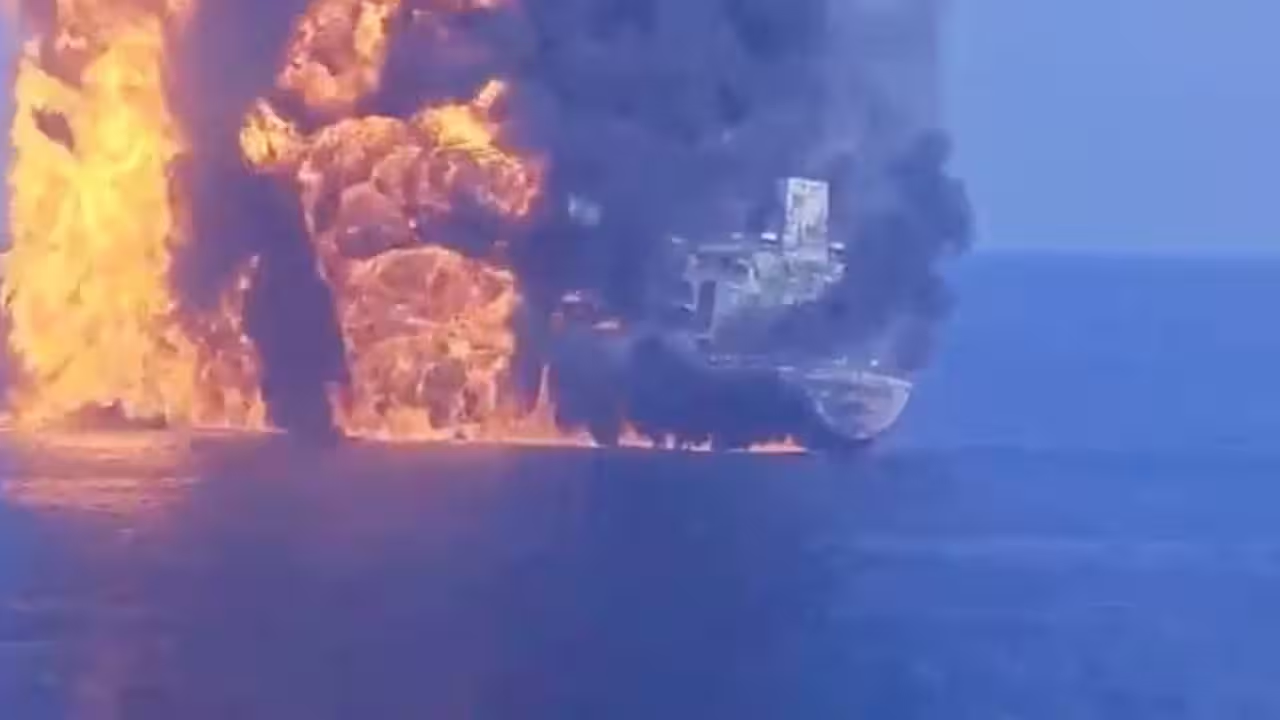
Iran has stepped up its attacks on vessels passing through the Strait of Hormuz, adopting what security experts term as a “double-tap” tactic. The strategy is aimed at inflicting greater damage and disrupting shipping operations.At least six vessels have been hit more than once in the past two months, raising concerns that Tehran is seeking to make passage through the strategically important waterway increasingly risky for shipping companies and their crews.According to the Financial Times, which cited data from maritime security consultancy EOS Risk, at least six ships were struck twice or more during October and November. The attacks have formed part of an intensified campaign against commercial shipping since the US and Israel launched strikes on Iran on February 28.One of the vessels targeted was the Navig8 Messi, owned by Abu Dhabi National Oil Company (ADNOC), the UAE's state-owned oil company. A maritime security adviser told the FT that the tanker was believed to have been struck at least three times. ADNOC declined to comment on the movement, routing or operational status of individual vessels.Another vessel, the Tara Gas, a liquefied petroleum gas carrier operated by a UAE shipping company, was struck on November 16 and again the following day, eventually catching fire. The China-owned crude oil tanker Gem No 2 was hit on October 9 and 10, causing a major oil spill near the UAE coast. The owners of the Tara Gas and Gem No 2 did not respond to requests for comment, the FT reported.Why is Iran striking ships repeatedly?The repeated attacks have raised questions over whether the strikes are coincidental or part of a deliberate strategy to disable vessels and discourage companies from using the waterway.Some shipping executives have suggested that the repeated targeting could be a consequence of the relatively small number of ships still willing to navigate the contested route. Others believe Iran may be deliberately hitting vessels more than once to increase damage, prevent them from returning to service and complicate salvage operations.“It seems to be aimed at halting and disabling ships. Of course what they are doing is reckless [anyway] and will kill people, but two missiles or drones into the stern will do more damage and are likely to halt the ship,” a tanker industry executive told the FT.Shipping traffic shows signs of recoveryDespite the attacks, shipping movements through the Strait of Hormuz have not come to a complete halt. Data published by Lloyd's List on November 27 showed that inbound transits into the Gulf reached 237 in October, the highest level since the conflict began.According to the FT, more than 50 attacks on shipping were recorded during October and November. The separate report said Iran launched 35 attacks on vessels in the Strait of Hormuz in October, the highest monthly figure since the conflict began, with at least 20 attacks recorded in November.Most vessels have continued to use a route along the Omani coast, under the protection of the US Navy, despite Iranian warnings that ships using the passage risk being attacked.Iran has also expanded a list of vessels it considers “non-compliant” with the system it is attempting to impose on the strait. Under the proposed arrangement, ships are required to register with the Persian Gulf Strait Authority, an organisation under US sanctions.The continued attacks and restrictions have made a return to normal shipping conditions increasingly uncertain, even as some vessels resume transit.Washington has maintained its naval blockade of Iranian ports. The US military said on Friday night that it had “disabled a commercial vessel in the Gulf of Oman” after its crew attempted to evade the blockade despite multiple warnings.With repeated attacks, restrictions on vessel movements and the US naval blockade continuing, shipping companies face uncertainty over the risks and costs of operating through one of the world's most important energy transit routes.You use AI every day. Now get your AI Quotient. Take the AIQ test.
Topics in this story
Gathered from external sources. Rights to this text belong to whoever originally published it.